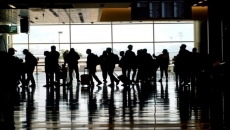
New statistics show 21 people were apprehended by the RCMP crossing into Canada from the U.S. in May, despite the shutdown of the border.
That's up from just six who were stopped in April, the first full month the border was closed to nearly everything but essential travel in a bid by the two countries to slow the spread of COVID-19.
The border deal gave Canada the right to turn people back to the U.S. if they sought to claim asylum here.
It was not immediately clear how many of those who arrived in May were returned to the U.S., or how many were allowed to file for asylum under existing rules around who can file a refugee claim in Canada.
Since 2017, nearly 57,000 people have crossed the border between Canada and the U.S. using unofficial entry points so they are able to file for asylum.
They do so because of the Safe Third Country Agreement, which governs asylum claims between Canada and the U.S., and forbids most people from lodging a claim when they arrive at a formal border point.
The agreement is based on the premise that both Canada and the United States are safe and a refugee claimant should seek asylum in whichever of the two he or she enters first. It does not forbid applications from people who are already on Canadian soil, however.
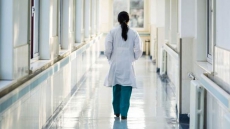
The vast majority of claimants leaving the United States arrived in Quebec, and as they've awaited decisions on their claims, many have found work in health care.
With those positions now essential to the fight against COVID-19, the federal and Quebec governments are considering a program that could see asylum-seekers granted permanent residency.
A new study released this week by Statistics Canada highlights the oversized role newcomers to Canada play in the health sector.
Using data from the 2016 census — which wouldn't capture the arrival of thousands of asylum-seekers since then — the agency found that year, 245,000 people were employed as nurses' aides, orderlies and patient service associates in Canada.
Of them, more than a third — 87,925 — were immigrants.
By comparison, the agency said, immigrants represented less than 1 in 4 people in all other occupations.
The percentage of immigrants working in health care in cities was even more pronounced.
In Toronto, Vancouver and Calgary, over 70 per cent of nurses' aides, orderlies and patient-service workers were immigrants, and the majority of those were women.
Statistics Canada pulled together the data as part of its effort to explore how the COVID-19 pandemic is affecting different communities in different ways.
The intersection between immigrants and the health care sector was important to examine, the agency said in the introduction to its research.
"One of the issues immigrants and visible minority groups have been facing since the start of the pandemic is that many of them are essential workers, which puts them at higher risk of contracting COVID-19," the introduction said.
"In particular, nurse aides, orderlies and patient-service associates were at higher risk of contracting COVID-19, especially those working in long-term care facilities in Quebec and Ontario. A number of workers in these occupations contracted the virus, which was an additional risk factor for their families and communities."
The research also showed that certain communities within the broader pool are potentially more at risk.
In 2016, 30 per cent of immigrants working as nurse aides, orderlies and patient-service associates were Black, and 30 per cent were Filipino.
The main places of birth for immigrant workers in those occupations were Southeast Asia, the Caribbean and Bermuda and sub-Saharan Africa.
Of the population from the Caribbean, about half were born in Haiti.
Of those who have crossed into Canada from the U.S. since 2017 and filed for asylum, just over 9,000 are from Haiti.