Photos of vaccinated community members flood our social media feeds as people share their excitement on what seems to be a step closer towards a pre-pandemic world.
As governments put a stop to social activities we previously took for granted, the question of finally returning back to the delicacies of ‘normal’ life lingers. Looking at our neighbors in the United States of America, the Centers for Disease Control and Prevention (CDC) has said that fully vaccinated individuals are able to hold outdoor gatherings without the use of masks.
However, Canada still stands on the cusp of just the first round of expectations. As such, can we really expect activities such as sports, playgrounds, concerts, and weddings to reopen, per say? Dr. Navdeep Grewal of the South Asian COVID Task Force suggests that we refrain from getting too eager, “After the first round of vaccinations, things won’t really change that much in terms of public health mandates because we are still not fully protected until 3-4 weeks after we’ve received our second dose. We will still have to wear masks indoors, in public places and continue to physically distance.” That said, she advises that the number of hospitalizations and deaths are expected to significantly drop as vaccinations increase, making it more likely that public health guidelines loosen and allow for larger gatherings.
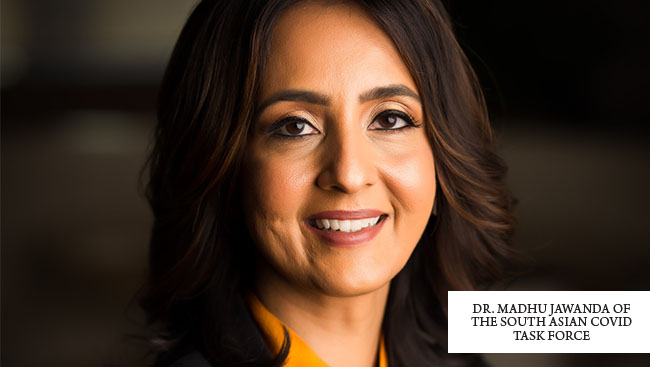
However, it is only after the second round of vaccinations that notable changes on restrictions for gatherings and travel will come about – more to the likeness of a pre-pandemic Canada. Until 80% of the eligible population gets both doses, masks and social distancing will be the norm. Also associated with the South Asian COVID Task Force, Dr. Madhu Jawanda details that as the vaccine roll-out accelerates and more people are getting vaccinated, along with the warmer weather, more outdoor activities will become sanctioned.
Until we reach community immunity and are all safe, stadium sports and concerts are just not realistic. “I wish I had a crystal ball and could predict when we can get together for large indoor/outdoor activities, but only time will tell,” says Jawanda.
In fact, Dr. Grewal explains that even after everyone has been immunized with the second dose, there still remains the concern of decreased vaccine effectiveness against variants. As a result, it is possible that the CDC changes their guidelines and eventually requires booster doses, especially if hospitalization numbers start to increase again. For now, we know that all government-approved vaccines do prevent serious illness and death, even in variant cases. Dr. Jawanda emphasizes the importance of ensuring that we minimize the community spread of the virus to prevent creating a situation which will lead to further illnesses, closures and COVID variants.
This begs the question, then, if the new normal is here to stay and what the timeline of normalcy looks like. As per Global leader in market research, Ipsos, only 1 in 4 Canadians believe that life will return to normal this year.
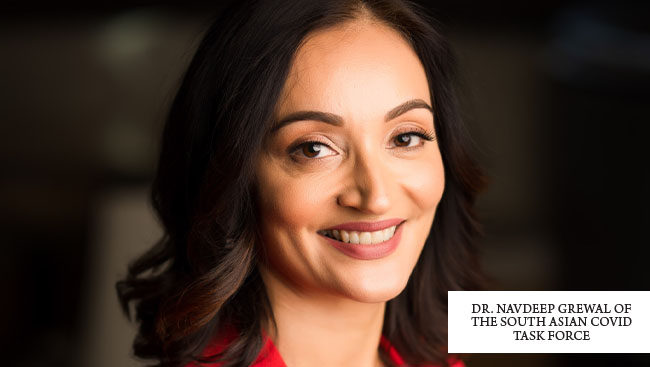
Dr. Grewal’s opinion on the matter is that the pre-pandemic normal will occur only once this virus spread is finally under control – once it becomes more like a common cold, and less like the currently unpredictably serious illness it can be. This may take several months to another year to occur. Dr. Jawanda outlines an interesting perspective, “The new normal is here to stay until we have control of the virus. Right now, the virus has control of us to a certain extent. I think we will see normalcy in early 2022 in Canada.” After we have the virus under control, good habits will hopefully come out of our experience with the pandemic, namely wearing masks in public when feeling unwell, or staying home when sick, and washing hands before eating food or touching the eyes.
Dr. Jawanda urges the public to also consider the fact that this is a global concern, not just a local or national one. Although we may be relatively normal, the rest of the world needs to be vaccinated in order to prevent creation of variants and ongoing spread. This virus knows no borders, boundaries, race or religion. We need to mobilize collectively in a humanitarian effort to combat COVID.
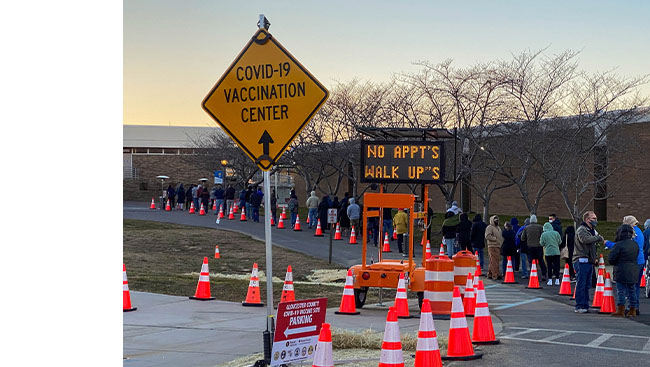
Despite any positive advances we make, we are far from becoming completely carefree when it comes to COVID-19. Dr. Grewal shares an important message, “We are inching closer to the end of the pandemic and our ability to live, work and travel as we please. However, we should remain vigilant as future pandemics could occur, but at least we will have learned what worked and didn’t work.” Hopefully, if such a situation arises, we can use our knowledge to globally work together, share technology and vaccines, and provide equitable help all around the world.
To help us all get vaccinated faster, Dr. Jawanda suggests that communities help elders, friends, and family with the process. Canadians can help each other by registering themselves for the COVID vaccine through the government website or the phone line provided by the government. As per the BC Centre for Disease Control, vaccines save lives by protecting the people that get vaccinated and those around them. The more people in a community who are vaccinated and therefore protected from COVID-19, the harder it is for it to spread, taking us one step closer to a normal life as we know it to be before the pandemic.