
Wednesday, May 13, 2026
ADVT 
National

Bank of Canada holds key interest rate steady at 2.25% in soft economy

Darpan News Desk The Canadian Press, 28 Jan, 2026 11:05 AM
  • Bank of Canada holds key interest rate steady at 2.25% in soft economy

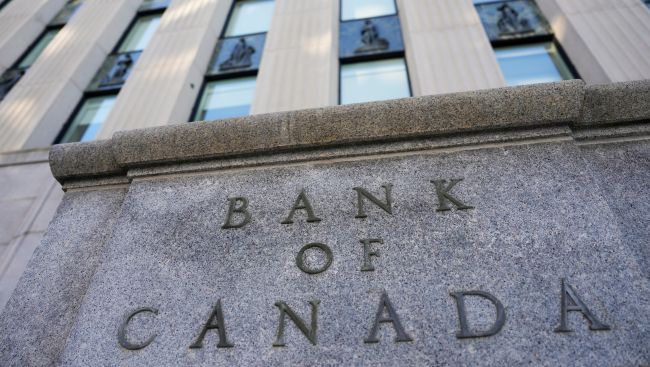
The Bank of Canada held its benchmark interest rate steady Wednesday and forecasts a gradual economic recovery from the U.S. tariff shock.

The policy rate remains at 2.25 per cent after the central bank’s first decision of the year. 

Economists had widely expected the hold.

Bank of Canada governor Tiff Macklem said in prepared remarks that the economy has evolved broadly in line with the central bank’s expectations since hitting pause on its interest rate easing cycle in December.

But he also warned that uncertainty remains “unusually high,” particularly around geopolitical risks and the upcoming review of the Canada-U.S.-Mexico agreement.

Macklem said it’s “too early to tell how well the Canadian economy will adjust to current tariffs and ongoing uncertainty.”

He said the bank’s governing council sees the policy rate as “appropriate” based on its outlook, but the “timing or direction of the next change in the policy rate” is difficult to predict.

The Bank of Canada released updated forecasts for the economy and inflation alongside Wednesday’s rate decision.

Coming off strong annual gross domestic product growth in the third quarter, the bank now expects the economy stalled in the final quarter of 2025. Swings in export volumes and other business activity responding to tariffs are driving volatility in the quarterly GDP readings, monetary policymakers noted.

The Bank of Canada is expecting annual GDP growth averaged 1.7 per cent last year. The central bank sees more modest growth of 1.1 per cent in 2026 and 1.5 per cent in 2027 as businesses adjust to the new trade realities.

Globally, the bank sees GDP growth higher at a little over three per cent for the coming years.

Projected drop-offs in net exports are a primary factor for Canada’s relative economic weakness, but forecasters at the central bank also cited slowing population growth as a drag on activity.

The inflation picture is also somewhat messy, thanks to tax changes like the federal government’s two-month tax holiday this time a year ago and ongoing impacts from the end of the consumer carbon price last spring.

But the Bank of Canada broadly sees annual inflation holding around its two per cent target over the forecast horizon as higher costs from trade disruptions are offset by a weaker economy.

The central bank’s next interest rate decision is set for March 18.

CIBC chief economist Avery Shenfeld said in a note to clients Wednesday that the Bank of Canada appears "firmly neutral" on where interest rates head from this point.

He said CIBC is sticking to its call for no rate changes in 2026, but the odds are tilted toward a further cut rather than a hike, "given the potential minefield in trade negotiations ahead."

TD senior economist Andrew Hencic said in a note that while the rate hold was expected, the central bank's focus on uncertainty surrounding CUSMA and geopolitical risks shows monetary policymakers are taking a data-dependent approach to future decisions.

He said TD's forecast is in line with the Bank of Canada's, with modest growth helping to tame inflation.

"Under these conditions we expect the BoC to stay on the sidelines in the coming months," Hencic said.

Picture Courtesy: THE CANADIAN PRESS/Sean Kilpatrick

MORE National ARTICLES

Commercial truck hits B.C. highway overpass, losing lumber load and snarling traffic

Commercial truck hits B.C. highway overpass, losing lumber load and snarling traffic
British Columbia's Highway Patrol says another commercial truck has hit an overpass in Metro Vancouver, causing no visible damage, but snarling traffic on Wednesday. Police say a load of lumber the tractor trailer was hauling along Highway 99 hit the Blundell Road overpass.

Commercial truck hits B.C. highway overpass, losing lumber load and snarling traffic

Consumers could find 'meaningful savings' as carbon price ends: Desjardins

Consumers could find 'meaningful savings' as carbon price ends: Desjardins
Canadians can expect to feel the absence of the consumer carbon price at the pumps immediately but it may take longer to notice a difference in the price of other goods, a new report released Wednesday suggests. The analysis by Desjardins Economics comes less than a week after Prime Minister Mark Carney and his new Liberal cabinet ordered that the consumer levy be set to zero on April 1.

Consumers could find 'meaningful savings' as carbon price ends: Desjardins

End of consumer carbon tax leaves $1.5-billion hole in B.C. budget

End of consumer carbon tax leaves $1.5-billion hole in B.C. budget
The budget released earlier this month shows the province was forecasting revenue of just over $2.5 billion from the tax in the 2024-25 fiscal year, while the estimated cost of the climate action tax credit was $995 million.

End of consumer carbon tax leaves $1.5-billion hole in B.C. budget

Ottawa caps non-sufficient funds fees at $10 starting March 2026

Ottawa caps non-sufficient funds fees at $10 starting March 2026
Ottawa has put in place new rules limiting the fees banks can levy on customers who don't have enough in their accounts to cover a cheque or other pre-authorized charges. The updates, included in an order-in-council last week, cap non-sufficient funds fees at $10 for personal deposit accounts, prohibit charging more than one NSF fee in a period of two business days, and prohibit charging an NSF fee when an account shortfall is under $10.

Ottawa caps non-sufficient funds fees at $10 starting March 2026

Federal government promises $2.55B in low-cost loans to build Toronto rental homes

Federal government promises $2.55B in low-cost loans to build Toronto rental homes
The federal government is promising billions in low-cost financing to help build thousands of rental homes in Toronto, including more than a thousand affordable units. Ottawa says it will provide $2.55 billion in financing through its Apartment Construction Loan Program, to be administered by the Canada Mortgage and Housing Corporation.

Federal government promises $2.55B in low-cost loans to build Toronto rental homes

Statistics Canada says population rose to 41,528,680 at Jan. 1 as growth slowed

Statistics Canada says population rose to 41,528,680 at Jan. 1 as growth slowed
Statistics Canada says the population grew to 41,528,680 people as of Jan. 1 as the pace of growth continued to slow after peaking in the third quarter of 2023. The total number of people was up 63,382 compared with Oct. 1, 2024, for a quarterly growth rate of 0.2 per cent.

Statistics Canada says population rose to 41,528,680 at Jan. 1 as growth slowed