Wednesday, July 1, 2026
ADVT 
National

B.C. boosts rebate for electric vehicles

Darpan News Desk The Canadian Press, 03 Aug, 2022 03:45 PM
  • B.C. boosts rebate for electric vehicles

The British Columbia government says it is improving its rebate program for electric vehicles to make them more affordable and accessible. 

A statement from the Ministry of Energy, Mines and Low Carbon Innovation says the maximum provincial rebate for battery-electric, fuel-cell electric and long-range plug-in hybrid electric vehicles climbs from $3,000 to $4,000. 

The maximum rebate for lower-range plug-in hybrid electric vehicles increases to $2,000 from the previous high of $1,500.

The ministry says eligibility for a rebate will be based on income levels, with an individual making up to $80,000, or a household with an income up to $125,000, eligible for the maximum rebate.

As personal or household income climbs, rebate eligibility decreases on a sliding scale until those with a personal income above $100,000 or households with incomes above $165,000 are no longer entitled to the discount.

The statement says 2020 income tax returns show more than 90 per cent of B.C. residents are eligible for an EV rebate and can save as much as $9,000 on the purchase or lease of a new electric vehicle when combined with federal incentives.

The president of the New Car Dealers Association of B.C. says the revised rebates will make zero-emission vehicles more affordable for lower-income individuals.

Blair Qualey says the changes are "positive steps" and his association is anticipating more.

“While we can appreciate that government always faces the difficult position of trying to manage program spending and budgets, we will be watching how changes for higher-income participants may impact (zero-emission vehicle) uptake," Qualey says in a statement.

The price cap to determine eligibility for vehicle rebates in B.C. remains at a maximum of $55,000 for compact and full-sized cars, but the Energy Ministry statement says a second category is being added to support those requiring larger EVs, such as soon-to-arrive minivans, sport utility vehicles and pickup trucks.

 The cap for those vehicles has been set at a maximum retail price of $70,000, the statement says.
MORE National ARTICLES

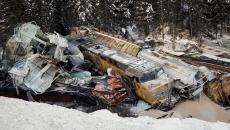
RCMP start criminal probe in B.C. train derailment

RCMP start criminal probe in B.C. train derailment
Sgt. Janelle Shoihet says the probe comes after a preliminary review of the incident near Field, B.C., that killed three rail company employees

RCMP start criminal probe in B.C. train derailment

B.C. budget deficit forecast to hit $13.6 billion

B.C. budget deficit forecast to hit $13.6 billion
In February, the government projected a budget surplus of $227 million for 2020-21 but that was before the impact of the COVID-19 pandemic.

B.C. budget deficit forecast to hit $13.6 billion

Groups warn of CERB clawbacks on vulnerable youth

Groups warn of CERB clawbacks on vulnerable youth
They are now among the 441,000 people who have received letters from the Canada Revenue Agency questioning their eligibility for the CERB, and warning they may owe back some of the payments.

Groups warn of CERB clawbacks on vulnerable youth

Surrey RCMP recover stolen bank and ID cards

Surrey RCMP recover stolen bank and ID cards
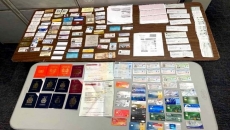
Shortly after 8 a.m. on December 8, 2020, Surrey RCMP responded to the theft of a vehicle from a residence in the 17200-block of 57 Avenue. The stolen vehicle had the owner’s credit card inside which was fraudulently used soon after it was stolen, at a business near 168 Street and 60 Avenue.

Surrey RCMP recover stolen bank and ID cards

B.C. mom who gave birth in coma able to meet son

B.C. mom who gave birth in coma able to meet son
Gillian McIntosh was given an emergency C-section after arriving at a hospital in Abbotsford, B.C., with COVID-19 symptoms in November.

B.C. mom who gave birth in coma able to meet son

B.C. sets new emissions goal to catch up on target

B.C. sets new emissions goal to catch up on target
The new emissions target requires greenhouse gases in B.C. to fall 16 per cent below 2007 levels within the next five years.

B.C. sets new emissions goal to catch up on target