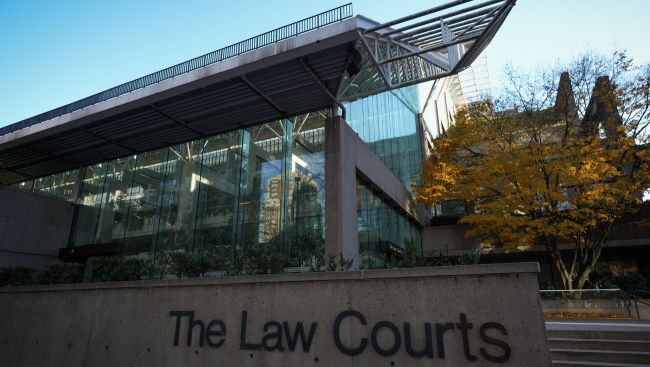
The B.C. Supreme Court has given the Canadian government until April 2026 to change the Indian Act to bring it into compliance with the Charter of Rights and Freedoms after a successful legal challenge by descendants of people who renounced their status under the law.
The court ruled that provisions of the act that denied status to people with a "family history of enfranchisement," where their parents or grandparents gave up their status and the benefits it entails, infringed upon the plaintiffs' Charter rights.
The ruling says the Canadian government agreed with the plaintiffs that the registration provisions of the act perpetuated "disadvantage, stereotyping, prejudice and discrimination" tied to enfranchisement by denying people the benefits of Indian status due to their family history.
Lawyer Ryan Beaton says the ruling comes eight years after he first met one of the plaintiffs, Sharon Nicholas, whose grandfather gave up his status in 1944 to spare his children from going to residential schools.
Beaton says when people like Nicholas' grandfather became enfranchised, their children also lost their status, and she had been working for decades on the issue before challenging it in court.
Beaton says a related class-action lawsuit filed this month in Federal Court is seeking damages from the Canadian government over lost benefits related to the denial of status under the law, and the class is estimated to include between 5,000 and 10,000 people.
He says the ruling has been "incredibly gratifying" for Nicholas.
"So for her it's been, you know, a 40-year journey to get to this point. She's an incredible person," Beaton said. "She came in with a whole lot of research. She taught me a lot about not just her family's history but the way the Indian Act registration provisions have affected her family."
He says the case was somewhat unusual because the Canadian government admitted that the law as written wasn't in line with the Charter, sparing the plaintiffs a trial after they originally filed their lawsuit in 2021.
Beaton says there were many reasons people gave up their status, but the law meant their descendants lost out on benefits such as treaty settlement funds doled out to First Nations members.
"In those days, if you were Indian, you could not vote, you could not own certain forms of property, your kids had to go to residential school," he said. "So to get out from those disadvantages, some people chose to renounce their Indian status."
He says Parliament had attempted to fix the law in the past, but it didn't succeed. The plaintiffs have "to get the change through the courts if it's not coming through Parliament," he said.
The court gave Parliament until April 2026 to bring the act into compliance with the Charter, which could be a "legislative solution" that will apply across the country rather than just within B.C., Beaton said.
Picture Courtesy: THE CANADIAN PRESS/Darryl Dyck