British Columbia has detected 44 cases of the fast-spreading COVID-19 variant Omicron, with more than half of the cases identified in the Fraser Health region.
The cases are included in new infection modelling released today that also shows overall COVID-19 cases rising on Vancouver Island, driven by outbreaks at the University of Victoria and a religious gathering in the northern part of the island.
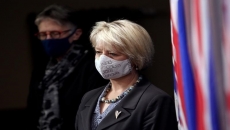
Join Adrian Dix, Minister of Health, and Dr. Bonnie Henry, BC's provincial health officer, for an update on COVID-19 and the Province's latest epidemiological modelling. #CovidBC https://t.co/gQAY7Z7Tlj
— BC Government News (@BCGovNews) December 14, 2021
Data from November and December across B.C. show that unvaccinated people are seven times more likely than those with two doses of a vaccine to contract COVID-19.
The unvaccinated are also 30 times more likely to be hospitalized and 50 times more likely to need critical care.
Those who have tested positive for Omicron are between the ages of five and 72 and none have been hospitalized.
The Health Ministry says 20 of those infected recently travelled to Nigeria, South Africa, Zimbabwe, Egypt, Iran, Mexico, Germany, Portugal or the United States.
British Columbia health officials are recommending against large holiday parties with COVID-19 cases poised to rise because of the quick-moving Omicron variant, but the threat still won't prompt the rollout of free at-home rapid tests before January.
Provincial health officer Dr. Bonnie Henry said B.C. ordered a different type of rapid test than provinces that are distributing tests in time for the holidays.
B.C.'s at-home test delivery has been delayed, she said.
The bulk of rapid tests that B.C. already has on hand — about 1.3 million — must be administered by a medical professional using a special machine. The remainder is being distributed strategically due to limited supply.
"Our testing strategy has been different from those used in other provinces all along," Henry said, adding B.C. has been focused on "making sure we get the right person the right test at the right time."
Henry made the comment as several provinces announced new restrictions to slow Omicron's spread. Ontario is limiting visits to long-term care homes, and Quebec ordered many civil servants home, recommending employers prioritize remote work, effective immediately. Prince Edward Island, meanwhile, imposed limits on private indoor gatherings.
New modelling shows B.C. is in a more stable COVID-19 situation than provinces like Ontario and Quebec, where new daily cases are above 1,000.
The models show a steady decrease in case counts in B.C. over the last several months, decreasing hospitalizations and low death rates thanks to high vaccination rates, Henry said.
However, overall case counts have begun to level off and Henry urged vigilance, given many unknowns about the Omicron variant.
"We are on a path that has been slowly going down but now is levelling off and can become worrisome," Henry said.
Those who have tested positive are between the ages of five and 72. None have been hospitalized and all but seven were vaccinated, she said.
"It is important to know that we have transmission in the community now and we are learning more and more from the global community about what that means and what are the measures we need to think about to get us through this period," Henry said.
Under worst-case scenario modelled by the government, B.C. could see more than 2,000 daily cases by the end of the month. That figure would see hospitalizations rise to the previous daily maximum last spring, threatening to overwhelm health facilities.
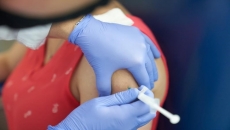
One year ago Wednesday, the B.C. government delivered its first vaccine shot and since then more than 4.2 million residents have been vaccinated.
As of Tuesday, 82.4 per cent of eligible British Columbians five and older had received two doses of the vaccine.
B.C. reported 519 new cases of COVID-19 and 3,171 active cases.
There are 191 people in hospital, of whom 81 are in intensive care.
No new deaths were reported, leaving the death toll at 2,386.
Henry said British Columbia is in different place than it was last Christmas, because of high vaccination rates, rolling booster shots and a vaccine card program.
Instead of announcing new public health orders, she encouraged people to keep holiday gatherings to close friends and family, rather than parties with strangers of unknown vaccination status. Other measures like mask mandates, ventilation and physical distancing remain important, she added.
"We need to be thoughtful about how we approach these holidays and more than ever need to be prudent," she said.
The modelling also showed case increases on Vancouver Island, which has managed a relatively low case count for much of the pandemic.
The new cases are driven by outbreaks at the University of Victoria and a religious gathering in the northern part of the island.
There have been 124 cases reported at the university. Most transmission occurred at off-campus parties and four Omicron cases were confirmed on the rugby team after a game at Queen's University, Henry said.
In addition to the rapid tests that must be administered by health professionals, Henry said the province has about 700,000 rapid tests that can be administered at home.
However, they are in packs of 25 or 35 that must be broken up, unlike the five-packs being shared in other jurisdictions. About 10,000 of the tests will be sent to the university, she said.
Vaccinations remain one of the greatest guards against serious infection, Henry added.