

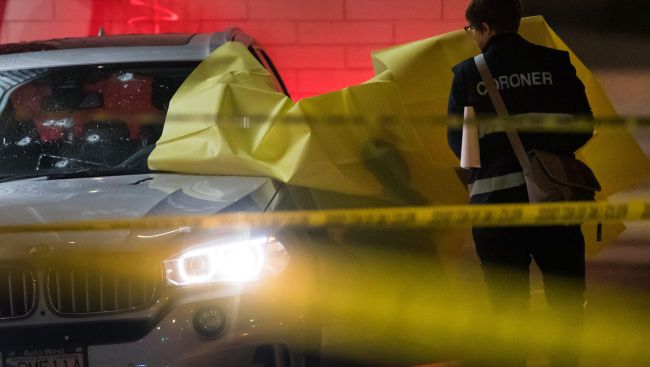
They work on gruesome scenes of death, sometimes traversing rough terrain to access bodies in various states of decomposition.
British Columbia field coroner Leena Chandi said the things that she and her colleagues encounter "are not what most people see, and nobody should have to see that."
"But somebody has to do the job, and somebody has to care about that person."
Yet field coroners say they are among the most underpaid workers in the province's emergency services sector, receiving just over $32 an hour as they work on scenes that can be risky and stressful.
And while field coroners work on call they are not paid for their time waiting to be sent to a scene of death.
The province's field coroners are now hoping to improve their situation, sending a letter to their bosses and members of the legislature in an "urgent" plea for an increase in pay that they say has stagnated for nearly a decade.
The letter, obtained by The Canadian Press, says field coroners — who differ from full-time investigative coroners — haven't had a wage increase since 2016 and high inflation and the rising cost of living make the job unsustainable.
"The financial strain imposed on field coroners by the failure to update wages has led to recruitment and retention challenges," the letter says.
"Many experienced professionals are forced to leave the role in search of more sustainable employment, leading to service gaps in our communities."
The coroners service says it investigates "unnatural, sudden and unexpected, unexplained or unattended deaths."
It says coroners determine the identity of a deceased person; when, where and how they died; and how the death should be classified — for example, whether it is natural, accidental or homicide.
Chandi said she joined the service last fall, banking on a background in insurance fraud investigations, and she and a group of around 10 colleagues have endorsed the letter's call to urgently increase field coroner pay.
Chandi, who lives in Surrey, B.C., said in an interview that the letter was distributed to upper management, including Chief Coroner Dr. Jatinder Baidwan, but so far there's been no response or official acknowledgment of their concerns.
She said she has a co-worker who is a single mother who "can barely pay her rent."
The BC Coroners Service said in a statement that it is working with the Public Safety Ministry to determine the best path forward in addressing compensation for field coroners.
"This work reflects our shared commitment to supporting those who serve in this essential role. Finding a resolution to this matter remains a priority," the statement said.
The coroners service website says there are approximately 50 full-time investigative coroners and around 85 so-called community coroners, also known as field coroners, whose part-time positions are paid according to hours worked.
The letter says there's a "glaring inequity" between how investigative coroners and field coroners are paid, despite the risks faced by the latter who attend calls when people have died.
It says investigative coroners have had consistent pay raises in the last few years, and they "work in hybrid, work-from-home positions with no exposure to hazardous environments."
"This means investigative coroners, who do not face the same risks or responsibilities as field coroners, earn significantly higher wages, along with pensions and benefits," the letter says. "In contrast, field coroners continue to put themselves in high-stress, high-risk situations without fair compensation or basic job protections."
It noted that field coroners work on call but are not paid for wait time.
"We are expected to be available round-the-clock, often waiting for extended periods before being dispatched, without any remuneration for our readiness. This practice is fundamentally unfair and does not align with the standards set for emergency service professionals," the letter says.
"On-call compensation must be introduced to recognize the time commitment and sacrifice required of field coroners."
Tom Grantham joined the service as a field coroner in 2016, and his territory includes 100 Mile House and Clinton, B.C.
Grantham said he believes the job is an important community service, and he signed on with that mindset, and fulfilled it by working with families in times of grief after the death of a loved one.
But he said the lack of pay, especially for on-call time, makes it hard to keep qualified and well-trained investigators on the job.
He's on-call 24 hours a day, seven days a week, and when he's unavailable, he has to find his own replacement, Grantham said.
"If I want to go to somebody's birthday party and have a beer, then it is my responsibility to find another field corner who will take over my area," he said.
Grantham said a similar situation used to exist with ambulance attendants in the province, who weren't paid between calls until they were eventually given so-called standby pay.
"That's something that we don't have," he said.
Both Grantham and Chandi said they enjoy a level of relative security compared with some of their colleagues who may be "nervous" about going public with their concerns.
They said coroners are mostly unseen and the role they play in emergency services is misunderstood.
"The public has no idea what goes on," Grantham said. "They might watch television a little bit, kind of think of what a coroner is, but unless somebody dies within the family, they never get to meet or see or talk to a coroner. Maybe it's time that it was brought a little bit more out there."
Picture Courtesy: THE CANADIAN PRESS/Darryl Dyck


