
Wednesday, December 10, 2025
ADVT 
National

B.C. finance minister describes Tuesday's budget as nothing 'splashy and new'

Darpan News Desk The Canadian Press, 05 Mar, 2025 02:17 PM
  • B.C. finance minister describes Tuesday's budget as nothing 'splashy and new'

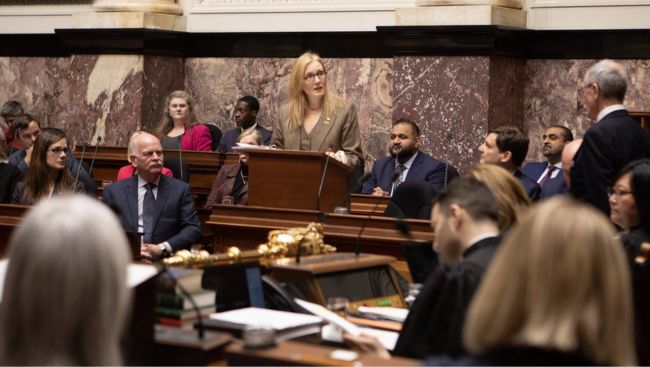
British Columbia Finance Minister Brenda Bailey says her inaugural budget was "very measured" rather than "splashy and new," in the early days of a trade war with the United States.

Bailey told members of the Greater Victoria Chamber of Commerce today that the budget drives economic growth by working to "unstick" things such as project development by cutting red tape to speed up the permit process.

Victoria Chamber of Commerce CEO Bruce Williams says he is pleased with the minister's pro-business approach but is concerned about the province's large debt.

Williams calls the budget "low key" and says the government isn't taking "a lot of chances on anything" during this disruptive time.

Jeff Bray, CEO of the Downtown Victoria Business Association, attended Bailey's speech and says the budget doesn't support growth for small to medium-sized businesses, the main source of B.C.'s economic activity and employment. 

Bray says he's also disappointed that the government isn't making "strong and immediate" investments in mental health and addictions, issues that are affecting Victoria businesses.

This was Bailey's first public appearance after tabling the budget on the same day U.S. President Donald Trump imposed 25 per cent tariffs on Canadian goods.

Her budget forecasts a record deficit of about $10.9 billion in the next fiscal year starting April 1, while promising an insurance rebate for drivers of $110, and increases to both supports for families under the Rental Assistance Program and for elderly renters relying on the Shelter Aid for Elderly Renters program.

The budget comes with $4 billion in annual contingencies for each of the next three years to cover what Bailey called “unpredictable costs," including the province's response to the tariffs.

As industry and advocates get a look at the books, some are raising concerns about what was included and what was left out.

The Independent Contractors and Businesses Association calls the budget out-of-touch and says the deficit, rising debt, and trade war will have dire consequences for the economy and the construction industry.

The BC Council of Forest Industries says it is disappointed by the absence of dedicated support for the forestry sector, which will be particularly hard hit by the new tariffs at a time when the industry is already facing significant challenge amid the ongoing softwood lumber dispute.

Bailey told reporters on Tuesday that the budget will focus on education and health care, while also boosting a “self-sufficient economy.”

The Business Council of B.C. says it's concerned about "the ongoing deterioration in B.C.’s public finances" and what it considers the absence of a credible path to restore fiscal sustainability.

B.C.'s taxpayer-supported debt is projected to be $97.7 billion at the end of 2024-25, approximately $9.1 billion more than was projected in the budget from the previous year.

The deficit is expected to decrease to $9.9 billion by 2027-28.

MORE National ARTICLES

Poilievre says Canadian counter-tariffs should go to fund tax cuts

Poilievre says Canadian counter-tariffs should go to fund tax cuts
Conservative Leader Pierre Poilievre says Canada needs to retaliate against American tariffs by targeting U.S. goods Canada can make, does not need or can obtain elsewhere. Poilievre says Canada needs to cut taxes to counteract the domestic impact of tariffs and points to the carbon price, the capital gains tax and income tax.

Poilievre says Canadian counter-tariffs should go to fund tax cuts

Canadians say they will stop buying U.S. products as Trump’s tariffs take effect

Canadians say they will stop buying U.S. products as Trump’s tariffs take effect
Canadians say they are ready to use their wallets to fight the trade war with the United States, which began today as President Donald Trump imposed 25 per cent tariffs on Canadian goods. Haligonians interviewed today said they are focused on buying Canadian whenever possible, and many said they had already stopped purchasing American products, as Trump had been threatening tariffs for months.

Canadians say they will stop buying U.S. products as Trump’s tariffs take effect

How Canadians are reacting to Donald Trump's tariffs

How Canadians are reacting to Donald Trump's tariffs
Canada is immediately imposing 25 per cent retaliatory tariffs on $30 billion worth of American products, and will expand that to cover another $125 billion in U.S. goods in 21 days. Here’s how political, business and union leaders reacted Tuesday.

How Canadians are reacting to Donald Trump's tariffs

The trade war is on between Canada and the U.S. Here's what you need to know

The trade war is on between Canada and the U.S. Here's what you need to know
A trade war between Canada and its largest trading partner has begun, with tariffs imposed by U.S. President Donald Trump now in effect and Prime Minister Justin Trudeau responding with a package of retaliatory tariffs. Stocks are tumbling, businesses are warning of impending layoffs and further measures from both countries are likely in the coming days.

The trade war is on between Canada and the U.S. Here's what you need to know

Key dates in the Canada-U.S. trade dispute as Trump launches trade war

Key dates in the Canada-U.S. trade dispute as Trump launches trade war
Canada has responded with retaliatory tariffs, and markets are falling as investors brace for the economic impact that the duties will have on economies on both sides of the border.  Canadians confused about Trump's plans aren't alone, with the U.S. president at times contradicting himself about his own tariff plans.

Key dates in the Canada-U.S. trade dispute as Trump launches trade war

As Trump's trade war begins, his team links his tariff agenda to drug trafficking

As Trump's trade war begins, his team links his tariff agenda to drug trafficking
As market turbulence rattled some Washington lawmakers, U.S. President Donald Trump's closest advisers fanned out to TV news programs Tuesday to claim a link between economywide tariffs on Canada and Mexico and fentanyl trafficking. The president's executive order hitting Canada and Mexico with 25 per cent across-the-board tariffs, with a lower 10 per cent levy on Canadian energy, took effect Tuesday.

As Trump's trade war begins, his team links his tariff agenda to drug trafficking