British Columbia has become the fourth province to identify its first case of the COVID-19 Omicron variant.
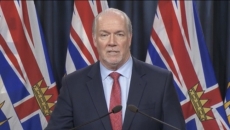
Provincial health officer Dr. Bonnie Henry says the affected person recently returned from Nigeria and lives in an area covered by the Fraser Health authority.
Dr. Henry says 204 people who recently returned from parts of southern African with outbreaks of the variant are undergoing testing while in quarantine.
Dr. Henry adds it will take weeks to understand Omicron as it is causing more severe disease and this strain is more transmissible that ones we've seen so far as it evades vaccines and is worse than the Delta variant.
Join Adrian Dix, Minister of Health and Dr. Bonnie Henry, BC’s provincial health officer for an update on COVID-19. #CovidBC https://t.co/T2Zw2nMxOK
— BC Government News (@BCGovNews) November 30, 2021
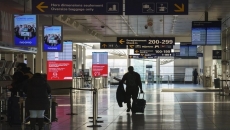
The federal government has announced that all air travellers, except those coming from the United States, will now be tested for COVID-19 when they arrive at Canadian airports, regardless of their vaccination status.
The Omicron variant has also been found in Ontario, Quebec and Alberta.
lberta and British Columbia are reporting their first cases of the Omicron COVID-19 variant that has now been detected in four Canadian provinces.
Dr. Deena Hinshaw, Alberta's chief medical health officer, said the province's case was confirmed in a traveller returning from Nigeria and the Netherlands.
"The individual tested positive while asymptomatic. I can confirm that this individual has not left quarantine since their arrival from international travel," Hinshaw said Tuesday at a news conference in Edmonton.
"We have notified the individual and their household and all necessary measures are in place to prevent transmission."
The variant of concern was first identified in South Africa after a spike in infections, but it is unclear where Omicron first emerged. Preliminary evidence suggests the new variant transmits more easily.
Ontario reported its earliest cases on Sunday and Quebec its first case on Monday.
The World Health Organization, which designated Omicron as a variant of concern last week, stated it has a "large number of mutations, some of which are concerning."
Also Tuesday, Egypt, Malawi and Nigeria were added to Canada's border closure list, which already included bans on foreign nationals from seven southern African countries, to protect against Omicron.
Several other countries have enacted similar travel bans, despite the WHO urging countries to avoid these restrictions because they "place a heavy burden on lives and livelihoods."
Hinshaw said Alberta is ready to deal with the new variant.
"While it is important that we all continue to be vigilant in the face of COVID-19 to protect ourselves and others, I don't want Albertans to be alarmed," said Hinshaw, who added that the arrival of Omicron was anticipated based on the emergence of previous strains of COVID-19.
"We are well prepared for this eventuality and have the necessary tools in place to monitor this case and any potential spread of the variant."
The goal is to delay the spread of Omicron as more information on the variant becomes available, Hinshaw said.
All Western provinces are monitoring for the variant. Manitoba and Saskatchewan have yet to record any positive cases.
Henry announced new restrictions for faith services heading into the Christmas holiday season with people attending and participating in those services, such as choir members, required to wear masks unless physical distancing is in place, while capacity will also be limited to 50 per cent unless every attendee is vaccinated.
Earlier Tuesday, the B.C. government said more than 98 per cent of public service workers meet provincial proof-of-vaccination requirements.
The Public Service Agency said in a statement 432 employees either are unvaccinated or declined to disclose their status before a Nov. 22 deadline for them to be either partially or fully vaccinated. It says 97 per cent of the more than 38,000 government workers are fully vaccinated, 439 people are partially vaccinated and another 274 workers have asked for accommodation based on medical or other reasons.
Employees who are unvaccinated, refuse to disclose their status, or who are partially vaccinated and don't get their second dose within 35 days of their first dose will be placed on unpaid leave for three months, the agency added.
Employees who do not show proof of full vaccination after the three-month unpaid leave may be terminated.
The policy applies to all employees who work for the B.C. public service and includes those on boards, commissions, agencies or any organization where the Public Service Act applies.