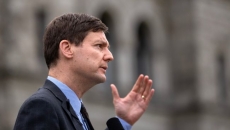
Relations between the British Columbia government and First Nations plunged this year as Premier David Eby grappled with how or whether to amend the Declaration on the Rights of Indigenous Peoples Act, which he once championed.
The province is also engaged in two high-profile appeals against court rulings that sided with First Nations, while a debate rages over their impact on property rights, development and the legislative landscape in B.C.
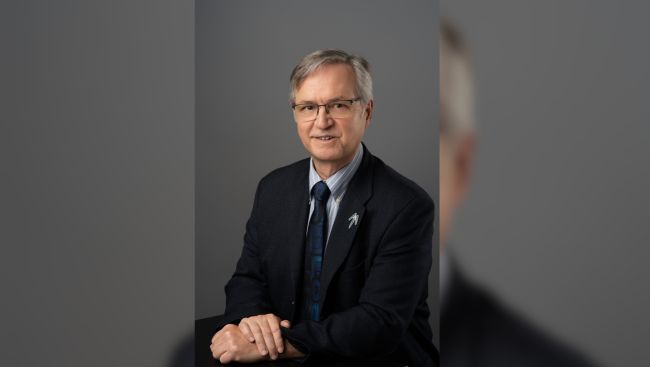
As George Abbott takes over as head of the BC Treaty Commission, would he prefer congratulations or condolences?
Abbott, a former BC Liberal minister for Aboriginal relations and reconciliation, said in an interview that he was "very much honoured" by his new role, facilitating treaties with First Nations in the province.
"I think it's a really important position at a remarkably interesting and challenging time in our history of Indigenous relations," said the new chief commissioner.
Abbott began a three-year-term in April, replacing Celeste Haldane, who was appointed in 2017.
In addition to the difficulties presented by the current reconciliation landscape, Abbott also faces the task of speeding up the process of treaty-making that can take decades.
Abbott has written extensively on the subject, and had been a treaty commissioner since 2025.
First elected as a legislator in 1996, he also served as health and education minister.
His appointment as treaty commissioner comes amid intense focus on the reconciliation arena after the recent court rulings.
First was the Cowichan Tribes decision in the B.C. Supreme Court last August, which held that sections of the Land Title Act establishing fee-simple title as "indefeasible" do not apply to the "senior interest" of Aboriginal title.
Then, in December, the B.C. Court of Appeal approved a challenge by the Gitxaala and Ehattesaht First Nations to B.C.'s mineral tenure system, giving "immediate legal effect" to the United Nations Declaration on the Rights of Indigenous Peoples, or UNDRIP. The judges said the province's Declaration on the Rights of Indigenous Peoples Act should be "properly interpreted" to incorporate UNDRIP into B.C. law, and that UNDRIP and the province's mineral claims regime are "inconsistent."
Both cases are still working their way through the court system, with the mineral tenure case now heading to the Supreme Court of Canada.
The rulings have also transformed provincial politics, amplifying critics' concerns about private property rights and Indigenous rights, and prompting demands to repeal DRIPA.
Many First Nations have made it clear they will not accept a rollback of DRIPA, something made apparent when they forced Eby to back down and put the matter back to consultation last month.
The controversies coincide with implementation of legislation for separate treaties for the K'omoks First Nation and the Kitselas First Nation, introduced last month on consecutive days after years of negotiation.
Abbott said it was "a remarkably interesting time for treaties to come to fruition and come before the legislature," and said the Cowichan ruling has "upset some people and again pushed Indigenous relations issues into a pretty harsh light."
But he warned against conflating the process of treaty-making with UNDRIP and DRIPA.
"There is a reference to UNDRIP in the treaties, but DRIPA is never mentioned in the treaties," he said. "UNDRIP is in there as an interpretive tool. It is not a binding issue for any party, whether it is the treaty nation or those around them."
These treaties, he added, will be beneficial for all parties.
"Despite the fraught context in which the treaties are moving forward, these are very thoughtful documents, which will bring certainty in a whole bunch of ways, where it doesn't exist today, because of the absence of treaties in the area," he said.
Not everybody agrees with Abbott's optimistic assessment. The Wei Wai Kum First Nation on Vancouver Island has challenged the K'omoks treaty, while a coalition of the Lax Kw'alaams and Nine Allied Tribes is opposed to the Kitselas treaty.
The opposing parties say the proposed treaties would encroach on their traditional territories, and have threatened actions, if the bills advance through the ratification process.
Supporting legislation for the treaties is expected to be passed by the B.C. legislature this week and they still must be considered by the Parliament of Canada. Abbott disagreed with the idea that the treaties were being rushed.
"It's taken over 30 years for both of the current treaties to be completed, and we don't want to make them wait years longer for the agreement," Abbott said. "But we want to work with the parties to try to find resolution to the concerns that have been raised."
Even setting aside the current "fraught context" the role of treaty commissioner has long faced profound hurdles.
History can be blamed for that.
Unlike the rest of modern-day Canada, much of B.C. remains unceded in the sense that it lacks treaties with First Nations. The main exception is B.C.'s northeast corner, covered by Treaty 8, signed in 1899.
The first modern agreement in B.C., the Nisga'a Treaty, was not signed until 1997 after a seven-year process, coming into effect in 2000.
The Treaty Commission is responsible for facilitating treaty negotiations between Canada, B.C. and participating First Nations. It does not negotiate treaties per se; rather, it facilitates discussion between willing partners.
Eight modern treaties have been signed, and with the K'omoks and Kitselas treaties currently before the legislature, and another set to be tabled later this year, that number could rise to 11 within few years, Abbott said.
Yet there are more than 200 recognized First Nations in B.C., many with overlapping territorial and economic claims.
How can the process of codifying their territorial rights be sped up, and scaled up?
Abbott said the treaty commission can also help facilitate non-treaty arrangements.
The commission, he said, wants to help First Nations move forward economically and socially, treaty or not. "We are happy to do that in any form of agreement, whether it's treaty or other agreement."
He also said up to 11 more First Nations could be signing treaties after the current round of treaty-making concludes, with things at a "very promising" stage.
Abbott, who describes himself as a "process nerd," said one of his goals is to examine every aspect of the treaty making process.
"We want to think about every way in which we can expedite and support treaties move forward in something less than over a generation," he said.
He said it was sad and unfortunate that some nations have had to wait over 30 years.
"In short, an entire generation has moved from infancy well into adulthood before a treaty has been completed," he said. "It means that an entire generation and a little bit more has been deprived of the opportunities and benefits that came with (treaties), because the process was so lengthy."
Picture Courtesy: THE CANADIAN PRESS/Handout — George Abbott