Monday, December 22, 2025
ADVT 
National

B.C. moves up zero-emission vehicle target, with 100-per-cent sales goal by 2035

Darpan News Desk The Canadian Press, 25 Oct, 2023 11:14 AM
  • B.C. moves up zero-emission vehicle target, with 100-per-cent sales goal by 2035

The British Columbia government is taking steps to accelerate the transition to zero-emission vehicles to meet its 100-per-cent sales target five years sooner than initially planned.

If passed, the legislation to amend the Zero-Emission Vehicles Act would increase access and choice for electric vehicle buyers, as new provincial funding expands the charging network, a statement from the Energy Ministry said.

B.C. would require all new light-duty vehicles sold in the province, including passenger cars and trucks, to be emission-free by 2035, it said, five years before the initial goal of 2040.

The accelerated timeline would mandate automakers to meet an escalating annual percentage for light-duty zero-emission vehicle sales and leases, with targets of 26 per cent by 2026, 90 per cent by 2030 and 100 per cent by 2035.

A statement from Energy Minister Josie Osborne said the province is the "first in the world" to put an EV sales target into law, and the proposed amendments would make it easier for people purchasing their next vehicle to choose electric.

After the announcement of the new timeline, the New Car Dealers Association of BC issued a news release encouraging the province to take a more flexible approach, saying its rules may have unintended consequences that could slow the adoption of clean energy vehicles.

It noted the legislation means automakers face the prospect of a significant penalty for every non-zero-emission vehicle sold beyond the allowable limits. Combined with reduced inventory, this could drive up the price of all vehicles, both new and used, it said.

Association president Blair Qualey said post-pandemic supply issues are still affecting the industry, that the province lacks an adequate charging network, particularly in B.C.'s Interior and the north, and zero-emission vehicles remain relatively unaffordable, even with incentives.

"By building flexibility into the regulatory regime and penalty structure, we stand a better chance of collectively meeting the kind of success we all want, and in doing so creating a cleaner, greener future for all British Columbians," he said in Tuesday's news release.

The province said it has consistently exceeded sales targets for zero-emission vehicles since the act was first passed in 2019.

It said B.C. has the highest percentage of electric vehicle sales in Canada this year, making up nearly 21 per cent of all light-duty passenger vehicles sold.

The province also announced Tuesday that B.C. has "recharged" its Go Electric EV Charger Rebate Program with $7 million in new funding.

The program operates on a first-come, first-served basis, providing funding for homes, workplaces and multi-unit residential buildings needing to install electric vehicle charging infrastructure. 

EV charger rebate applications for single-family homes and workplaces reopened on Tuesday.

MORE National ARTICLES

Man dies in Hope shooting

Man dies in Hope shooting
The province's homicide investigation team has been called in after a man was fatally shot in Hope. R-C-M-P say they were called just before 3 a.m. on Sunday and found a 28-year-old man who had been shot and killed.

Man dies in Hope shooting

Ottawa 'shouldn't walk around with a stick' to enforce health deals: Holland

Ottawa 'shouldn't walk around with a stick' to enforce health deals: Holland
Newly appointed Health Minister Mark Holland says he doesn't want to go waving a stick around as he negotiates the final details of a health accord with provinces and territories, and it'll largely be up to Canadians to hold them accountable. All provinces except Quebec accepted the $198-billion deal in principle earlier this year and are expected to sign final agreements before the end of 2023.

Ottawa 'shouldn't walk around with a stick' to enforce health deals: Holland

PharmaCare covers medicine to treat rare diseases

PharmaCare covers medicine to treat rare diseases
The province says its PharmaCare program now covers medications used to treat rare diseases such as A-L-S. The Ministry of Health says the oral form of edaravone, which is used to treat A-L-S patients, will be added to the PharmaCare formulary as a limited-coverage benefit.

PharmaCare covers medicine to treat rare diseases

Shortage of diabetes and weight loss drug Ozempic expected in Canada: manufacturer

Shortage of diabetes and weight loss drug Ozempic expected in Canada: manufacturer
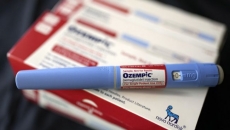
A shortage of diabetes drug Ozempic that is used off-label for weight loss is expected in Canada, the manufacturer says. Health Canada says intermittent shortages are expected from late August to early October.  

Shortage of diabetes and weight loss drug Ozempic expected in Canada: manufacturer

Feds could spur rental construction with tax incentives, financing: experts

Feds could spur rental construction with tax incentives, financing: experts
Strong demand for rentals and a shortage of homes are both contributing to soaring rental costs. And that's making it even more difficult for people to save money for down payment on a home. For most minimum-wage workers, affording these rents with their earnings is impossible. 

Feds could spur rental construction with tax incentives, financing: experts

Home prices in Canada continue to rise

Home prices in Canada continue to rise
Home prices in Canada continued to rise last month, the fourth consecutive monthly increase. Eight of the 11 markets in the composite index were up in July led by Halifax at 4.9 per cent, Vancouver at 3.9 per cent and Toronto at 3.5 per cent.

Home prices in Canada continue to rise