British Columbia Premier David Eby is considering amendments that would weaken the province's Declaration on the Rights of Indigenous Peoples Act, after two recent court decisions siding with First Nations under the law's current wording.
Amendments proposed in a confidential letter and document sent to some First Nations leaders in B.C. on Monday say the government is looking to change the wording to promise "ongoing processes" to align "select" legislation with the bill, known as DRIPA.
The current wording of the "Purpose of the Act" section says it is "to affirm the application of the Declaration to the laws of British Columbia."
First Nations leaders, along with more than 130 civil society organizations including the B.C. Federation of Labour, have called on Eby to leave the bill alone.
The bill, passed in 2019, also currently says B.C. "must take all measures" to align the rights of Indigenous Peoples with existing provincial legislation.
The proposed changes to that clause -- outlined in the documents, which have been seen by The Canadian Press -- instead say the provincial government will work toward aligning specific laws "identified as priorities."
They continue that the province "may prepare a new action plan" for implementing DRIPA "at any time."
DRIPA is based on the United Nations Declaration on the Rights of Indigenous Peoples, which requires free, prior and informed consent from Indigenous Peoples on matters affecting their rights, lands, territories and resources.
The federal government has similarly adopted the UN principle and is working toward its implementation, though its view is it does not constitute a veto on development.
Eby told reporters last week his government was trying its best to work with chiefs across the province to address concerns about the two court decisions, which both cited DRIPA and sided with First Nations on mining and property rights. The provincial government has said that wasn't the intention of the law.
One found the provincial mineral claims regime is “inconsistent” with DRIPA, and another recognized the Cowichan Tribes' Aboriginal title on land along the Fraser River, with titles held by Canada and the City of Richmond deemed "defective and invalid."
In response to the mineral claims case, Eby has said it's "crucial that it is British Columbians through their elected representatives that remain in control of this process, not the courts."
"Too much rides on it in terms of our province’s prosperity and certainty going forward."
Attorney General Niki Sharma said in a statement on Tuesday that reconciliation "must be grounded in government‑to‑government relationships between the provincial, federal and First Nations governments."
"That’s why we are moving to amend the Declaration Act to make this intent absolutely clear," she said.
She said the mineral claims case, known as the Gitxaala decision, "has led to legal uncertainty and increased the role of the courts in deciding how our laws should be aligned with UNDRIP at the expense of the role of democratically elected governments."
Officials from the premier's office, who spoke at a background briefing on condition of anonymity, said the documents represent only a part of the larger consultation process.
They said the government remains committed to aligning laws to DRIPA and working in partnership with First Nations.
If the amendments are passed, it could complicate relationships between Indigenous Peoples and Eby's government as it looks to get major projects built to boost its economy in the face of trade threats from the United States.
Eby has been facing growing questions over the future of the legislation, and has been criticized over the process in which changes are being discussed.
The proposed changes have remained out of the public eye.
The letter sent to First Nations leaders on Monday, which included a link to a document with details of the proposed amendments, said it was "subject to cabinet confidence" and was shared under a confidentiality agreement, which some leaders agreed to in order to allow for consultations.
Some First Nations leaders have told media they have yet to see the proposed amendments themselves, despite signing the confidentiality agreement.
The province is scheduled to host a briefing about the proposed changes with First Nations leaders on Wednesday, and those leaders are asked to provide feedback by 4 p.m. Friday.
A one-hour meeting for those leaders has also been set for April 1 with Eby, Sharma and Spencer Chandra Herbert, the minister of Indigenous relations and reconciliation.
The letter says the government is open to changes and acknowledges the "compressed timelines."
The government document shows the existing wording of some sections of the law crossed out, with the proposed text of the changes underneath for First Nations leaders to review.
The proposed changes to the "Purpose of the Act" section say the government will "provide for the ongoing processes of the government working, in consultation and co-operation with the Indigenous peoples in British Columbia, towards aligning enactments with the declaration."
First Nations have said they do not support any changes to the legislation, while some B.C. Conservative MLAs have called for the law to be scrapped altogether.
The Union of B.C. Indian Chiefs, which advocates on behalf of more than 100 First Nations in the province, passed a resolution in February calling on the government to publicly commit to keeping the law as is currently written.
Terry Teegee, regional chief of the British Columbia Assembly of First Nations, said the process to change the legislation is "problematic" as First Nations are being asked to adhere to compressed timelines, and that the provincial government may be opening itself up to further court challenges if they change the legislation.
He also said non-disclosure agreements required for First Nations leaders to view the documents are essentially gagging those leaders from publicly criticizing the changes.
"There's nothing wrong with DRIPA. As a matter of fact, it did the job it was supposed to do," Teegee said in an interview, referencing DRIPA's use in agreements between First Nations and industry, and on working to give back to First Nations control over their child welfare systems.
"We're kind of going back to the days where many things were confrontational."
The Law Society of British Columbia has decried Eby's intent to change the legislation in response to court rulings.
In a statement released in February, the group said "politicians must take great care when commenting on judicial decisions and must avoid asserting or implying that courts are not properly playing their role." Doing so, the group said, decreases confidence in the justice system.
"The Law Society urges the B.C. government to reconsider making any proposed legislative changes that would limit access to independent courts," its statement reads.
The B.C. Conservative critic for Indigenous relations called the move to keep the proposed amendments confidential "unprofessional and undemocratic."
"First Nations are not happy," Scott McInnis told The Canadian Press.
"The public feels completely left out in the dark. The official Opposition has no idea what's going on with any of these proposed amendments," he said, reiterating calls from his party for Eby to scrap the legislation.
BC Green MLA Rob Botterell questioned whether amending DRIPA would have the intended effect.
"This move risks increasing litigation, and eroding the trust DRIPA was built on," he said.
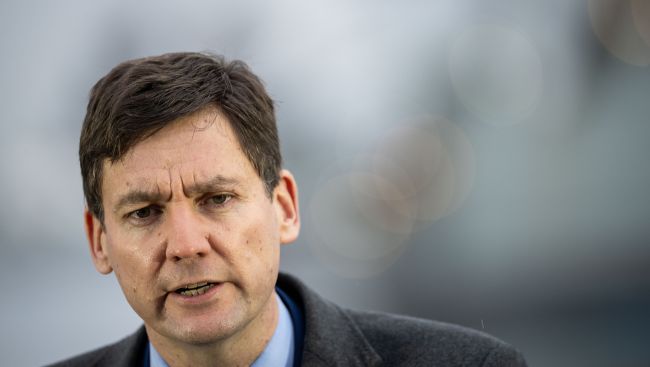
Picture Courtesy: THE CANADIAN PRESS/Ethan Cairns