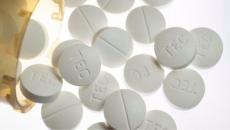
BC Coroners Service data show nearly half the people who died in January due to unregulated toxic drugs had the depressant bromazolam in their system, which researchers say highlights "emerging dangers" in the illicit drug supply even as deaths decline.
The coroners service said Friday that 152 people died of toxic drug overdoses in January, marking four consecutive months that the toll was under 160.
Deaths in B.C. are down more than 30 per cent from January 2024, when there were 219 deaths, part of a broad decline in overdose fatalities across Canada and the United States.
Nearly half of those who died in B.C. in January had bromazolam, a benzodiazepine, in their system. Such drugs reduce the effectiveness of overdose-reversing treatments.
The B.C. Centre for Disease Control says the presence of benzodiazepines in illicit opioids poses a problem because it can be difficult to tell if a person in "prolonged sedation" is suffering severe opioid poisoning, requiring multiple naloxone doses to revive them, or is under the effects of the benzodiazepines.
Both can occur at once, it says in advice to first responders.
The new data reflect research out of the University of Victoria showing how bromazolam emerged in illicit fentanyl samples.
A research paper in the April 2025 issue of the International Journal of Drug Policy highlights findings by the Canadian Institute for Substance Use Research involving the examination of more than 8,000 illicit opioid samples submitted to drug-checking services in Victoria between January 2021 and December 2023.
Researchers detected benzodiazepines in just under half of the samples tested, and the paper cites a "notable shift" to bromazolam from a longer-acting drug, noting that by July 2022, it was "the most common benzodiazepine detected within the opioid supply."
The paper's lead author Pablo González Nieto said in an interview that bromazolam has been present in the illicit supply for several years, and the shift from the other drug, etizolam, was possibly due to changing international regulations.
He said researchers believed that the illicit drug market adapts to shifting international regulations and enforcement, but also said bromazolam was a shorter-acting sedative than etizolam.
"And it was less regulated," he said. "That's why we think the shift happened. Of course, we can't know for sure."
The coroners service said fentanyl and its analogues were found in 77 per cent of tests on those who died in January, followed by methamphetamine, while 46 per cent of those who died had bromazolam in their system.
The coroners service said half of those who died in January were between the ages of 40 and 59, while three were children or youth under the age of 18.
The coroner said while the number of deaths were down overall, the Fraser and Interior health regions saw increases in their overdose toll.
The service said about 46 per cent of the reported deaths occurred in private homes, and investigations showed that 57 per cent of those who died smoked their drugs.
There have recently been declines in drug deaths across North America, with Health Canada reporting a 12 per cent drop from January to September 2024, compared to the same period in 2023.
The U.S. Centers for Disease Control says reported U.S. drug deaths in October 2024 were down more than 25 per cent, year on year.
The Council of Chief Medical Officers of Health in Canada issued a statement last week saying there had been a "small, but welcome decrease" in the number of overdose deaths, hospitalizations, emergency department visits and emergency responder calls nationally in the last nine months.
The statement said many factors are being explored for the cause of the changes, including regional differences in illegal drug markets, changes in substance use patterns, and investments in public health measures and treatment and recovery programs.
It said based on drug samples seized by police, the Drug Analysis Service is reporting changes in the composition of the illicit drug supply.
The samples that contain fentanyl have declined since 2020, but the drug's analogues now appear in a greater proportion than fentanyl itself, suggesting they may be replacing it in the illicit supply, the statement says.
"The presence of benzodiazepines in opioid samples has also declined in 2024, though regional differences persist, with some jurisdictions reporting increases in stimulants and benzodiazepines."
It said that while the continued decreases in deaths from the poisonings are encouraging, numbers and trends are subject to change and should be interpreted with caution.
"National numbers remain well above levels observed prior to the pandemic, and there were 5,626 lives lost to toxic drug use between January and September 2024," the statement says.
González Nieto, who is a research assistant at the Canadian Institute for Substance Use Research working toward his master's degree, said data from drug checking services is vital to understanding the volatile and dangerous nature of the illicit drug supply.
"It's information that we wouldn't have without drug checking at all," he said. "It's sometimes appalling for me to imagine, you know, what we would do without any kind of data that's coming actually from the ground."