Sunday, December 28, 2025
ADVT 
National

B.C.'s low snowpack, early-season melt raise drought concern: province

Darpan News Desk The Canadian Press, 12 May, 2025 01:14 PM
  • B.C.'s low snowpack, early-season melt raise drought concern: province

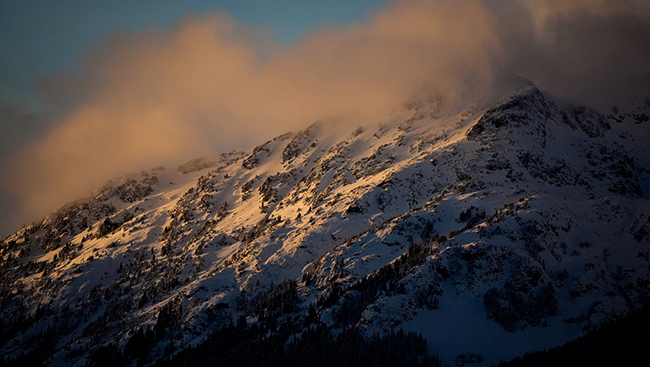
British Columbia's latest snowpack and water supply bulletin says drier, warmer weather last month has contributed to an early melt, raising concern for widespread drought this summer.

By early May, the bulletin says about five per cent of B.C.'s annual snowpack has typically melted, but 15 per cent had melted by the start of this month.

The bulletin from the province says snowpack was an average of 71 per cent of normal as of May 1, decreasing from 79 per cent of normal on April 1. 

The figure is slightly higher than last year, when B.C.'s snowpack was an average of 66 per cent of what would be normal on May 1.

The bulletin says low snowpackearly snowmelt and warm seasonal weather forecasts all point to "elevated drought" this summer.

It says rivers on Vancouver Island, the South Coast and in northeastern B.C., where snowmelt is not a significant contributor this spring, are flowing "at or near record low levels for early May."

Still, the bulletin notes spring and summer temperatures and precipitation are also key factors that will influence drought conditions.

Seasonal weather forecasts from Environment Canada in late April indicate a greater likelihood of above-normal temperatures in B.C. through July, it says.

The bulletin says May is forecast to be wetter than normal in parts of northern B.C., while it's expected to be drier in the south.

Snow basins are greater in higher-elevation regions compared with 2024 as more snow accumulated throughout the season, it says, but lower-elevation basins tend to have a lower level due to earlier melting.

Snowpack levels on May 1 were under 60 per cent or "well-below" normal in the Upper Fraser West, Lower Thompson, Nicola, Bridge, Skagit, Central Coast, Similkameen, and Skeena-Nass basins, the bulletin says.

There is no elevated flood risk based on the current snowpack. However, in areas with low snowpack, the bulletin notes key flood risks shift toward heavy rain, either short-duration events or prolonged periods of wet weather.

"It is important to note that May and June are wet months through the B.C. Interior with the potential for extreme precipitation patterns," it says, adding the flood season can extend into July in the Rockies and the northeast.

"Therefore, precipitation poses a flood risk through the spring even with limited snowpack," the bulletin says.

Picture Courtesy: THE CANADIAN PRESS/Darryl Dyck

MORE National ARTICLES

Canadian pride surges in face of Trump's tariff, sovereignty threats: Leger poll

Canadian pride surges in face of Trump's tariff, sovereignty threats: Leger poll
A new poll suggests Canadians' sense of national pride has surged in response to U.S. President Donald Trump's tariffs and threats against the country's sovereignty. The poll, conducted by Leger Marketing for the Association for Canadian Studies, says that the number of people saying they're proud to be Canadian has jumped from 80 per cent in November 2024 to 86 per cent this month.

Canadian pride surges in face of Trump's tariff, sovereignty threats: Leger poll

In America's 'most Canadian town,' Trump's trade war wounds wallets and hearts

In America's 'most Canadian town,' Trump's trade war wounds wallets and hearts
The tiny community of Point Roberts is a little bit of America, firmly fixed to British Columbia. It's the result of a cartographic quirk, occupying the southern tip of the otherwise-Canadian Tsawwassen peninsula that is surrounded by water, but dangles south of the 49th parallel.  The exclave gets water and electricity from Metro Vancouver and sometimes Canadian firefighters come to the rescue.

In America's 'most Canadian town,' Trump's trade war wounds wallets and hearts

Bank of Canada cuts benchmark rate to 2.75%

Bank of Canada cuts benchmark rate to 2.75%
The Bank of Canada announces an interest rate cut as a cloud of uncertainty looms over the Canadian economy. Economists polled by Reuters widely saw the central bank lowering its key lending rate to 2.75 per cent, which marks its seventh consecutive cut.

Bank of Canada cuts benchmark rate to 2.75%

Canada to impose 25% tariffs on $29.8B in U.S. goods starting Thursday

Canada to impose 25% tariffs on $29.8B in U.S. goods starting Thursday
The federal government will impose 25 per cent tariffs on U.S. goods worth $29.8 billion in retaliation for steel and aluminum tariffs the administration of U.S. President Donald Trump imposed today. All countries, including Canada, were hit Wednesday with 25 per cent tariffs on steel and aluminum imports into the United States — part of Trump's attempts to realign global trade.

Canada to impose 25% tariffs on $29.8B in U.S. goods starting Thursday

White House says Trump dropping plan to double steel, aluminum tariffs

White House says Trump dropping plan to double steel, aluminum tariffs
After another chaotic day in Canada-U.S. relations, U.S. President Donald Trump dropped his threat to double tariffs on Canadian steel and aluminum imports after Ontario agreed to pause a surcharge on electricity exports. White House spokesman Kush Desai confirmed a 25 per cent tariff on steel and aluminum, with no exceptions, will go into effect for Canada and all other countries on Wednesday.

White House says Trump dropping plan to double steel, aluminum tariffs

B.C. takes advantage of U.S. 'chaos,' trade war to attract more doctors and nurses

B.C. takes advantage of U.S. 'chaos,' trade war to attract more doctors and nurses
The "chaos" in the United States provides an opportunity for British Columbia to recruit more American doctors and nurses, the province's health minister said as she announced changes aimed at fast-tracking the recognition of their credentials. Josie Osborne said "now is the time" for U.S. health workers to make the move.

B.C. takes advantage of U.S. 'chaos,' trade war to attract more doctors and nurses