Wednesday, December 31, 2025
ADVT 
National

B.C.'s low snowpack, early-season melt raise drought concern: province

Darpan News Desk The Canadian Press, 12 May, 2025 01:14 PM
  • B.C.'s low snowpack, early-season melt raise drought concern: province

British Columbia's latest snowpack and water supply bulletin says drier, warmer weather last month has contributed to an early melt, raising concern for widespread drought this summer.

By early May, the bulletin says about five per cent of B.C.'s annual snowpack has typically melted, but 15 per cent had melted by the start of this month.

The bulletin from the province says snowpack was an average of 71 per cent of normal as of May 1, decreasing from 79 per cent of normal on April 1. 

The figure is slightly higher than last year, when B.C.'s snowpack was an average of 66 per cent of what would be normal on May 1.

The bulletin says low snowpackearly snowmelt and warm seasonal weather forecasts all point to "elevated drought" this summer.

It says rivers on Vancouver Island, the South Coast and in northeastern B.C., where snowmelt is not a significant contributor this spring, are flowing "at or near record low levels for early May."

Still, the bulletin notes spring and summer temperatures and precipitation are also key factors that will influence drought conditions.

Seasonal weather forecasts from Environment Canada in late April indicate a greater likelihood of above-normal temperatures in B.C. through July, it says.

The bulletin says May is forecast to be wetter than normal in parts of northern B.C., while it's expected to be drier in the south.

Snow basins are greater in higher-elevation regions compared with 2024 as more snow accumulated throughout the season, it says, but lower-elevation basins tend to have a lower level due to earlier melting.

Snowpack levels on May 1 were under 60 per cent or "well-below" normal in the Upper Fraser West, Lower Thompson, Nicola, Bridge, Skagit, Central Coast, Similkameen, and Skeena-Nass basins, the bulletin says.

There is no elevated flood risk based on the current snowpack. However, in areas with low snowpack, the bulletin notes key flood risks shift toward heavy rain, either short-duration events or prolonged periods of wet weather.

"It is important to note that May and June are wet months through the B.C. Interior with the potential for extreme precipitation patterns," it says, adding the flood season can extend into July in the Rockies and the northeast.

"Therefore, precipitation poses a flood risk through the spring even with limited snowpack," the bulletin says.

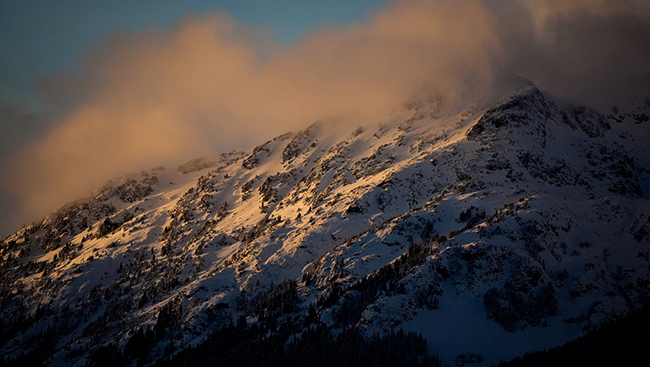
Picture Courtesy: THE CANADIAN PRESS/Darryl Dyck

MORE National ARTICLES

'Wouldn't even hurt a fly': Memorial grows for B.C. teen shot dead by police

'Wouldn't even hurt a fly': Memorial grows for B.C. teen shot dead by police
A memorial of flowers, stuffed animals, condolence cards and cans of Orange Crush is growing for a 15-year-old Surrey, B.C., boy who died in a police shooting on Sunday. Friends, family members and strangers, many of them crying, have stopped at the memorial not far from the site where the Surrey high school student was killed. 

'Wouldn't even hurt a fly': Memorial grows for B.C. teen shot dead by police

B.C. snowpack at 72% of normal as of Feb. 1 after 'extremely dry' January

B.C. snowpack at 72% of normal as of Feb. 1 after 'extremely dry' January
British Columbia's latest snow and water supply bulletin says it was "extremely dry" across much of the province last month, with average snowpack measuring 28 per cent below normal as of Feb. 1. The latest snow pack figures released Tuesday come after the province started the year with a snowpack at 13 per cent below normal. 

B.C. snowpack at 72% of normal as of Feb. 1 after 'extremely dry' January

Former prime ministers call on Canadians to 'show the flag' as Trump pushes trade war

Former prime ministers call on Canadians to 'show the flag' as Trump pushes trade war
All of Canada's living former prime minister's are calling on Canadians to express their national pride and "show the flag" as U.S. President Donald Trump continues his threats against this country's economic security and sovereignty. Saturday, Feb. 15 — Flag Day — marks the 60th anniversary of the Canadian flag.

Former prime ministers call on Canadians to 'show the flag' as Trump pushes trade war

White House says 25 per cent steel tariffs would stack on others, as premiers in DC

White House says 25 per cent steel tariffs would stack on others, as premiers in DC
The news comes as Prime Minister Justin Trudeau cautioned U.S. Vice-President JD Vance against Trump's promised steel and aluminum levies, while Canadian premiers picked up the Team Canada mantle in Washington to push against Trump's tariff threats.

White House says 25 per cent steel tariffs would stack on others, as premiers in DC

'Get the message to President Trump': Premiers in D.C. deliver anti-tariff message

'Get the message to President Trump': Premiers in D.C. deliver anti-tariff message
Prime Minister Justin Trudeau cautioned U.S. Vice-President JD Vance against steel and aluminum levies Tuesday, as Canadian premiers picked up the Team Canada mantle in Washington to push against U.S. President Donald Trump's tariff threats. Trudeau and Vance are in Paris for a global summit on artificial intelligence.

'Get the message to President Trump': Premiers in D.C. deliver anti-tariff message

Trump signs order imposing 25 per cent tariffs on steel and aluminum

Trump signs order imposing 25 per cent tariffs on steel and aluminum
U.S. President Donald Trump has signed executive orders slapping 25 per cent tariffs on all steel and aluminum imports into the United States, including Canadian products. U.S. President Donald Trump is slapping 25 per cent tariffs on all steel and aluminum imports into the United States, including Canadian products.

Trump signs order imposing 25 per cent tariffs on steel and aluminum