Wednesday, December 31, 2025
ADVT 
National

B.C.'s low snowpack, early-season melt raise drought concern: province

Darpan News Desk The Canadian Press, 12 May, 2025 01:14 PM
  • B.C.'s low snowpack, early-season melt raise drought concern: province

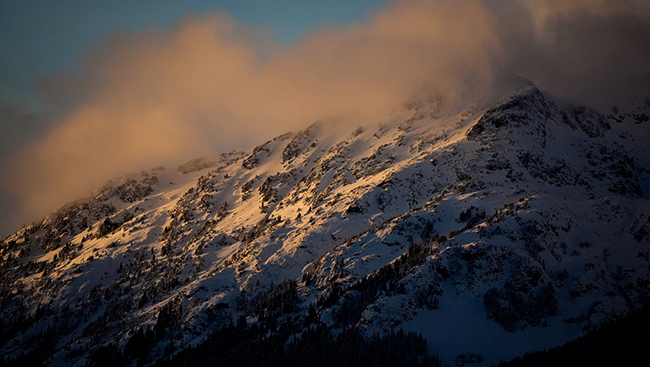
British Columbia's latest snowpack and water supply bulletin says drier, warmer weather last month has contributed to an early melt, raising concern for widespread drought this summer.

By early May, the bulletin says about five per cent of B.C.'s annual snowpack has typically melted, but 15 per cent had melted by the start of this month.

The bulletin from the province says snowpack was an average of 71 per cent of normal as of May 1, decreasing from 79 per cent of normal on April 1. 

The figure is slightly higher than last year, when B.C.'s snowpack was an average of 66 per cent of what would be normal on May 1.

The bulletin says low snowpackearly snowmelt and warm seasonal weather forecasts all point to "elevated drought" this summer.

It says rivers on Vancouver Island, the South Coast and in northeastern B.C., where snowmelt is not a significant contributor this spring, are flowing "at or near record low levels for early May."

Still, the bulletin notes spring and summer temperatures and precipitation are also key factors that will influence drought conditions.

Seasonal weather forecasts from Environment Canada in late April indicate a greater likelihood of above-normal temperatures in B.C. through July, it says.

The bulletin says May is forecast to be wetter than normal in parts of northern B.C., while it's expected to be drier in the south.

Snow basins are greater in higher-elevation regions compared with 2024 as more snow accumulated throughout the season, it says, but lower-elevation basins tend to have a lower level due to earlier melting.

Snowpack levels on May 1 were under 60 per cent or "well-below" normal in the Upper Fraser West, Lower Thompson, Nicola, Bridge, Skagit, Central Coast, Similkameen, and Skeena-Nass basins, the bulletin says.

There is no elevated flood risk based on the current snowpack. However, in areas with low snowpack, the bulletin notes key flood risks shift toward heavy rain, either short-duration events or prolonged periods of wet weather.

"It is important to note that May and June are wet months through the B.C. Interior with the potential for extreme precipitation patterns," it says, adding the flood season can extend into July in the Rockies and the northeast.

"Therefore, precipitation poses a flood risk through the spring even with limited snowpack," the bulletin says.

Picture Courtesy: THE CANADIAN PRESS/Darryl Dyck

MORE National ARTICLES

Ottawa, provinces should discuss possibility of west-east oil pipeline: Wilkinson

Ottawa, provinces should discuss possibility of west-east oil pipeline: Wilkinson
Federal Energy Minister Jonathan Wilkinson says Ottawa and the provinces should discuss the possibility of an oil pipeline to Eastern Canada to improve energy security and diversify trade. Wilkinson said Thursday that United States President Donald Trump's tariff threats have exposed "vulnerabilities" in the Canadian economy, including in the energy sector. 

Ottawa, provinces should discuss possibility of west-east oil pipeline: Wilkinson

Federal government commits more than $160 million to Jasper recovery

Federal government commits more than $160 million to Jasper recovery
The fire-ravaged town of Jasper, Alta., has received two pieces of critical funding from the federal and provincial governments as it attempts to stabilize in the wake of last summer's devastating wildfire. The federal government announced on Thursday it's committing $162 million to the recovery in Jasper, Alta. — a portion of which is being dedicated to interim and long-term housing.

Federal government commits more than $160 million to Jasper recovery

Fast-track approval no guarantee of success for B.C. mines, researcher suggests

Fast-track approval no guarantee of success for B.C. mines, researcher suggests
The mining industry is applauding the British Columbia government's decision to fast-track permits for several projects amid the ongoing U.S. tariff threat, but research suggests economic factors have been behind long delays for many other proposals. Simon Fraser University associate professor Rosemary Collard says research shows that regulatory fast-tracking of mining projects is no guarantee that they will all materialize.

Fast-track approval no guarantee of success for B.C. mines, researcher suggests

Former human rights chief commissioner sues for defamation

Former human rights chief commissioner sues for defamation
At a press conference Thursday, Birju Dattani spoke about lawsuits he has filed against Conservative deputy leader Melissa Lantsman, media personality Ezra Levant and the Jewish advocacy group Centre for Israel and Jewish Affairs over statements made about him on social media last year. One of the defendants has called Dattani's claims "baseless."

Former human rights chief commissioner sues for defamation

Five women sexually assaulted in B.C. 'grateful' for lawsuit victory, lawyers say

Five women sexually assaulted in B.C. 'grateful' for lawsuit victory, lawyers say
Lawyers for five women who were sexually assaulted in Vancouver decades ago say their clients are grateful they won a civil lawsuit against a man acquitted of the crimes due to state misconduct. The B.C. Supreme Court awarded the five plaintiffs $375,000 each in damages from Ivan Henry for attacks in the early 1980s, in a case that set off decades of legal battles over his wrongful conviction, for which he won $8 million in his own civil lawsuit in 2016.

Five women sexually assaulted in B.C. 'grateful' for lawsuit victory, lawyers say

Liberal leadership candidates make rival defence spending pledges

Liberal leadership candidates make rival defence spending pledges
Contenders to replace Justin Trudeau as Liberal leader are attempting to one-up each other over how quickly they'd meet Canada's defence spending commitment to NATO. Both Chrystia Freeland and Karina Gould vowed Thursday to bring Canada's military spending up to the equivalent of two per cent of national GDP by 2027 — five years ahead of Trudeau's timeline and three ahead of rival candidate Mark Carney's plan.

Liberal leadership candidates make rival defence spending pledges