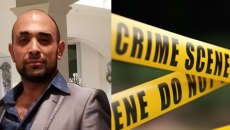
Ronald McHaffie said he had big plans to build a ski resort near Hope, 150 km east of Vancouver, ahead of the 2010 Olympics.
He cut an unlikely figure, with a Grizzly Adams beard and no history of resort development.
Yet the Bigfoot Ski Resort's website was full of promises — world-class skiing, a golf course, a fishing lodge and an "antique train" carrying guests around the facility. The website, which now exists in archived form, purported to show endorsements from all three levels of government, and a range of permits.
McHaffie gathered $642,000 from dozens of investors, telling them construction was just "around the corner," according to a 2014 B.C. Securities Commission ruling.
But the provincial government had already rejected the project. The commission said McHaffie's claims “were all lies,” and he put the investors' money in his own account, blowing it on "personal expenses," including groceries and gas.
When the CBC tracked him down in 2013, he was living in a dilapidated mobile home in the B.C. Interior town of Princeton.
The commission fined McHaffie and ordered him to pay back the money in the 2014 ruling, but he died last year, leaving $2.64 million in debt to the commission, representing a $2 million penalty and the disgorgement of the investors' money.
His case, and the trail of frustrated investors it left behind, is far from unique. McHaffie is among more than 400 individuals and companies that the B.C. Securities Commission says owe about $430 million in unpaid administrative penalties and disgorgement orders.
The unpaid amount far overshadows the $12.7 million the commission says it has collected in the last six fiscal years, reflecting challenges that include legal action, absconding offenders, and resistance to the agency's authority.
Dan Valliquette of Parksville, B.C., calls the commission a "very toothless entity."
He lost about $47,000 to McHaffie, an ordeal that still stings more than a decade later.
"I always thought that someone couldn't lie that much and take your money because it would be illegal," said Valliquette, an electrician and operations manager for an energy firm.
He said it was a "major mistake" to trust not only McHaffie, but the legal system to protect him.
"At the end (the commission) did speak to me and say that 'yeah he has been fined this amount,' but in the same breath they basically said that there's very little chance that they'll get paid out," Valiquette said.
"I think most people think that this activity would be criminal and are more relaxed about investing because they think that the police or that the system will protect them."
'WE'RE NOT GOING TO LET UP'
McHaffie's debt died with him, but some of those sanctioned are in jail, some are companies that have been dissolved, others are fighting penalties in court and many more simply have no means to pay.
More than a quarter of the money owed to the B.C. Securities Commission, about $130 million, is unlikely to ever be recovered, it says.
Now, another potential hurdle looms for the commission and other regulators, with the Supreme Court of Canada set to rule whether bankruptcy wipes out debts from administrative penalties. If the appellants, a B.C. couple who owe the commission about $19 million, succeed, it could have dire consequences for the collection of other unpaid amounts.
Amendments to British Columbia's Securities Act in 2020 gave the commission new collection powers, such as the ability to deny drivers' licenses or vehicle insurance to those with unpaid fines.
"The BCSC has also been vigorously pursuing sanctioned individuals for unpaid penalties, including using the tools in the 2020 Securities Act amendments," the commission told the provincial government in a service plan document in February 2023.
"While our use of the new tools has been effective in encouraging some payments, our efforts are being met with multiple legal challenges in the courts which results in delays and the diversion of litigation resources from other enforcement efforts."
Doug Muir, the commission's director of enforcement, said in an interview that $179 million owed to the commission is tied to just four cases.
One involves Michael Lathigee and Earle Pasquill, whose Freedom Investment Club group defrauded hundreds of investors out of millions of dollars, leading to the pair being sanctioned $51.7 million in 2014.
The commission's pursuit of the men over the past decade has resulted in some small victories. But it also highlights the difficulty tackling recalcitrant targets and their strategies to avoid paying.
Lathigee, who couldn't be reached for comment, moved to Las Vegas where his wife fought the B.C. regulator's enforcement efforts in a Nevada court.
He paid the commission US$350,000 and entered a settlement agreement in April 2023 after the Nevada Supreme Court deemed the commission's payment orders enforceable in the U.S. But the amount is a fraction of the $15 million in penalties and $21.7 million in disgorgement ordered by the B.C. regulator.
"We will continue to proceed against Mr. Lathigee until we can't any further and we tend to take it as long as we can," Muir said. "Whether we end up getting full payment or not, I can't say, but we're certainly not going to let up from trying."
Pasquill meanwhile transferred assets to his wife Vicki Pasquill, and the commission and the couple continue to battle it out in court.
In December last year, the B.C. Supreme Court refused to dismiss the commission's action against the Pasquills and a company through which Vicki Pasquill owns Vancouver real estate.
The ruling described how fraudsters "will structure their affairs in advance of precarious transactions, promotions, and other activities, often transferring assets to family members or other third parties, in order to protect themselves from future judgments and sanctions."
It said Michael Lathigee and Earle Pasquill's failure to pay their sanctions had forced the regulator to pursue assets held by their wives, in a "secondary collections action that would be rendered unnecessary if the commission is able to collect from any of the primary targets."
The court recognized the 2020 amendments to the Securities Act, describing a "remarkable" and unique provision to allow forfeiture orders against assets that had been transferred below market value to family members "at any time," including before a contravention.
Such restructuring efforts now face stiffer scrutiny under the new rules.
But another strategy in the fine evader's playbook remains in play — declaring bankruptcy.
THE BANKRUPTCY OPTION
Bankruptcy "remains a favoured tool in … efforts to escape the consequences of misconduct under the Securities Act," the B.C. Securities Commission says in court documents.
The commission says 44 sanctioned individuals owing more than $83 million have declared bankruptcy. The regulator has only been able to collect about $300,000 from them.
The decision from the Supreme Court of Canada involving the B.C. couple could have major implications for whether any of the rest is ever collected. The case was heard in December and a ruling is expected later this year.
Thalbinder Singh Poonian and Shailu Poonian claim they'll be in debt to the commission "likely for life," owing about $19 million after being found to have engaged in market manipulation of a company's stock in 2015. The commission ruled the couple boosted the price of OSE Corp. on the Toronto Stock Exchange by trading among themselves, relatives, friends and acquaintances, then sold the shares at the inflated prices to unsuspecting buyers.
The Poonians and the B.C. Securities Commission agree that the court's finding will affect securities regulators across Canada.
The commission says bankruptcy shouldn't wipe the slate clean for people whose debt arises from "intentional wrongdoing or other morally blameworthy conduct," and the bankruptcy system cannot be used "to avoid the consequences of their conduct."
"The question of whether these sanctions continue to be enforceable after discharge from bankruptcy … is a matter of public importance not only for the parties to this appeal, but for securities regulators across the country and for all market participants," the commission says in submissions to Canada's highest court.
Success in that case "would be a large legal victory, but doesn't immediately get us money to pay off their sanctions," Muir said.
The commission has been battling the Poonians in court for years, and would still have to continue collection efforts against the couple, he said.
Cristie Ford, a law professor at the University of British Columbia, said securities frauds and schemes often end with no money left to collect. But bringing enforcement action is still beneficial even if debts go unpaid, or a case isn't referred for criminal prosecution.
"You bring the enforcement action anyway because it also allows you to do things like impose a ban on the person being a director (or) officer of a public company going forward, it allows you to warn the market about particular individuals or about the company," she said.
Ford said since the amendments to the Securities Act in 2020, the B.C. Securities Commission has power beyond its provincial counterparts, and although it may not be ideal to have millions outstanding in penalties, "it's better than the alternative, which is not to try and bring those actions in the first place."
Jean-Paul Bureaud, executive director of the Canadian Foundation for Advancement of Investor Rights, said investment fraud has been increasing at a level that "may be outstripping the ability of regulators to keep up.
He said technological advancements have created a "bit of an arms race" between fraudsters and regulators, meaning that investor education to prevent fraud is more important than ever.
While regulators have "moved the needle" over the last few years in their pursuit of bad actors, he said collecting money owed remains "a challenge and unfortunately there's no easy solution."
"We'd like to see the collection rates much higher," he said. "It's a serious issue."
Vancouver Island house painter Andy Schofield knows it all too well.
He invested about $200,000 in the Bigfoot resort after being introduced to McHaffie by a co-worker. Then McHaffie disappeared "off the face of the Earth."
"He might have even believed in what he was doing and that's the impression I had," Schofield said. "He really believed he could make it."
Schofield said he didn't know McHaffie had died, and he looks back on the misfortune of meeting him through the lens of his Christian faith.
"I pray a little harder than I did back in those days before I make bold moves," he said. "I can forgive Mr. McHaffie, but the Lord's the one who needs to forgive him, so hopefully he found God before he passed. I may see him again in heaven and we can shake hands and have a laugh about this whole thing. Who knows?"
For fellow Bigfoot investor Valliquette, forgiveness isn't something he's willing to extend to McHaffie.
"He was a swindler," Valliquette said. "I think there's a bit of a false sense of security within Canada … until you get burned you don't really realize how weak the system is."