OTTAWA - The federal government's decision on British Columbia's drug decriminalization threshold was based on police input, says Canada’s minister of mental health and addictions.
Drug users in B.C. who possess up to a cumulative 2.5 grams of illicit drugs for personal use will not be arrested or charged starting next year.
The threshold falls short of the 4.5 grams requested by the province and has been criticized as too low by some advocates who say entrenched drug users typically carry more.
The government received input from law enforcement across the country, including in B.C. and from the RCMP, Carolyn Bennett said in an interview.
Today, after careful consideration, taking into account both the Public Health and Public Safety impacts, I have granted B.C’s request for an exemption under the CDSA for personal possession of small amounts of some illicit drugs. pic.twitter.com/LEALGsWrm2
— Carolyn Bennett (@Carolyn_Bennett) May 31, 2022
Law enforcement showed that about 85 per cent of drug confiscations are of quantities less than two grams, she said.
The minister said the government will be watching closely to see whether people will continue to be charged or have their drugs confiscated if they are carrying over 2.5 grams.
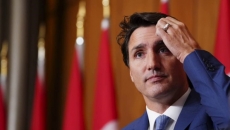
Prime Minister Justin Trudeau said Thursday the federal government has taken a science-based approach to moving drug addictions out of the criminal system and into the health system, but had to make sure the conditions were right before moving forward on decriminalization in B.C.
"How do you make sure police officers and the justice system is ready for this change? How do you make sure that organized crime doesn't make a windfall off of this change?" Trudeau said.
Ben Perrin, criminal law professor at the University of British Columbia, said the federal government was told to take one approach to the threshold by people who use drugs and experts, and told another by police.
"They chose to go with what the police told them. I think that's problematic," said Perrin, who also wrote a recent book on Canada's opioid crisis.
More accurate data to properly set a threshold would not be the average amount of drugs confiscated from people for personal use, but the average amount of drugs confiscated by people who are drug traffickers, he said.
Perrin also cautioned against accepting police data at face value, which was echoed by M-J Milloy, a research scientist at the BC Centre on Substance Use.
"We don't know if those numbers are correct because, in fact, the police never share their data. And to be frank, the police have a long history of not being open and transparent with respect to their operations or the data that they collect," said Milloy.
Perrin said he had requested data on the number of people that were charged with drug trafficking from the Vancouver Police Department.
While the department cited 899 drug trafficking charges between 2015-16, only 31 were what would be called mid- and high-level traffickers, he said. "Even when you talk about drug traffickers, you have got to be super careful with who they're even talking about."
Asked what the discrepancy in the numbers means, he said, "If you want to show that you're cracking down on drug trafficking, you better be rounding up a lot of street-level dealers to get your numbers up."
Vancouver Police Department data on drug confiscations by quantity for 2019-20 was analyzed by Erica McAdam, another researcher at the BC Centre on Substance Use.
McAdam found that 75 per cent of opioid seizures by Vancouver police were from people carrying about 7.37 grams.
Her analysis was based on data obtained through an access-to-information request.
Milloy said even if the data Bennett cited getting from police is correct, that still leaves about 15 per cent of people who are arrested carrying more than 2.5 grams.
"These are the people who are particularly vulnerable to being marginalized and criminalized, because they're carrying more weight, they're carrying more drugs, probably because their addiction is more intense, and they are using more at a given time," he said.
Trudeau said Edmonton and Toronto have expressed interest in moving forward on decriminalization, but the federal government working with the cities will be a challenge "to be entirely honest, without some support from provincial governments that are in charge of policing and health care."
The British Columbia Association of Chiefs of Police was not immediately available for comment.
Police reported almost 67,000 drug-related offences across the country in 2020, according to Statistics Canada.
During that year, there were about 3,400 violations related to personal possession of opioids, and more than 6,300 violations related to personal possession of cocaine.