Tuesday, December 16, 2025
ADVT 
National

Being out in public is stressful in pandemic era, new survey suggests

Darpan News Desk, 12 May, 2020 07:02 PM
  • Being out in public is stressful in pandemic era, new survey suggests

People cross the Adawe Crossing footbridge in Ottawa, in the midst of the COVID-19 pandemic, on Sunday, May 10, 2020. THE CANADIAN PRESS/Justin Tang


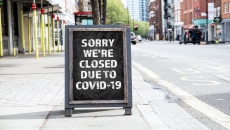
OTTAWA - As restrictions to prevent the spread of COVID-19 persist, a new survey suggests more than half of Canadians find it stressful to venture out in public.

In a web survey conducted by polling firm Leger and the Association for Canadian Studies, 57 per cent of respondents said leaving their home for a public space caused anxiety.

While the figures were relatively consistent across the country, they reached a high of 64 per cent in Ontario and a low of 48 per cent in Alberta.

In comparison, 64 per cent of American respondents said they found it somewhat or very stressful to go out in public during the pandemic.

The survey was conducted May 8 to 11 among 1,526 Canadians and 1,004 Americans, 18 or older, who were randomly recruited from an online panel.

Since polls created from Internet panels are not random samples, however, the survey can't be assigned a margin of error.

The polling firm says that using data from the 2016 census, results were weighted according to age, gender, mother tongue, region, level of education and presence of children in the household in order to ensure a representative sample of the population.

Forty-three per cent of Canadians who took part found going out in public somewhat stressful while 13 per cent considered it very stressful. The figures do not correspond to the sum of 57 per cent due to rounding.

Ten per cent of men who responded found going out very stressful, compared with 17 per cent of women.

The vast majority of Canadians who took part said they were following advice to help contain the spread of the novel coronavirus by maintaining a safe distance of two metres from others, washing their hands more often, coughing or sneezing into their elbow and going out only for necessities.

In addition, 42 per cent of Canadians surveyed said they wore a protective mask when they did head out to public areas in the last week.

Fifty-one per cent said people outside their family had gotten within two metres of them over the last seven days.

The vigilance needed to maintain one's personal space in public is likely a factor in the stress people are feeling, said Leger executive vice-president Christian Bourque.

"Every time I go out grocery shopping, which I do because it's a necessity, somebody wants to pick the same avocados I'm looking at," he said. "There's always somebody in your bubble at some point, even though we try to do our best."

Asked how long it would take for the economy in their province to start getting back to normal, with commercial activity and jobs being created at a level before the pandemic hit, 14 per cent said about six to eight months from now, 24 per cent about a year and 30 per cent one to two years.

This report by The Canadian Press was first published May 12, 2020.

—Follow @JimBronskill on Twitter

MORE National ARTICLES

Canadians trust their family doctor more than the PM on COVID-19, says poll

Canadians trust their family doctor more than the PM on COVID-19, says poll
Canadians trust health professionals like their family doctor first and foremost when it comes to the COVID-19 crisis, a new poll suggests. The poll, conducted by Leger and the Association for Canadian Studies, asked respondents to rate their level of trust in various institutions, including public health officials and politicians.

Canadians trust their family doctor more than the PM on COVID-19, says poll

Two planes from China forced to arrive in Canada empty of supplies: PM

Two planes from China forced to arrive in Canada empty of supplies: PM
OTTAWA - Prime Minister Justin Trudeau says two planes from China were forced to return empty to Canada on Monday, without the protective medical equipment that they were sent there to pick up.

Two planes from China forced to arrive in Canada empty of supplies: PM

More deaths, no benefit from malaria drug in VA virus study

More deaths, no benefit from malaria drug in VA virus study
A malaria drug widely touted by President Donald Trump for treating the new coronavirus showed no benefit in a large analysis of its use in U.S. veterans hospitals. There were more deaths among those given hydroxychloroquine versus standard care, researchers reported.

More deaths, no benefit from malaria drug in VA virus study

Many B.C. businesses uncertain about reopening after COVID passes: survey

Many B.C. businesses uncertain about reopening after COVID passes: survey
A survey of more than 1,000 British Columbia businesses has found that nearly half of those which have remained open during the COVID-19 pandemic believed they could survive for no longer than three more months. The BC Chamber of Commerce, Greater Vancouver Board of Trade, Business Council of B.C. and other partners worked with the Mustel group to survey 1,284 businesses in April.    

Many B.C. businesses uncertain about reopening after COVID passes: survey

Liz Weston: Is your financial adviser really helping you?

Liz Weston: Is your financial adviser really helping you?
Stock market crashes don’t just test investors’ mettle. Abrupt downturns also can reveal what kind of financial adviser you have.   Some people will discover, to their horror, that they’ve been dealing with outright crooks. Ponzi schemes are among the cons that fall apart when markets do, as investors try to pull their money out and discover it’s gone.

Liz Weston: Is your financial adviser really helping you?

Liberals, Bloc, NDP, Greens approve once-a-week sittings in House of Commons

Liberals, Bloc, NDP, Greens approve once-a-week sittings in House of Commons
OTTAWA - The Conservatives' bid to have Parliament sit in person several times a week throughout the COVID-19 pandemic has been thwarted by the combined forces of the governing Liberals and other opposition parties.

Liberals, Bloc, NDP, Greens approve once-a-week sittings in House of Commons