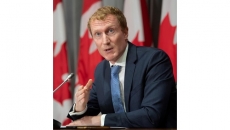
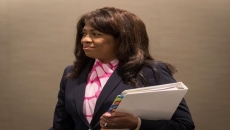
Canada's deputy chief public health officer Dr. Howard Njoo says collecting better data can help in addressing inequalities the COVID-19 pandemic has exposed.
Speaking at a virtual public health conference Wednesday, Njoo said collecting data on race and ethnicity for health purposes has been neglected for a very long time but everyone recognizes its importance now.
Having this detailed data will help delineate and then address the problem of inequality in health care, said Njoo.
"That's an important, I think, first step," he said. "We're obviously working diligently to make that happen."
Njoo's superior Dr. Theresa Tam said having more granular data now, during the second wave of COVID-19, makes it possible to adopt more targeted approaches to resisting the illness in different areas of the country.
Tam said overcoming the pandemic depends on increasing resilience in the population and building health equality into the immediate response and longer-term recovery plans.
"You cannot have public health measures and ask people to isolate … without social support for (their) income or for child care," Tam said.
She said the pandemic exposed existing inequities in society. Workers in essential services and long-term-care facilities are often racialized women in low-paying jobs, for instance, who are risk at work and have few options even if they're sick.
Indigenous, Black and other racialized people, homeless people, incarcerated people and those living in crowded conditions are among many groups that have been disadvantaged, Tam said.
Canadian Public Health Association chair Richard Musto — a former top public health doctor in Calgary — said all health and social services organizations should use demographic data to understand fully who is affected disproportionately by the pandemic.
Musto said Canada remains a nation where public policies and institutions create harm for individuals and communities based on race, religion, culture, or ethnic origin.
"These public policies and institutional practices result in inequities in social inclusion, economic outcomes, personal health and access to and quality of health and social services," he said. "These effects are especially evident for racialized, Black and Indigenous Peoples."
These practices also can harm those at the lower end of the socio-economic spectrum, women and gender-diverse people, people with disabilities, and other equity-seeking communities, he said.
The pandemic has highlighted the awareness of these injustices and how the social determinants have devastating impact on the health and well-being of the underserved communities, he said.
The Canadian Institute for Health Information has been working to develop a standardized approach to including race-based data in health care, Musto said.
Meanwhile, as the second wave of COVID-19 washes over the country, Tam said the fatigue that regular people and public health workers alike feel is presenting new challenges.
She said limiting physical contact to those living in the same household is still a very critical measure to avoid huge outbreaks and maintain manageable level of COVID-19 cases.
"We have to do all that we can to keep that slow burn."
Tam said there's a need for a fine balance between maintaining low virus transmission and at the same time minimizing the social and economic impacts of the pandemic and the measures authorities use to fight it.
"There is no written playbook on this," she said. "You're trying to trade and balance it out."
Tam said it's going to take a number of months after having a safe and effective vaccine for everyone who wants it to be vaccinated.