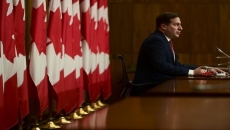
OTTAWA - The head of the Bank of Canada is warning that the faster pace of price increases may persist longer than first thought, and slow the pace of Canada's economic recovery, as global supply-chain issues weigh on the domestic economy.
Annual inflation rates have run above the Bank of Canada's comfort zone since April, reaching 4.1 per cent in August. The central bank expects readings higher than its target of two-per-cent through the rest of the year.
Governor Tiff Macklem said bottlenecks in the international movement of goods and oil aren't easing as quickly as he and his counterparts from around the world expected.
Still, he believes the hiccups will only cause one-off price increases, rather than ongoing inflation.
What has happened globally is a sharp rebound in consumer spending particularly for goods that need to be shipped through supply chains that have been damaged by a sharp drop in demand last year, and ongoing COVID-19 outbreaks and public health measures.
All this affects inventories of in-demand consumer products and the delivery of parts needed to build things like cars, and pushes up transportation costs that get passed on to consumers.
And at the same time, shipping delays mean households can't get goods as fast as they want, meaning their spending is delayed, which bites into the pace of growth.
"We're still expecting a good rebound. It may be not quite as fast as we had" in July's forecast, Macklem said on a videoconference with reporters late Thursday.
"What we've seen since then is these supply constraints. They were certainly a factor then but they are proving to be more complicated."
On Wednesday, U.S. President Joe Biden announced a plan to have the Port of Los Angeles run round-the-clock to ease constraints that have put upward pressure on prices for goods as companies pass on higher costs. Biden also called on companies to do more themselves.
Finance Minister Chrystia Freeland said the government is mindful of supply-chain issues in the Canadian economy, and is watching for signs of strain at Canadian ports. Speaking to reporters Thursday afternoon, Freeland also said Canadians should be confident in the country's economic recovery while noting some headwinds.
"Turning an economy back on in Canada, and also around the world, is inevitably uneven and that natural unevenness is compounded by the fourth wave of the coronavirus," she said at Canada's embassy in the American capital.
"We need to be realistic about that, mindful of that. But I think we can also have a very confident outlook about Canada's economic resilience, and about the strength of our recovery."
Supply-chain concerns came up in talks with Freeland's global counterparts, including Hong Nam-ki from South Korea and Janet Yellen of the United States, during meetings this week in Washington.
Freeland's meeting with Yellen also included warnings that any new "Buy American" provisions in the Biden administration's economic aid package, which would limit the ability of Canadian firms to compete for U.S. government contracts, would be met in-kind.
"What Canada is saying to our partners is, our procurement opportunities will be open to your companies just as much as your procurement opportunities are open to ours," Freeland said.
The Canadian Chamber of Commerce called Thursday on the government to push back against any new Buy America provisions, which have been a thorn in the cross-border relationship since the spring.
In a briefing note ahead of an April 7 telephone call with Yellen, Finance Department officials told Freeland that "Canadian suppliers would likely have access in areas where the U.S. has international commitments" through the World Trade Organization.
The note, obtained by The Canadian Press under the access-to-information law, linked Buy America to supply chain strains seen during the pandemic. Officials suggested Freeland argue Canada was a trusted supplier to the U.S. and the two countries needed to "further strengthen our mutually beneficial cross-border supply chains."