
Friday, June 26, 2026
ADVT 
National

BoC cuts growth forecast for 2021, holds rate

Darpan News Desk The Canadian Press, 14 Jul, 2021 10:21 AM
  • BoC cuts growth forecast for 2021, holds rate

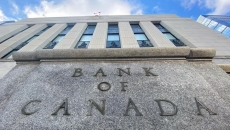
The Bank of Canada says the domestic economy will grow at a slightly slower pace this year than it previously thought and expects the risks from COVID-19 to wane — but not enough to change its trendsetting policy rate.

 The central bank said it expects the economy to grow 6.0 per cent in 2021, down from its previous forecast of 6.5 per cent. However, the bank now expects growth of 4.6 per cent in 2022, up from its earlier forecast of 3.7 per cent.

 The reason for the shift is a weaker first half of the year than the bank expected as the economy was hampered by lockdowns and restrictions.

 With public health restrictions partially or entirely lifted across the country, the central bank now expects consumers to start spending more, including from some of the estimated $200 billion in savings Canadians accumulated during the pandemic that officials previously hadn't worked into their forecasts.

 The bank’s updated economic outlook also said spending shouldn’t be affected by a decline in federal aid as it expects more people to get back to work, meaning they earn more and offset declines in government assistance.

 "The reopening of the economy and the strong progress on vaccinations have given us reason to be more optimistic about the direction of the economy," governor Tiff Macklem said in his opening statement at a late-morning press conference. "But we are not there yet, and we are mindful that the process is likely to be bumpy, and some scars will remain."

 As a result, the bank kept its key policy rate on hold at 0.25 per cent on Wednesday, where it has been since the onset of the pandemic. The bank said it will keep the rate at near-zero until the economy is ready to handle an increase in rates, which it doesn't expect to happen until the second half of 2022.

 The central bank also said that economic conditions have improved enough to allow it to reduce its weekly purchases of federal bonds to $2 billion from $3 billion. The purchases are a stimulus measure, known as quantitative easing, designed to help drive down rates charged on mortgages and business loans.

 "With the economic recovery strengthening on the back of easing public health restrictions, it was a prudent move by the Bank to remove some policy support," said TD senior economist Sri Thanabalasingam.

 Macklem said the pace of purchases should slow over time if the economy recovers broadly in line with the bank's outlook, but future changes will be gradual and deliberate.

 BMO chief economist Douglas Porter said he expected the bank to wind down the quantitative easing program by early next year, which would set the stage for rate hikes likely within the ensuing 12 months. 

In the scenario the bank laid out Wednesday, inflation runs above three per cent for the rest of the year because of higher gasoline prices and service businesses raising prices as demand returns. Inflation also stays above the Bank of Canada’s two-per-cent target next year and in 2023 because of excess demand before coming back to target in 2024.

 Macklem said the factors pushing up inflation are likely to be short-lived, but that the bank will watch them closely in case they become persistent or grow.

 "What we're seeing are some sharp movements in prices, but that doesn't look like inflation — it's unlikely to cause ongoing price increases," he said.

 "Sure, there is some uncertainty about this. We will be watching these effects, we will be watching the evolution of inflation very carefully."
 

MORE National ARTICLES

The Bank of Canada announced that it is holding its interest rate target at 0.25 per cent

The Bank of Canada announced that it is holding its interest rate target at 0.25 per cent
The Bank of Canada is warning that the downturn tied to COVID-19 will be the worst on record and that the economic recovery will depend on the effectiveness of current measures to bring the pandemic under control. The bank announced that it is keeping its key interest rate target on hold at 0.25 per cent, saying that it is effectively as low as it can go to combat the economic impacts of COVID-19.

The Bank of Canada announced that it is holding its interest rate target at 0.25 per cent

Liberals ease access to emergency COVID-19 benefit, plan to top-up wages

The federal government is making changes to its COVID-19 programs to send emergency aid to seasonal workers without jobs and those whose hours have been drastically cut but who still have some income. The changes will also allow people who are making up to $1,000 a month to qualify for the Canada Emergency Response Benefit, as well as those whose employment insurance benefits have run out since the start of the calendar year.    

Liberals ease access to emergency COVID-19 benefit, plan to top-up wages

Canada focused on fighting COVID-19 Trudeau steers clear of WHO controversy

Prime Minister Justin Trudeau refused Wednesday to join the escalating global debate about the World Health Organization's handling of the COVID-19 crisis, insisting Canada remains focused on working with experts around the world to combat the pandemic. Trudeau repeatedly batted back questions about Donald Trump's plan to halt funding to the UN agency and review what the U.S. president says was a failure to properly assess the threat posed by the novel coronavirus back in January.

Canada focused on fighting COVID-19 Trudeau steers clear of WHO controversy

With strong control measures, the federal public health agency projects that 11,000 to 22,000 Canadians could die of COVID-19 in the coming months

Canada could see the end of the first wave of the COVID-19 epidemic before autumn, according to federal projections, but only if strong physical distancing measures are strictly maintained the whole time. Even in that best-case scenario, the federal public health agency projects that a total of 4,400 to 44,000 Canadians could die of COVID-19 in the coming months.    

With strong control measures, the federal public health agency projects that 11,000 to 22,000 Canadians could die of COVID-19 in the coming months

Canada lost more than a million jobs in March, but April may be even worse

The Canadian economy lost an unprecedented one million jobs in March — the worst recorded single-month change — as the COVID-19 crisis began to take hold, lifting the unemployment rate to 7.8 per cent, Statistics Canada reported Thursday. The loss is eight times worse than the previous one-month record, yet economists warned it will likely be even worse in April, when the impact of physical distancing practices and other measures became clearer and millions of Canadians began receiving emergency federal aid.

Canada lost more than a million jobs in March, but April may be even worse

The latest numbers on COVID-19 in Canada

Total number of cases broken down by province and the total number right across the country. 

The latest numbers on COVID-19 in Canada