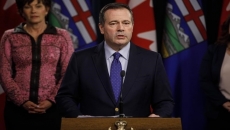
OTTAWA - The man at the helm of the Bank of Canada says the central bank has grown uncomfortable with hot inflation readings, which remained at an 18-year high last month, as he vowed to rein in price increases.
Read Governor Tiff Macklem’s speech to @Empire_Club on the renewal of the inflation-control target agreement with the Government of Canada. https://t.co/n9l1CTZ2O8
— Bank of Canada (@bankofcanada) December 15, 2021
Governor Tiff Macklem said the issue comes down to the trust Canadians have in the Bank of Canada to make sure the pace of price increases doesn’t run too high.
Statistics Canada reported Wednesday that the annual pace of inflation held steady in November as the consumer price index rose 4.7 per cent compared with a year ago.
But he also noted that high inflation is difficult for many Canadians because as the cost of living goes up, households have trouble paying their bills.
The reading landed two days after the Bank of Canada and federal government agreed to maintain the central bank’s inflation target range of one to three per cent, but more formally let the bank keep tabs on the labour market when making interest rate decisions.
In a virtual speech to Empire Club of Canada, Macklem said the new marching orders mean the bank may sometimes let inflation run at the higher end of its target range if it helps bolster the job market.
But "price stability is job one, because if we don't get that right, nothing else is going to work," Macklem told reporters at an end-of-year press conference.
As inflation has ticked up, the dollars Canadians bring home have lagged. Wages have increased by 2.8 per cent between November 2020 and last month, meaning that consumers, on average, saw a drop in their purchasing power.
Wages usually lag inflation, but with the tight labour market causing wages to already increase substantially for job hoppers, the amount paid to workers could soon catch up to the pace of price gains, said Tu Nguyen, an economist with accounting firm RSM Canada.
A key driver of inflation in November was once again the price of gasoline, which rose 43.6 per cent compared with the same month a year earlier, slightly above the October year-over-year rise of 41.7 per cent.
The annual rate of inflation in November would have been 3.6 per cent if gasoline prices had been excluded, the same as in October.
Also fuelling the once-in-a-generation gains in the consumer price index last month were increases in food prices that grew at their fastest annual pace since January 2015 because of supply chain disruptions and low crop yields.
The pinch on consumer pocketbooks is also driving up business costs as the economy struggles with labour shortages, supply chain disruptions, and renewed uncertainty around the Omicron variant, said Stephen Tapp, chief economist with the Canadian Chamber of Commerce.
"If companies start to pass these cost increases on more to their consumers, that's going to keep the price pressures going," he said.
November marked eight straight months that headline Inflation has come in above the Bank of Canada’s target range. The run isn't expected to last forever. CIBC senior economist Royce Mendes said prices increases should slow by the spring, but not necessarily go in reverse.
"If prices just remain where they are today, the overall rate of inflation will slow down," he said. "And that's sort of what we're expecting, we're not expecting massive discounts at retailers."
The average of the three measures for core inflation, which are considered better gauges of underlying price pressures and closely tracked by the Bank of Canada, was 2.73 per cent for November, up slightly from October, Statistics Canada said. The average was last that high in November 2008.
Stephen Brown, senior Canada economist with Capital Economics, said the rise in the measures suggest inflationary pressures are broadening.
The Bank of Canada doesn’t foresee a first hike to its trendsetting interest rate until at least April. The rate has been at 0.25 per cent since the pandemic upended the Canadian economy almost two years ago.
Since then, employment has rebounded and the economy has nearly shaken off the shock of COVID-19.
Statistics Canada also said Wednesday that the November inflation reading was the first without special consideration for certain goods and services that were unavailable because of the pandemic. The agency also noted that the data is largely unaffected by November flooding in British Columbia because the majority of prices were collected before it occurred.