
Saturday, July 4, 2026
ADVT 
National

Brakes failed in fatal train derailment

Darpan News Desk The Canadian Press, 31 Mar, 2022 09:53 AM
  • Brakes failed in fatal train derailment

CALGARY - An investigation into a fatal train derailment near the British Columbia-Alberta boundary has found the locomotive's brakes failed with prolonged exposure to cold temperatures.

The Transportation Safety Board of Canada on Thursday released its findings into the February 2019 derailment that killed three Canadian Pacific Railway employees.

The train was parked on a grade near Field, B.C., when it started rolling on its own and gained speeds far above the limit for the mountain pass. It derailed at a curve in the tracks and 99 grain cars and two locomotives plummeted off a bridge.

The safety board said its findings show an inbound train engineer had warned the trainmaster of brake system irregularities, but they were not seen as problematic.

It said the trainmaster's training and experience did not adequately prepare him to evaluate the circumstances or to make decisions.

It also found brake cylinders on the freight cars were leaking compressed air and, worsened by their age and condition and extreme cold, reached a critical threshold before the brakes gave out.

The board said it has made multiple recommendations to Transport Canada to enhance the safety of train operations in cold weather, including a requirement to install automatic parking brakes on freight cars.

"The leakage of compressed air from the train's air-brake system degraded the performance of the brakes in the extreme cold temperature," reads the report.

"As a result, even though the inbound locomotive engineer had increased the amount of braking several times while going down Field Hill towards Partridge, the train's speed continued to increase. When the speed reached 21 (miles per hour), the train crew applied the brakes in emergency."

The derailment prompted a criminal investigation by the RCMP that Staff Sgt. Janelle Shoihet has said continues with no timeline for completion.

Conductor Dylan Paradis, engineer Andrew Dockrell and trainee Daniel Waldenberger-Bulmer died in the derailment.

The families of two of the men filed a lawsuit last April alleging negligence against Canadian Pacific, its CEO, board of directors, CP police and the federal minister of transport.
MORE National ARTICLES

Ferries, orchestra retract layoffs, await subsidy

Vancouver Symphony Orchestra and BC Ferries have rescinded lay-off notices in anticipation of receiving the Canadian government's emergency wage subsidies. Both BC Ferries and the symphony had planned layoffs to take effect on the Easter weekend as the COVID-19 pandemic drains away their businesses.

Ferries, orchestra retract layoffs, await subsidy

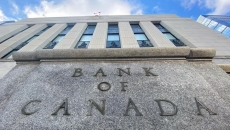
The Bank of Canada announced that it is holding its interest rate target at 0.25 per cent

The Bank of Canada announced that it is holding its interest rate target at 0.25 per cent
The Bank of Canada is warning that the downturn tied to COVID-19 will be the worst on record and that the economic recovery will depend on the effectiveness of current measures to bring the pandemic under control. The bank announced that it is keeping its key interest rate target on hold at 0.25 per cent, saying that it is effectively as low as it can go to combat the economic impacts of COVID-19.

The Bank of Canada announced that it is holding its interest rate target at 0.25 per cent

Liberals ease access to emergency COVID-19 benefit, plan to top-up wages

The federal government is making changes to its COVID-19 programs to send emergency aid to seasonal workers without jobs and those whose hours have been drastically cut but who still have some income. The changes will also allow people who are making up to $1,000 a month to qualify for the Canada Emergency Response Benefit, as well as those whose employment insurance benefits have run out since the start of the calendar year.    

Liberals ease access to emergency COVID-19 benefit, plan to top-up wages

Canada focused on fighting COVID-19 Trudeau steers clear of WHO controversy

Prime Minister Justin Trudeau refused Wednesday to join the escalating global debate about the World Health Organization's handling of the COVID-19 crisis, insisting Canada remains focused on working with experts around the world to combat the pandemic. Trudeau repeatedly batted back questions about Donald Trump's plan to halt funding to the UN agency and review what the U.S. president says was a failure to properly assess the threat posed by the novel coronavirus back in January.

Canada focused on fighting COVID-19 Trudeau steers clear of WHO controversy

With strong control measures, the federal public health agency projects that 11,000 to 22,000 Canadians could die of COVID-19 in the coming months

Canada could see the end of the first wave of the COVID-19 epidemic before autumn, according to federal projections, but only if strong physical distancing measures are strictly maintained the whole time. Even in that best-case scenario, the federal public health agency projects that a total of 4,400 to 44,000 Canadians could die of COVID-19 in the coming months.    

With strong control measures, the federal public health agency projects that 11,000 to 22,000 Canadians could die of COVID-19 in the coming months

Canada lost more than a million jobs in March, but April may be even worse

The Canadian economy lost an unprecedented one million jobs in March — the worst recorded single-month change — as the COVID-19 crisis began to take hold, lifting the unemployment rate to 7.8 per cent, Statistics Canada reported Thursday. The loss is eight times worse than the previous one-month record, yet economists warned it will likely be even worse in April, when the impact of physical distancing practices and other measures became clearer and millions of Canadians began receiving emergency federal aid.

Canada lost more than a million jobs in March, but April may be even worse