The federal budget signals there is no room for the premiers to negotiate for more health-care funding in the coming years, one economist says - and the Ontario government is calling for that to change.
The Canada Health Transfer is projected to be $54.7 billion in 2025-26 and is set to grow by five per cent per year until 2028.
After that, the budget sets out a plan for increases - known as the escalator - of a minimum of three per cent annually, based on a rolling three-year average of nominal GDP growth.
"It looks like the signal from the budget is that health transfers, social transfers, equalizations — those things are not going to change. There's no room for negotiation," said Mostafa Askari, chief economist at the University of Ottawa's Institute of Fiscal Studies and Democracy.
Askari said that's because the government's main fiscal target is to balance the operating budget - which includes health transfers - within three years.
The Canadian Union of Public Employees' budget analysis said that means the overall share of federal funding going toward provincial and territorial health budgets will decrease over the next five years.
"Inflation and an aging population will mean that the real cost of maintaining service levels will be higher than nominal GDP increases," the analysis said.
The amount of health funding that Ottawa covers has been a perennial source of concern for premiers, who have used the Council of the Federation to push the federal government to take on more.
In 2021, premiers said they were "firmly united" in their call for the federal government to increase its share of health costs to 35 per cent from 22 per cent, and to maintain the five per cent annual transfer increases.
At a meeting last July, premiers agreed to emphasize "the importance of enhancing the Canada Health Transfer and its escalator."
A spokesperson for Ontario Health Minister Sylvia Jones said the province is calling on Prime Minister Mark Carney's government "to be our partner and contribute their fair share." Spokesperson Ema Popovic said five per cent should be the minimum growth rate going forward.
"This will give Ontario, and other provinces and territories, the stability needed to create long-term plans for the health-care system," she said.
The Council of the Federation's chair is P.E.I. Premier Rob Lantz. His office did not respond to multiple requests for comment.
The budget also notes that billions of dollars in health funding deals are set to expire in coming years, including $1.2 billion for home care, mental health and addictions. Those funding deals expire in 2027, while a $600 million transfer for long-term care expires in 2028. Bilateral agreements with the provinces and territories worth $2.5 billion a year are set to be in place until 2033.
The Canadian Health Coalition said there's no indication those deals will be renewed.
"The federal government, I think, is just going do the absolute minimum on health care," said Steven Staples, the group's national director of policy and advocacy.
In a statement, a spokesperson for Health Minister Marjorie Michel said the budget is "an investment budget" that protects health transfers and includes a $5-billion health infrastructure fund "to upgrade hospitals, emergency rooms and urgent care centres."
Askari said that is an area for provinces to negotiate new health funding for infrastructure.
Don Drummond, an adjunct professor of policy studies at Queen’s University, said the rolling average for health transfers likely means the transfers will stay around three per cent per year "given our weak productivity range."
He said federal governments seem increasingly uninterested in handing over billions of dollars without getting the credit from voters.
"They want to have a much more direct intervention in health care," he said. "And that's why you see they've carved out part of the infrastructure money for health infrastructure, why they're into the dental plan."
Drummond, who previously held senior roles in the Finance Department and worked on federal budgets, warned that premiers may want to brace for what comes next. He recalled that the 1995 budget included cuts to federal transfers.
"That would be my worry, that this isn't the end of it."
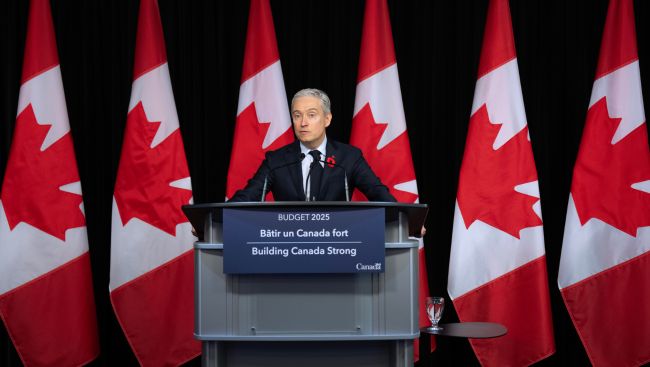
Picture Courtesy: THE CANADIAN PRESS/Adrian Wyld