A Canadian-born cabinetmaker whose DNA helped identify the remains of King Richard III after they were excavated from under a British parking lot is now helping to ensure his famous ancestor has a resting place fit for royalty.
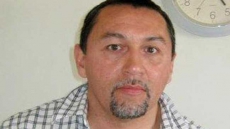
Michael Ibsen, 57, has personally designed and built the coffin in which the controversial 15th-century monarch will be reinterred later this week.
It was Ibsen's DNA that initially helped identify the bones unearthed by researchers at the University of Leicester in 2012. Ibsen, who is a 17th-generation descendant of Richard's older sister, Anne of York, agreed to allow his genetic profile to be compared with the historic skeleton.
Geneticists said Ibsen shares a rare strain of mitochondrial DNA with the remains, proving "beyond reasonable doubt" that the king's body had finally been found after centuries of speculation.
Ibsen said he had never built a coffin over his 25-year career as a furniture maker, but said his personal ties to the oft-maligned monarch made this project feel very appropriate.
"It's sort of a unique privilege to be asked to do such a thing," Ibsen said in a telephone interview with The Canadian Press from Leicestershire, U.K. "It seemed sort of a logical thing to do. There's a certain symmetry to it."
Ibsen was approached to build the royal casket by officials at Leicester Cathedral, which will be Richard's official resting place after Thursday's ceremony.
Ibsen then undertook several weeks of research to ensure the design would live up to both practical and traditional requirements.
After consulting with a historian specializing in royal burial practices, he decided to build the casket out of both English oak and English yew.
The two types of wood are strong enough to contain both the 60-kilogram lead liner that will protect the king's corpse and the embroidered pall that will decorate the outside.
Just as importantly, Ibsen said, is the fact that both substances pay homage to aspects of British culture and Richard's own historical period.
"English oak would have been used for a high-status coffin like this, but also oak is sort of imbedded in the English psyche as a traditional wood," he said. "Yew was used for English longbows, and also it tends to be found in churchyards and has sort of a mystical element to it."
Ibsen said the casket also had to be cut to the specific dimensions of the vault where Richard will be laid to rest for a second time.
Thursday's interment ceremony will be a marked departure from Richard's first burial in 1485, which came at the end of a tumultuous, two-year reign.
He was killed in battle against Henry Tudor and hastily buried without a shroud on the grounds of a former monastery. When researchers discovered his remains centuries later, the site had been converted into a parking lot.
After his death, historians writing under the victorious Tudors comprehensively trashed Richard's reputation, accusing him of myriad crimes — most famously the murder of his two young nephews. His image was further tarnished in William Shakespeare's play "Richard III," which depicts the last Plantagenet king as a bloodthirsty monster with physical deformities and equally flawed morals.
But historians have been working to rehabilitate Richard's image, arguing he was far more enlightened and benevolent than literature would suggest.
His ambiguous reputation has done little to deter public interest in his burial.
Earlier this week, hundreds of people lined the streets of Leicestershire to watch a procession carry the king's remains past several historical sites en route to Leicester Cathedral. In the days leading up to the final burial ceremony, British media reports said thousands of people waited for hours to view the coffin of the former ruler.