
Friday, December 26, 2025
ADVT 
National

Bus driver with one eye wins discrimination case

Darpan News Desk The Canadian Press, 23 Jul, 2020 09:33 PM
  • Bus driver with one eye wins discrimination case

A city bus driver whose licence was revoked after she lost her eye to cancer has won her battle to have the relevant provincial regulations declared unconstitutional.

In her ruling this month, Ontario Superior Court Justice Jessica Kimmel decided the rules, aimed at enhancing road safety, are unfair to the monocular — those with sight in only one eye.

"These vision standards are based on, and perpetuate, the stereotype that monocular drivers are not able to safely drive public transit vehicles," Kimmel found. "They create or perpetuate a discriminatory disadvantage without allowing for individual exemption based on the actual driving capabilities and characteristics of individual monocular drivers."

Kimmel put her unconstitutionality finding on hold for 12 months to give the province time to redo the rules, and the driver who launched the case will have to remain unlicensed in the interim.

Liliana Di Cienzo, a bus driver with an unblemished driving record in Oakville, Ont., lost her right eye to cancer in October 2013 when she was 41 years old. As a result, the province revoked her Class C commercial licence under a section of the Highway Traffic Act that bars a person with one eye from holding the permit.

Court documents show Di Cienzo maintained she could drive safely using her left eye when she tried returning to work about a year after her eye removal.

The Ministry of Transportation, however, said vision regulations precluded her holding a licence, effectively ending her driving career.

"I was pretty much shocked," Di Cienzo, of Hamilton, said in an interview. "I was certain that I'd at least be given a road test to prove I could do it."

Di Cienzo, who is allowed to drive passenger vehicles, argued the rules discriminated against those with physical disabilities. Backed up by a provincial study from 1998, she argued little evidence exists to show the one-eyed — as a group — are unsafe commercial drivers, and she should have the chance to prove she can drive buses safely.

"The Ministry of Transportation found me guilty right away," she said. "They basically gave me a life sentence for doing nothing wrong."

After several failed legal manoeuvres, the province argued in court that the minimum vision standard at play is fair and related to important and reasonable safety considerations.

The rules do make a distinction based on a physical disability, the province conceded, but said they do not specifically single out those with one eye, because even people with both eyes functional might not meet the standards.

Several experts testified, with one arguing for the province that statistics show the monocular have a higher risk of crashes. Di Cienzo's experts assessed her capable of driving safely. Other provinces do allow individual exceptions based on functional assessments.

Despite the victory, Di Cienzo will have to wait at least 12 months before potentially getting her licence back. Kimmel refused her request to exempt her from the hold she put on the ruling, saying a test first needs to be in place for Di Cienzo to show she can indeed drive safely.

Di Cienzo's lawyer, Neil Wilson, said the ruling would affect Class-C licensing, which covers all buses other than school buses.

"It's an important recognition of what she has always said: that she should be assessed on her actual ability to drive safely rather than on her disability," Wilson said.

A similar case was unfolding in Belleville, Ont., he said, in which a client of his with albinism who used a "telescopic" lens to drive cars accident-free for 25 years lost his licence under changed rules.

Jenessa Crognali, a spokeswoman for Attorney General Doug Downey, said only that the vision standards are not discriminatory and, in any event, are justified to protect road safety.
MORE National ARTICLES

Ferries, orchestra retract layoffs, await subsidy

Vancouver Symphony Orchestra and BC Ferries have rescinded lay-off notices in anticipation of receiving the Canadian government's emergency wage subsidies. Both BC Ferries and the symphony had planned layoffs to take effect on the Easter weekend as the COVID-19 pandemic drains away their businesses.

Ferries, orchestra retract layoffs, await subsidy

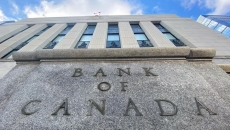
The Bank of Canada announced that it is holding its interest rate target at 0.25 per cent

The Bank of Canada announced that it is holding its interest rate target at 0.25 per cent
The Bank of Canada is warning that the downturn tied to COVID-19 will be the worst on record and that the economic recovery will depend on the effectiveness of current measures to bring the pandemic under control. The bank announced that it is keeping its key interest rate target on hold at 0.25 per cent, saying that it is effectively as low as it can go to combat the economic impacts of COVID-19.

The Bank of Canada announced that it is holding its interest rate target at 0.25 per cent

Liberals ease access to emergency COVID-19 benefit, plan to top-up wages

The federal government is making changes to its COVID-19 programs to send emergency aid to seasonal workers without jobs and those whose hours have been drastically cut but who still have some income. The changes will also allow people who are making up to $1,000 a month to qualify for the Canada Emergency Response Benefit, as well as those whose employment insurance benefits have run out since the start of the calendar year.    

Liberals ease access to emergency COVID-19 benefit, plan to top-up wages

Canada focused on fighting COVID-19 Trudeau steers clear of WHO controversy

Prime Minister Justin Trudeau refused Wednesday to join the escalating global debate about the World Health Organization's handling of the COVID-19 crisis, insisting Canada remains focused on working with experts around the world to combat the pandemic. Trudeau repeatedly batted back questions about Donald Trump's plan to halt funding to the UN agency and review what the U.S. president says was a failure to properly assess the threat posed by the novel coronavirus back in January.

Canada focused on fighting COVID-19 Trudeau steers clear of WHO controversy

With strong control measures, the federal public health agency projects that 11,000 to 22,000 Canadians could die of COVID-19 in the coming months

Canada could see the end of the first wave of the COVID-19 epidemic before autumn, according to federal projections, but only if strong physical distancing measures are strictly maintained the whole time. Even in that best-case scenario, the federal public health agency projects that a total of 4,400 to 44,000 Canadians could die of COVID-19 in the coming months.    

With strong control measures, the federal public health agency projects that 11,000 to 22,000 Canadians could die of COVID-19 in the coming months

Canada lost more than a million jobs in March, but April may be even worse

The Canadian economy lost an unprecedented one million jobs in March — the worst recorded single-month change — as the COVID-19 crisis began to take hold, lifting the unemployment rate to 7.8 per cent, Statistics Canada reported Thursday. The loss is eight times worse than the previous one-month record, yet economists warned it will likely be even worse in April, when the impact of physical distancing practices and other measures became clearer and millions of Canadians began receiving emergency federal aid.

Canada lost more than a million jobs in March, but April may be even worse