There are calls for expanded PCR testing as the limitations of relying on rapid antigen tests become especially apparent among a sixth wave.
Experts say rapid antigen tests are a useful tool to help Canadians make safer decisions in navigating rising COVID-19 cases, but warn that results should be read with caution.
Dr. Christopher Labos, a Montreal cardiologist with a degree in epidemiology, says it takes more than one rapid test to rule out infection because of high rates of false negatives.
Labos says potential sources of inaccuracy include improper technique, testing too early in the illness for viral levels to be detectable and preliminary data suggesting rapid tests are less sensitive to the Omicron variant.
Health Canada says on its website that it has "no evidence" that variants affect the ability of agency-approved tests to confirm COVID-19 cases, but notes that these new devices are still being investigated.
In February, the Ontario COVID-19 Science Advisory Table published findings from an analysis of preprint studies suggesting that the pooled sensitivity of rapid antigen tests for detecting Omicron infections is about 37 per cent, compared to 81 per cent for the Delta variant.
Labos says he expects that rapid test sensitivity would be similar for the fast-spreading Omicron sibling known as the BA.2 subvariant, but there isn't enough evidence to say for certain.
There are studies that suggest that repeated rapid testing at frequent intervals can improve detection, said Labos. So if your first rapid test comes back negative, he recommended testing again.
"Now that we're into the 'judge your own risk' phase of the pandemic ... I think people need to realize that the risk of false negatives with rapid tests is very real," Labos said, noting that evidence suggests the rate of false positives is fairly low.
"If you take your negative result as a license to return to normal, you might be inadvertently infecting other people, so I would continue to isolate, repeat the testing and make very sure you don't have COVID."
Omar Khan, a professor of biomedical engineering and immunology at University of Toronto, agreed that rapid tests are an important, if imperfect, tool to guide individual behaviour, but without systems in place to report results, they do little to inform public policy.
As provinces have restricted access to PCR testing, Khan said authorities have limited ability to track how the variants are spreading. This could be a cause for even greater concern as the COVID-19 virus continues to evolve, potentially rendering our current screening methods less effective.
"The targets of these rapid tests are no longer valid (if) genetically it's changed too much. And that's going to be important, because we want to make sure we have the right tools for surveillance and detection of the pathogen."
Dr. Peter Juni, the scientific director of the panel advising Ontario, said wastewater monitoring suggests the province is seeing between 100,000 and 120,000 new cases of the virus each day — a far cry from the 4,224 officially reported Thursday due to limits on PCR testing.
Juni said those same testing limits mean it's unclear how long this wave will last, because we don't know how many people have been infected so far and may have an extra bit of immunity.
His comments come as all three provincial Opposition parties called on the government to reinstate or continue several public health measures, including mandatory masking and greater access to PCR testing.
Hospitalizations are up 40 per cent week over week, with 1,126 people reported hospitalized with the virus Thursday and 159 in intensive care.
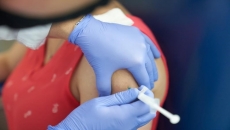
Meanwhile, Ontarians aged 60 and older were able to start booking appointments for a fourth dose of a COVID-19 vaccine Thursday.
First Nations, Inuit and Métis individuals and their non-Indigenous household members aged 18 and above are also eligible to start booking those shots.
Fourth doses are being offered at a recommended interval of five months after the initial booster shot.