Thursday, January 1, 2026
ADVT 
National

Canada, allies launch Arctic military exercise

Darpan News Desk The Canadian Press, 04 Aug, 2020 07:58 PM
  • Canada, allies launch Arctic military exercise

Canada and some of its closest allies have kicked off a three-week naval exercise in the Arctic that aims to send a message of unity against potential adversaries in the North without spreading COVID-19 to local communities.

The training exercise known as Operation Nanook has been a mainstay for the Canadian Armed Forces since 2007 but this is the first year that the U.S., France and Denmark will all be participating as well.

Canadian and U.S. naval officers told reporters during a briefing Tuesday that the involvement of those other nations reflected the importance of co-operation among allies when it comes to military operations in an increasingly important part of the world.

Western countries as well as potential adversaries such as Russia and China have been steadily expanding their military footprints and activities in the region as climate change makes it easier to reach and operate in, raising concerns about the threat of a conflict.

"The message is the Arctic is strategically important, it's becoming increasingly important and it's important for our collective national security," said Vice-Admiral Steven Poulin, commander of the U.S. Coast Guard's Atlantic area.

"And I think the participation is a reflection of a mutual commitment by the partners and allied nations to share goals to that end."

Yet this year's iteration of Operation Nanook is also smaller than past versions, which have included personnel and equipment from across the Canadian military, particularly the Canadian Rangers, as well as other federal departments.

Rear Admiral Brian Santarpia, commander of the Royal Canadian Navy's Maritime Forces Atlantic, said this year's exercise will not include any land-based forces and focus almost exclusively on naval operations because of concerns about spreading COVID-19.

"Much of Nanook we decided not to conduct this year because we didn't want to be a vector into our own remote populations, where they're quite protected from COVID now just by that very fact of being remote," Santarpia said.

The three Canadian navy ships and four foreign vessels participating will not make any stops in Canada's Far North. Their only port call will be to Nuuk, Greenland, to refuel. Sailors will not be allowed off their ships.

Canada's three territories have been largely spared from any COVID-19 outbreak, with only a handful of positive cases reported.

The Canadian and allied warships will focus most of their activities in the Davis Strait between Baffin Island and Greenland, which is considered part of the Northwest Passage.

Canada and the U.S. have been at odds for decades over whether the passage is Canadian or international waters, a question Santarpia, Poulin and Vice-Admiral Andrew Lewis, commander of the U.S. 2nd Fleet, studiously avoided.

"It's a complex issue that involves more lawyers than naval officers and it has a lot to do with interpretations of international law," Santarpia said.

"This exercise is really designed to let us work better together than we already do and we'll let the lawyers worry about the rest of it."

MORE National ARTICLES

Local restaurants feel squeezed by delivery apps' commission fees

Local restaurants feel squeezed by delivery apps' commission fees
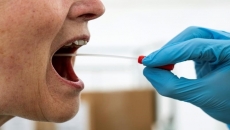
Restaurants struggling to survive during the COVID-19 crisis have turned to take-out and delivery, but the fees charged by food-delivery companies are eating away their bottom line, some operators say. Physical distancing measures have decimated dine-in service, which accounts for most industry revenue, said Mark von Schellwitz, a vice-president of the non-profit Restaurants Canada.

Local restaurants feel squeezed by delivery apps' commission fees

Ottawa helping guide, but not dictating, provincial reopening plans: Trudeau

Ottawa helping guide, but not dictating, provincial reopening plans: Trudeau
With Canada's two most populous provinces poised to outline plans for a gradual return to normalcy, Prime Minister Justin Trudeau said Monday that Ottawa will help guide, but not dictate, how provinces and territories should start easing restrictions. Ontario and Quebec together account for more than 80 per cent of the country's COVID-19 cases.    

Ottawa helping guide, but not dictating, provincial reopening plans: Trudeau

Crisis lines face volunteer, cash crunch even as COVID-19 drives surge in calls

Crisis lines face volunteer, cash crunch even as COVID-19 drives surge in calls
Despite a surge in demand due to COVID-19, many distress centres across Canada are dangerously close to folding thanks to major declines in both volunteers and revenue. Stephanie MacKendrick, CEO of Crisis Services Canada, which runs the only national suicide-specific helpline in Canada, says her organization relies on a network of approximately 100 community distress centres across the country to field calls from people.

Crisis lines face volunteer, cash crunch even as COVID-19 drives surge in calls

Conservatives gear up to grill government in modified return of House of Commons propose and oppose: Tories

Conservatives gear up to grill government in modified return of House of Commons propose and oppose: Tories
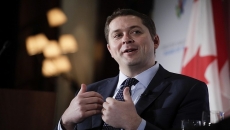
Conservative Leader Andrew Scheer laid out Monday the numerous lines of inquiry his party intends to follow this week as a modified version of a House of Commons sitting gets underway. They include the state of the nation's emergency supply stockpile, the mishmash of federal economic benefit programs that allow some to fall through the cracks and to what extent the minority Liberals are backstopping provincial efforts to reopen their economies, Scheer said.

Conservatives gear up to grill government in modified return of House of Commons propose and oppose: Tories

Learning to live with COVID-19 requires permanent fixes to vulnerable settings

Learning to live with COVID-19 requires permanent fixes to vulnerable settings
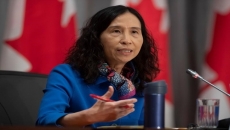
Canada's chief public health officer warned Monday there is still a lot we don't know about the virus that causes COVID-19, but said stopping this pandemic or preventing a future one will require more than just physical distancing and handwashing. Dr. Theresa Tam said we simply do not know yet whether someone who has had COVID-19 will be immune from getting it again, or how long that immunity will last.

Learning to live with COVID-19 requires permanent fixes to vulnerable settings

B.C. university creates institute to take microscope-telescope view of pandemic

B.C. university creates institute to take microscope-telescope view of pandemic
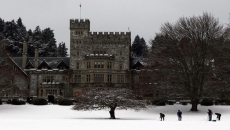
The COVID-19 pandemic has placed the world at a tipping point that's challenging social, political, economic and environmental structures, says the director of a new academic research institute at British Columbia's Royal Roads University. Dr. Thomas Homer-Dixon said Monday the pandemic is an event with the power to cause those structures to fall like dominos or shift radically to new paths.

B.C. university creates institute to take microscope-telescope view of pandemic