OTTAWA - The debate around sending weapons to Ukraine was being panned as a “red herring” on Thursday, as several experts suggested Canada can better support the eastern European country in its standoff with Russia in other ways.
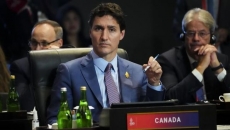
The comments came one day after Prime Minister Justin Trudeau announced this week a package of support for Ukraine. That includes expanding Canada’s efforts to train the Ukrainian military, bolstering its cyber defences, as well as financial assistance.
The prime minister also said Canada would be sending metal detectors, thermal binoculars, rangefinders, armour plates and other non-lethal military equipment. Not on the list, at least not yet: weapons.
Trudeau repeatedly declined to explain the decision on Wednesday, and members of Canada’s influential Ukrainian community were still scratching their heads on Thursday.
“We have not received any feedback from the government on the decision,” said Ihor Michalchyshyn, executive director of the Ukrainian Canadian Congress, which has been one of the loudest voices calling for the provision of Canadian arms to Ukraine.
“All of our NATO allies are doing this. The situation has changed rapidly in the last week and days, hour by hour. So it's very difficult to understand why Canada will not join the United Kingdom, United States and other (NATO allies).”
Yet while foreign policy experts were divided over why the Liberal government decided not to send arms to Kyiv, several shared the view that a planeload of Canadian guns was unlikely to make much of a difference to whether Russia attacks.
University of Ottawa professor Roland Paris, who served as Trudeau's first foreign policy adviser, said the debate in Canada around whether to provide weapons has become bigger than the actual benefit that would be gained.
“The delivery of lethal arms is not going to change the overwhelming preponderance of Russian forces in the region, or change the fact Russia has the capacity to sweep across Ukraine if it's determined to do so,” he said.
“The whole debate about lethal arms for the Ukrainian government is maybe the least important of the various tools that are available to increase the costs of a Russian invasion.”
Paris instead pointed to the threat of economic sanctions as a more effective deterrence measure, and said what would really send a message would be if NATO — including Canada — strengthened its military presence in eastern Europe.
Canada currently has about 540 soldiers in Latvia leading a NATO battlegroup designed to defend against a Russian attack in the Baltics. It also has 200 military trainers in Ukraine, with Trudeau promising on Wednesday that another 60 will be added.
Carleton University professor Fen Hampson also questioned the idea of Canada providing arms to Ukraine, noting the Ukrainian military uses different equipment than its Canadian counterpart, which is struggling to buy new equipment for itself.
“This may be a bit of a red herring,” he said, adding Canada’s support to Ukraine’s cyber defences is much more important. “Cyber warfare really has become kind of the first line of attack where Ukraine can use some help.”
Trudeau did leave the door open to revisiting the decision in the future, but Wednesday’s announcement continued Ottawa’s pattern of refusing to arm Ukraine starting with Stephen Harper’s Conservative government in 2014.
Harper at that time indicated his reluctance to provide weapons to Ukraine stemmed more from wanting to work in collaboration with the U.S., which at the time was not sending arms to the country.
The official Opposition Conservatives have criticized the government’s decision not to send weapons to Ukraine.
Canada isn’t the only NATO member not sending arms; Germany has also said it will not provide weapons, which has reportedly triggered annoyance and consternation in Kyiv and Washington.