Tech giants such as Amazon and Google will not have to shell out close to $2 billion as expected today, as Canada moved to cancel the controversial digital services tax on Sunday, just one day before the first payment was due.
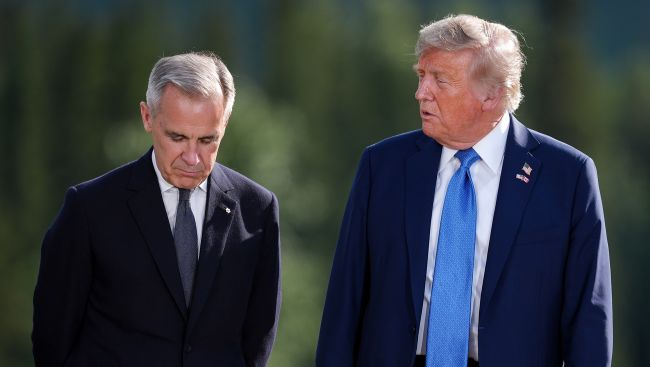
The announcement from Finance Minister François-Philippe Champagne came late Sunday evening, following a phone call between Prime Minister Mark Carney and U.S. President Donald Trump.
That call concluded a flurry of discussion between the two countries since Trump suddenly announced on Friday afternoon that he was ending all trade talks with Canada and threatened new tariffs.
But the standoff had really been building for years.
Here's a brief look at what the tax was about and why Trump made such a drastic move to try and kill it.
What is the digital services tax?
The tax was announced in 2020, but the legislation to enact it didn't pass until last year. While it has been in effect for a year, the first payment, retroactive to 2022, was to be submitted on June 30.
The government intended it to overcome what Canada saw as a tax loophole, with big tech companies operating in Canada digitally, making money off Canadian users and data, but not paying tax on it in Canada.
The tax was to apply to companies that operate online marketplaces, online advertising services and social media platforms, and those that earn revenue from some sales of user data.
It meant companies such as Amazon, Google, Meta, Uber and Airbnb, would pay a three-per-cent levy on revenue from Canadian users.
The tax was only to cover large companies, those that have worldwide annual revenues greater than 750 million euros per year and Canadian digital services revenue greater than $20 million per year. The parliamentary budget officer had estimated it would bring in $7.2 billion over five years.
Because the first payment was retroactive to cover three years, the expectation was the companies collectively could be on the hook for an initial payment of around US$2 billion.
Why did Canada impose it?
Work has been underway for years at the Organization for Economic Co-operation and Development to set up a multilateral tax approach meant to replace digital service taxes imposed by individual countries.
But after that work stalled, Canada went ahead with its own tax. Other countries, including France and the United Kingdom, also have digital taxes.
The Liberals had long maintained Canada would go ahead on its own if the OECD deal fell through. In a 2024 release, the government said while "Canada’s priority and preference has always been a multilateral agreement," many of Canada’s allies have digital services taxes in place.
"Canada has been at a disadvantage relative to these countries which have continued collecting revenue under their pre-existing digital services taxes," it said.
Why do some oppose it?
Critics of the tax took issue with Canada’s refusal to wait for a global deal. They also opposed the retroactive application of the tax, which means companies will have to pay several years’ worth of taxes at once.
U.S. businesses and politicians argued the tax targets U.S. companies. The tax applied to all large tech companies no matter where they were based, but because so many of those companies are American, U.S. firms would have paid the bulk of the money.
In a letter earlier this month, 21 members of Congress said U.S. companies will pay 90 per cent of the revenue Canada will collect from the tax, and that first payment will cost U.S. companies US$2 billion.
That opposition isn’t new. The Biden administration also pushed back against the tax, and the stance isn’t isolated to Canada, with the U.S. also opposing digital service taxes imposed by other countries.
Before the tax was rescinded on Sunday, the president of the American Chamber of Commerce in Canada said its "members have been warning for years that this tax would become a flashpoint in the Canada-U.S. relationship. That moment has arrived."
The tax is "retroactive, one-sided, and deeply damaging to cross-border trade," Rick Tachuk said in an emailed statement, which encouraged Canada to cancel its tax.
Michael Geist, Canada research chair in internet and e-commerce law at the University of Ottawa, wrote in a blog post Saturday the current conflict shouldn’t come as a surprise.
"Canada pushed ahead despite efforts at an international agreement on the issue and later dismissed the increasing friction over the issue with the U.S., which has been signalling its opposition to the DST for many years," he said.
Geist said once Finance Minister François-Philippe Champagne confirmed on June 19 Canada would be going ahead with the tax, the government "virtually guaranteed the U.S. would respond as it did."
Where does Trump come in?
While opposition to the tax has been brewing south of the border for years, Trump escalated it abruptly Friday afternoon with an online post.
He wrote he was "terminating all discussions on trade with Canada" because of the tax and called it a "direct and blatant attack on our country." He also complained about Canada's dairy-sector protections that include high tariffs on imports of American milk and cheese.
Canada and the U.S. have been in a trade war for months, triggered by Trump’s imposition of tariffs. At the G7 summit in Alberta earlier this month, Carney and Trump agreed to work on reaching a deal by mid-July — work that Trump said was halted Friday.
Friday afternoon, shortly after Trump’s post went live, Carney told reporters he hadn’t spoken to Trump that day but that "we'll continue to conduct these complex negotiations in the best interests of Canadians."
So what happened on Sunday?
A flurry of activity followed Trump's post on Friday, culminating Sunday night in the call between Trump and Carney.
The decision opened the door for trade talks to restart, and Carney said in a statement, the overall results of those talks were paramount.
“In our negotiations on a new economic and security relationship between Canada and the United States, Canada’s new government will always be guided by the overall contribution of any possible agreement to the best interests of Canadian workers and businesses," he said.
"Today’s announcement will support a resumption of negotiations toward the July 21, 2025, timeline set out at this month’s G7 Leaders’ Summit in Kananaskis.”
Picture Courtesy: AP Photo/Mark Schiefelbein