Saturday, July 4, 2026
ADVT 
National

Canada Child Benefit: Everything You Need To Know

Darpan News Desk The Canadian Press, 19 Jul, 2016 01:08 PM
    OTTAWA — The federal government's new child benefit will arrive in bank accounts and mailboxes starting Wednesday, and replaces the universal child care benefit, the Canada child tax benefit and the national child benefit supplement.
     
    Here are three things to know about the new program: 
     
     
    1) If you already receive the universal child care benefit, or the child tax benefit, you don't need to apply for the new one. Your information is already on file and all you have to do is file your 2015 tax return.
     
    Payments will be made by direct deposit if you're signed up for it, or by cheque if that is how you received the universal child care benefit around the 20th of each month.
     
    2) The new child benefit won't count as income, meaning it won't count against your tax return next year and be taxed like the previous universal child care benefit. Provinces have also said they won't count the new money when calculating income-tested benefits like rent and child care supplements.


    3) How much you receive is based on two things: the number of children under age 18 in your household and your net family income. Families with a net income of less than $30,000 receive the full benefit of $533 per month for a child under six and $450 per month for children six to 17. Benefit levels drop as income rises. 
     
    Most families, on average, will receive about $191 per month. An extra $227 per month is added for a child who qualifies for a disability payment.
     
    A LOOK BY PROVINCE AT THE ANTI-POVERTY EFFECTS OF THE NEW CHILD BENEFIT
     
    OTTAWA — The federal government's new child benefit that rolls out this week is expected to lift almost 300,000 children out of poverty by 2017.
     
    That's being measured by looking at how many children will, as a result, be living above the income threshold the government uses to determine who lives in poverty.
     
    Here's a breakdown by age and province of the percentage and number of children the government says will be living above the low-income cut off, or LICO.
     
    The numbers don't include the territories or aboriginal children living on reserve.


    All children to be lifted above LICO
     
    Newfoundland and Labrador: 8,900 (37%)
     
    Prince Edward Island: 600 (26%)
     
    Nova Scotia: 10,500 (40%)
     
    New Brunswick: 9,400 (37%)
     
    Quebec: 60,300 (48%)
     
    Ontario: 107,900 (38%)
     
    Manitoba: 21,000 (52%)
     
    Saskatchewan: 3,200 (12%)
     
    Alberta: 46,000 (42%)
     
    British Columbia: 16,100 (17%)
     
    Children age 0-5 lifted above LICO
     
    Newfoundland and Labrador: 2,000 (22%)
     
    Prince Edward Island: 0 (0%)
     
    Nova Scotia: 6,300 (59%)
     
    New Brunswick: 1,500 (21%)
     
    Quebec: 20,300 (56%)
     
    Ontario: 24,200 (24%)
     
    Manitoba: 8,500 (61%)
     
    Saskatchewan: 2,400 (24%)
     
    Alberta: 28,200 (52%)
     
    British Columbia: 8,200 (19%)
     
    Children 6-17 lifted above LICO
     
    Newfoundland and Labrador: 6,900 (46%)
     
    Prince Edward Island: 600 (43%)
     
    Nova Scotia: 4,100 (26%)
     
    New Brunswick: 7,800 (43%)
     
    Quebec: 40,000 (45%)
     
    Ontario: 83,700 (46%)
     
    Manitoba: 12,500 (47%)
     
    Saskatchewan: 800 (4%)
     
    Alberta: 17,800 (32%)
     
    British Columbia: 7,900 (15%)

    MORE National ARTICLES

    Custom-Fit Therapy In B.C. Targets Advanced, Hard-to-treat Cancers

    Custom-Fit Therapy In B.C. Targets Advanced, Hard-to-treat Cancers
    The B.C. government is investing $3 million in advanced genome sequencing research to customize treatment for thousands of new patients suffering from advanced cancer.

    Custom-Fit Therapy In B.C. Targets Advanced, Hard-to-treat Cancers

    Nipigon Bridge Delays Slow $100 Million Of Goods Shipped Daily

    Nipigon Bridge Delays Slow $100 Million Of Goods Shipped Daily
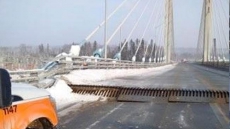
    About 1,300 trucks cross the Nipigon River Bridge, in Nipigon, Ont., every day, according to the Ontario Ministry of Transportation's 2012 commercial vehicle survey — amounting to about $100 million in cargo daily.

    Nipigon Bridge Delays Slow $100 Million Of Goods Shipped Daily

    B.C. Workers, Families Seek Class Action Suit Over Deadly Sawmill Explosions

    B.C. Workers, Families Seek Class Action Suit Over Deadly Sawmill Explosions
    The separate blasts in 2012 killed four workers and injured 42 people at Babine Forest Products in Burns Lake and Lakeland Mills in Prince George.

    B.C. Workers, Families Seek Class Action Suit Over Deadly Sawmill Explosions

    .joint Committee On Doctor-assisted Suicide Dying Sets First Meeting For Monday

    .joint Committee On Doctor-assisted Suicide Dying Sets First Meeting For Monday
    The joint parliamentary committee that's examining the divisive issue of doctor-assisted death has scheduled its first meeting for next Monday.

    .joint Committee On Doctor-assisted Suicide Dying Sets First Meeting For Monday

    Burnaby Mayor Derek Corrigan Asks Justin Trudeau To Suspend NEB Pipeline Review

    Burnaby Mayor Derek Corrigan Asks Justin Trudeau To Suspend NEB Pipeline Review
    The mayor of a Metro Vancouver city is urging Prime Minister Justin Trudeau to immediately suspend National Energy Board hearings into the proposed Trans Mountain pipeline expansion.

    Burnaby Mayor Derek Corrigan Asks Justin Trudeau To Suspend NEB Pipeline Review

    Nuclear Provided 60 Per Cent Of Ontario's Electricity In 2015; Little From Wind, Solar

    Nuclear Provided 60 Per Cent Of Ontario's Electricity In 2015; Little From Wind, Solar
    TORONTO — Nuclear power provided 60 per cent of Ontario's electricity in 2015, while renewables such as wind and solar power added only a tiny amount to the supply mix.

    Nuclear Provided 60 Per Cent Of Ontario's Electricity In 2015; Little From Wind, Solar