

Canada and Ukraine's other allies in the "coalition of the willing" signed a statement Tuesday pledging to help secure Ukraine from further Russian invasions if there is a viable peace deal.
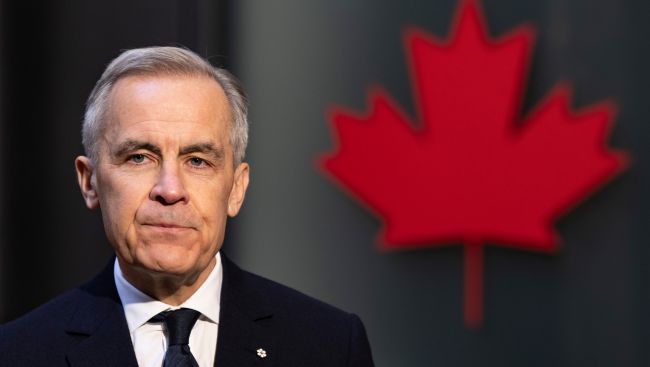
Prime Minister Mark Carney was back in Ottawa late Tuesday night, after a brief trip to Paris for these talks, where he promised Canada's support for Ukraine alongside the more than 30 countries in the coalition — though it remains unclear whether Canada would deploy troops to Ukraine.
The proposed security agreement would see a multinational force sent to aid Ukraine after a ceasefire takes hold, and offers a promise to support the war-torn country if Russia invades again.
While that effort would be led by Europe, the agreement says the force would also involve "non-European members of the coalition, and the proposed support of the U.S."
At an earlier press conference announcing the statement, U.S. President Donald Trump's personal envoy Steve Witkoff said the U.S. is committed to playing its part to secure peace for Ukraine.
"President Trump's mandate is that he wants a peace in Ukraine, and we are determined on his behalf to do everything on his behalf to attain that peace," he said.
Witkoff added that the agreements involve "security protocols, which are important so that the people of Ukraine know that when this ends, it ends forever."
Trump's son-in-law, Jared Kushner, who also attended the Paris meetings, said the agreement is "a big, big milestone" on the path to "an eventual peace deal."
"This does not mean that we will make peace, but peace would not be possible without the progress that was made here today," he said.
The declaration commits to a U.S.-led ceasefire monitoring system aided by coalition members, long-term military support for Ukraine's armed forces and a binding plan to support Ukraine if Russia breaks a ceasefire deal.
Members of the coalition would also beef up Ukraine’s war-battered army with weapons and training, to "remain the first line of defence and deterrence." The public statement does not specify how many Ukrainian or foreign troops would be involved in securing the country.
France and the U.K. would establish military hubs across Ukraine and "protected facilities for weapons and military equipment," according to British Prime Minister Keir Starmer.
French President Emmanuel Macron noted that the declaration includes non-European nations such as Canada, New Zealand, Australia, and Japan.
"In particular, the Canadian prime minister was with us today, which is a very strong signal and (he) is committed to these security guarantees," Macron said in French.
At a news conference at the Canadian Embassy before the announcement, Carney said in French that putting Canadian troops on the ground is just a "possibility" at this stage. He said that taking part in a multinational force would have "a much bigger effect than obviously we would if we were on our own."
Carney, who boarded a flight back to Ottawa on Tuesday evening, said Canada's initial contributions to Ukraine could start with training. Canadian soldiers are currently training Ukrainian forces in Poland as part of Operation Unifier.
Earlier Tuesday, Carney said his government's push to build up the military will help Canada play a role in securing Ukraine after the war.
"We've been building that bench, and we're going to continue to build that bench," he told reporters.
"The largest military buildup in generations coming over the course of the next five years, an additional $80 billion of investment, in part because of issues like this."
Carney said Gen. Jennie Carignan, chief of Canada's defence staff, has been in talks with her counterparts in the coalition for months on shaping Ukraine's security guarantees. The Department of National Defence confirmed that Carignan participated virtually Monday in a meeting of defence chiefs from coalition countries, scheduled for the day before the coalition leaders' summit.
A senior Canadian government official briefing reporters on the plane to Paris said Canada has been in talks for months on making an "appropriate and serious contribution" to Ukrainian security guarantees.
Carney also met Tuesday with NATO Secretary-General Mark Rutte, who said he admired how Canada is stepping up to support Ukraine with equipment and financial assistance.
Rutte also praised Canada for taking a leadership role in the defence of the Far North, where he noted Russia and China have been "active."
Carney spoke Tuesday about the importance of scaling up Canada's military to defend the wider Arctic region. He referred to Greenland and the Arctic as the "western flank" of NATO.
"With our buildup that's just beginning of our military capabilities, we are making heavy investments in the Arctic," he said.
Picture Courtesy: THE CANADIAN PRESS/Christinne Muschi


