Canada may have difficulty taking part in a peacekeeping mission in Ukraine after a future ceasefire because it has clearly taken a side in the conflict, an international affairs expert suggests.
During a visit to Kyiv on the third anniversary of Russia's full-scale invasion on Monday, Prime Minister Justin Trudeau did not rule out deploying Canadian troops to the region as part of a possible peace deal.
But that decision isn't entirely up to Canada.
The United Nations' guiding principles for peacekeeping state that the parties to a conflict — in this case, Ukraine and Russia — need to agree on deploying peacekeepers. Those principles also state the nations sending peacekeepers must be "impartial."
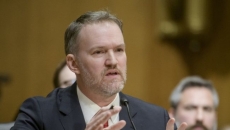
Canada would have a hard time proving that, given its vocal support for Ukraine and its substantial contributions to its defence, said David Perry, president of the Canadian Global Affairs Institute.
"It would be difficult to see what kind of role Canada could really play as sort of a neutral observer or arbiter of anything," Perry said.
"This would be a circumstance where the Russians would have good reason to say that we can't really provide an independent role because we have (been), again, for all the right reasons, partial to one side in the prevailing conflict."
The UN peacekeeping principles state that while impartiality is crucial, peacekeepers should not be neutral if one side compromises the peace process.
Canada, along with its allies, condemned Russia's invasion at the start. It has contributed money and equipment to Ukraine's defence and has frozen Russian assets.
U.S. President Donald Trump has said Ukrainian President Volodymyr Zelenskyy will meet with him Friday to sign an agreement on sharing his country's mineral resources with the United States.
During a press conference in Washington Thursday with U.K. Prime Minister Keir Starmer, Trump claimed this deal would help bring lasting peace to the region.
At a news conference in Kyiv Wednesday, Zelenskyy said the framework for an economic deal had been reached but it does not include security guarantees.
The Ukrainian president said he needs to know where the U.S. stands on continued military support.
Starmer said Thursday he thinks the deal will be celebrated in Ukraine and around the world. He added Britain is ready to put boots on the ground and planes in the air to support that peace.
Trump said he sees the U.S. getting a share of Ukrainian resources as a form of repayment for American support during the war.
The U.S. has been holding peace talks with Russian officials in recent weeks, without Ukraine at the table.
Since those talks began, Trump has referred to Zelenskyy as a "dictator" due to the lack of wartime elections, and has accused Ukraine of starting the war.
Trump softened that language slightly Thursday when asked by a reporter in the Oval Office if he still believed Zelenskyy was a dictator.
"Did I say that? I can't believe I said that. Next question," Trump said.
On Wednesday, Russian Foreign Minister Sergey Lavrov said Russia would not accept European peacekeepers in the event of a truce.
During a meeting with French President Emmanuel Macron at the White House on Tuesday, Trump said he was open to the idea of putting European peacekeepers in Ukraine as part of a potential deal and that Russian President Vladimir Putin shared that view.
The Kremlin later rejected Trump's characterization.
Orest Zakydalsky, senior policy adviser with the Ukrainian Canadian Congress, said that Russia is the party preventing peace in the region.
"I think we are pretty far afield in terms of getting to some sort of stage where there could even be peacekeepers, and the reason for that is not Ukraine, it's Russia," he said. "Russia has proven, I don't know how many times, that it seeks the destruction of the Ukrainian state."
Zakydalsky said he believes the focus for NATO should be supplying Ukraine with weapons to defend itself and shoring up its own military resources, now that the U.S. is becoming more friendly with Russia.
"I don't think anyone can say that the U.S. is a reliable ally anymore when you have the U.S. even unable to say simply who started this war," he said.
Perry said that even if Canada is invited to take part a peacekeeping operation in Ukraine, he's not sure how much — if anything — it could contribute.
"The Canadian Forces level of operational readiness right now is the lowest it's been reported in many years, if not decades," he said.
"And practically speaking, given our commitments in Latvia and the state of understaffing in the Canadian military right now, I'm not really sure how we could actually contribute very much at all."
Canada currently has about 1,900 Canadian Armed Forces members deployed in Latvia as part of Operation Reassurance, a NATO mission meant to deter Russian aggression in eastern Europe.