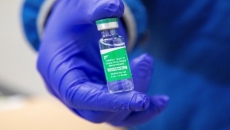
The federal government is donating 17.7 million doses of the Oxford-AstraZeneca COVID-19 vaccine and is asking Canadians to give their own money to help other countries get needles into arms.
Procurement Minister Anita Anand says after talking to provinces, it was determined these COVID-19 doses to be excess supply, as demand for this vaccine had been met.
She says the AstraZeneca doses to be donated were supposed to flow into Canada through an advanced purchase agreement and be produced in the United States.
Anand says the shots will be made available to lower-income countries through the global vaccine-sharing alliance COVAX. The timing is still being worked out.
Let’s keep going Canada!
— Anita Anand (@AnitaOakville) July 12, 2021
🇨🇦Thanks to all frontline workers administering vaccines and @thisisourshotca @VaxHuntersCan for your work.
🇨🇦PSPC_SPAC will keep bringing in millions of vaccines for Canadians.
🇨🇦55 million vaccines and our work continues. https://t.co/35eD6txBV7
The National Advisory Committee on Immunization says mRNA vaccines, such as the ones by Modernaand Pfizer-BioNTech, are preferred over the viral-vector vaccine by AstraZeneca, even for people who received AstraZeneca as a first dose.
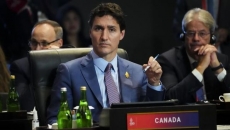
Prime Minister Justin Trudeau was among the Canadians who got AstraZeneca for his first dose and Moderna for his second.
While at the G7 last month, Trudeau pledged Canada would give back 13 million doses it was set to receive through a contract with COVAX, on top of millions of dollars already set aside for the global vaccine effort.
Canada is on track to receive 68 million doses by the end of July, which would be enough to inoculate most Canadians.
At Monday's announcement, Anand says 44 million doses of Moderna and 51 million shots from Pfizer-BioNtech are expected to have arrived in the country by the end of September.
With a population of nearly 38 million people, Canada would need about 76 million shots of two-dose vaccines to make sure everyone is fully vaccinated.
Asked Monday about why the federal government hasn't marked any of its Moderna or Pfizer deliveries for donation given its volume of supply, Anand said these shots are still in high demand in Canada and things could stay that way.
"We are still watching the science evolve in this area in terms of the potential need for an additional third shot or boosters, and so we are making sure that we have the supply on hand of these vaccines to be able to serve the needs of Canadians in the short and the long term," she said.
"Any decision on the donation of doses needs to be made by the Public Health of Agency in co-ordination with the provinces and territories."
It's unclear when, or whether,Canadians will need to get a third dose of vaccine.
Pfizer said recently it has seen a bit of a dip in antibodies in Israel six months after vaccination.
Canada is expecting vaccine shipments to keep rolling in this week as the country inches closer to matching the percentage of people in the United States fully vaccinated against COVID-19.
The federal government expects another 1.4 million doses of the shot from Pfizer-BioNTech to arrive in the next seven days.
It also plans to distribute the 1.5 million doses from Moderna that came in last Friday.
By the end of the week, Canadian officials expect to have received a total of more than 55 million doses including the latest shipments, though those figures may change.
🇨🇦 is donating 17.7M doses of AstraZeneca to #COVAX to help meet international vaccine needs.
— Anita Anand (@AnitaOakville) July 12, 2021
With nearly 55M doses in 🇨🇦 & millions more arriving weekly, we are now in a position to donate excess vaccines while continuing to meet needs here at home.https://t.co/45wE1keRo4
The federal government has promised that it would reach 68 million shots delivered by the end of July and says it's still on track to hit that target.
To date, around 42.7 per cent of eligible Canadian residents have received two doses of COVID-19 vaccine, giving them full protection against the virus.
The figures come courtesy of COVID-19 Tracker, a volunteer-run project that relies on data from provincial and territorial governments.
The U.S.'s Centers for Disease Control and Prevention data tracker lists 48 per cent of that country's population as being fully immunized.