
Thursday, April 2, 2026
ADVT 
National

Canada faces 'massive challenge' as NATO eyes new 5% spending target: expert

Darpan News Desk The Canadian Press, 27 May, 2025 01:04 PM
  • Canada faces 'massive challenge' as NATO eyes new 5% spending target: expert

When representatives of NATO nations meet in The Hague late next month, they're expected to dramatically hike the alliance's defence spending target for members — the one Canada is failing to hit already.

At the last NATO summit in Washington last year, allies lined up to call out Canada for failing to meet the alliance defence spending target of two per cent of national GDP.

When Prime Minister Mark Carney attends the NATO summit next month, he'll likely be under pressure to commit to a new defence spending target of five per cent of national GDP.

"We're such an outlier now," said David Perry, president of the Canadian Global Affairs Institute. He said Canada will face a "massive challenge" in meeting the new target.

U.S. President Donald Trump has said for months he wants to see NATO countries increase their defence spending to five per cent of GDP.

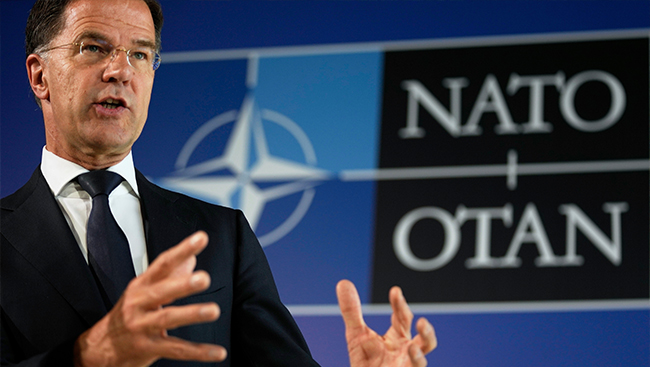
On Monday, NATO Secretary General Mark Rutte said he believes allied nations will agree at next month's gathering to a new target of five per cent.

Annual NATO data shows Canada is still failing to reach its current commitment; defence spending amounted to just 1.3 per cent of GDP in 2024. Canada also failed to meet the alliance's target for equipment spending.

"The last time that there were reported stats, we were one of only two not meeting either (pledge). Everybody else meets at least one," Perry said. "We're increasingly, extraordinarily isolated in how far behind everyone else we are."

Laval University international relations professor Anessa Kimball said Canada should be preparing to argue that investing more in the military becomes much harder in the middle of a trade war.

Kimball said Ottawa should prepare to leverage Trump's calls for higher military spending in the alliance and use that to press the case against his tariff agenda.

Kimball, who wrote a book on defence burden-sharing among NATO members, also said Carney may have a ready-made excuse for missing the NATO target.

As governor of the Bank of England, Carney was busy in the U.K. managing the economic fallout from Brexit when Justin Trudeau was in power and directing Canada's military spending.

"While I think that gives him an important level of macroeconomic credibility, it also gives him a little bit of an out. Essentially he can say, 'Trudeau and the Liberal Party left me a bit of a mess and they've known that they had to do this,'" Kimball said.

"Carney couldn't do worse at being convincing as Trudeau was. Trudeau was entirely unconvincing last year."

At the 2024 NATO summit in Washington, after a series of U.S. politicians blasted Canada for failing to meet its commitments, Trudeau pledged to reach the two per cent target by 2032.

His government suggested this could be done by buying up to 12 new submarines — a procurement project for which no deadline was ever given.

Trudeau said at the time that Canada's defence spending was based on its needs, "not some nominal targets that make for easy headlines and accounting practices, but don’t actually make us automatically safer.”

During the spring election campaign, Carney pledged to reach two per cent by 2030.

"The government was elected on a strong mandate to rebuild Canada's defence capacity, rearm the Canadian Armed Forces and invest in the Canadian defence industry," said Laurent de Casanove, a spokesperson for Defence Minister David McGuinty.

"The prime minister was clear that this government will invest to put Canada on track to exceed our NATO defence spending target before 2030."

But Perry said Carney likely will have very little wiggle room at The Hague, even in a room full of allies who know he's new to the job.

"I think, unfairly for him, there's probably not a lot (of room)," he said. "Even though he's brand-new, this commitment for Canada isn't. It's over a decade old."

Picture Courtesy: THE CANADIAN PRESS/AP-Khalil Hamra

MORE National ARTICLES

As birth tourism rises again, will Trump's citizenship moves send more Canada's way?

As birth tourism rises again, will Trump's citizenship moves send more Canada's way?
Vancouver-based birth tourism operator Liga Lin says her phone has been buzzing with inquiries from expectant mothers since U.S. President Donald Trump moved to end American birthright citizenship. Lin's business, New Joy Postpartum Care, arranges accommodation and services for non-resident women — mostly from mainland China, Taiwan and Hong Kong — who want to give birth in Canada, granting their children automatic citizenship rights.

As birth tourism rises again, will Trump's citizenship moves send more Canada's way?

A short list of some of the U.S. goods to be hit with Canadian tariffs on Tuesday

A short list of some of the U.S. goods to be hit with Canadian tariffs on Tuesday
Effective Tuesday, Canada is imposing 25 per cent tariffs on $30 billion in goods originating in the United States — part of Canada's response to sweeping tariffs on Canadian goods ordered by U.S. President Donald Trump. Here are some of the major categories of imported items being hit with Canadian tariffs, along with their approximate annual dollar values:

A short list of some of the U.S. goods to be hit with Canadian tariffs on Tuesday

Ontario, Quebec and B.C. among provinces pulling U.S. booze from provincial retailers

Ontario, Quebec and B.C. among provinces pulling U.S. booze from provincial retailers
Canadian alcohol producers are cheering decisions from several provinces to yank U.S. booze from provincial liquor stores. They say the move will deliver a boost to homegrown business while adding ammunition to a federal plan aimed at getting the U.S. to back down from tariffs.

Ontario, Quebec and B.C. among provinces pulling U.S. booze from provincial retailers

Canada slaps retaliatory tariffs on hundreds of U.S. goods, outlines response plan

Canada slaps retaliatory tariffs on hundreds of U.S. goods, outlines response plan
Ottawa is imposing 25 per cent tariffs on hundreds of goods originating in the United States — from meat and milk to carpets and curtains — in response to steep new American levies against Canada. A federal official also signalled that Canada will pursue available legal remedies in response to the U.S. breaching its international trade commitments.

Canada slaps retaliatory tariffs on hundreds of U.S. goods, outlines response plan

Employment Outlook 2025: Opportunities and Challenges in BC and Canada

Employment Outlook 2025: Opportunities and Challenges in BC and Canada
The employment landscape in British Columbia (BC) and Canada is undergoing dynamic transformations shaped by economic shifts, evolving labor market demands, and demographic changes. As we move into 2025, a comprehensive outlook reveals both opportunities and challenges for job seekers, particularly for immigrants, underrepresented groups, and youth entering the workforce.  

Employment Outlook 2025: Opportunities and Challenges in BC and Canada

Ottawa defers effective date of capital gains changes to 2026, promises exemptions

Ottawa defers effective date of capital gains changes to 2026, promises exemptions
The federal government says it is deferring the implementation of a hike to the capital gains inclusion rate to next year and plans to introduce new exemptions to ensure most middle-class Canadians do not pay more tax if the rate becomes official. The deferral announced by Finance Minister Dominic LeBlanc on Friday delays the implementation of the change from June 25, 2024 to Jan. 1, 2026.

Ottawa defers effective date of capital gains changes to 2026, promises exemptions