Sunday, June 7, 2026
ADVT 
National

Canada joining Mexico to dispute USMCA auto-rules

Darpan News Desk The Canadian Press, 13 Jan, 2022 10:58 AM
  • Canada joining Mexico to dispute USMCA auto-rules

WASHINGTON - Canada is joining forces with Mexico to challenge how the United States is interpreting the new rules that govern duty-free cars and trucks.

Mexico last week asked for a dispute resolution panel to challenge the stringent U.S. interpretation of the auto rules of origin enshrined in the U.S.-Mexico-Canada Agreement.

Rules of origin in the deal known as CUSMA in Canada dictate how much of a product must originate in the region in order to qualify for tariff-free status.

The new deal requires passenger vehicles to contain 75 per cent regional content, up from 62 per cent under NAFTA.

Canada says the U.S. is violating the terms of the agreement by adopting a stricter formula for how those thresholds are met

It's the second major dispute to arise since the deal took effect after a panel ruled last week in favour of a U.S. complaint about how Canada is allocating its quotas for dairy imports.

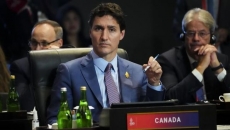
"Canada is joining Mexico's request to establish a dispute resolution panel," Trade Minister Mary Ng said in a statement today.

"Canada, Mexico and the United States would all benefit from certainty that CUSMA is being implemented as negotiated, and Canada is optimistic that a dispute settlement panel will help ensure a timely resolution of this issue."

News of the decision comes after virtual meetings Wednesday between deputy U.S. trade representative Jayme White and David Morrison, Canada's deputy trade minister.

The two are scheduled to continue their discussions behind closed doors today with Mexican counterpart Luz María de la Mora.


 

MORE National ARTICLES

Most B.C. COVID cases are in 20- to 40-year-olds with one or fewer doses: top doctor

Most B.C. COVID cases are in 20- to 40-year-olds with one or fewer doses: top doctor
British Columbia's top doctor says the surge in COVID-19 cases is fuelled by those between the ages of 20 and 40 who are unvaccinated or have only had one dose.

Most B.C. COVID cases are in 20- to 40-year-olds with one or fewer doses: top doctor

Have your say on B.C.’s permanent paid sick leave

Have your say on B.C.’s permanent paid sick leave
British Columbians are invited to provide input into the development of made-in-B.C. permanent paid sick leave to support workers and protect workplaces.

Have your say on B.C.’s permanent paid sick leave

Vancouver Police identify a 40 year old as victim of its 11th homicide

Vancouver Police identify a 40 year old as victim of its 11th homicide
Bailey was shot inside the London Hotel at around 5 a.m. on July 20. Two suspects fled the area prior to police arrival. VPD investigators believe the incident was targeted. The investigation is active and ongoing.

Vancouver Police identify a 40 year old as victim of its 11th homicide

Mandatory vaccination possible for federal workers

Mandatory vaccination possible for federal workers
Prime Minister Justin Trudeau says he is considering making COVID-19 vaccinations mandatory for some federally regulated workplaces such as airlines. It is the first time Trudeau has openly supported any form of compulsory vaccinations.

Mandatory vaccination possible for federal workers

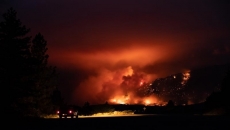
Falkland, B.C., evacuated as wildfire threatens

Falkland, B.C., evacuated as wildfire threatens
The wildfire service says fire danger in the southern Interior is ranked high to extreme and strong winds forecast over the White Rock Lake fire have the potential to cause further flare-ups through the day.

Falkland, B.C., evacuated as wildfire threatens

Ottawa won't share details on Afghan refugees

Ottawa won't share details on Afghan refugees
Speaking to a virtual news conference today, Mendicino says the government is dealing with urgent and volatile circumstances in Afghanistan as the international coalition forces led by the United States continue to withdraw from the country and the Taliban gain ground.

Ottawa won't share details on Afghan refugees