Canada and other major fossil fuel-producing countries are derailing the world’s chance to hit key targets to rein in climate change, a new international report suggests, with 2030 production levels expected to be more than double what would be compatible with the Paris Agreement.
While some countries have committed to a clean energy transition, others appear to be turning back to “an outdated fossil-fuel dependent playbook,” the report said.
“The continued collective failure of governments to curb fossil fuel production and lower global emissions means that future production will need to decline more steeply to compensate,” read the Production Gap Report produced by three climate research non-profits.
“These deeper reductions will be harder and more expensive to achieve, as the result of further lock-in of fossil fuel infrastructure added in the 2020s, and the increased pace of reductions required from now on.”
The report suggests countries are now planning to produce 120 per cent more fossil fuels in 2030 than is consistent with keeping global warming to 1.5 degrees, and 77 per cent more than what's aligned with a two-degree limit. That production gap – the difference between the cuts required to keep emissions in check and planned production – is even bigger than two years ago, the report said.
Coal still has the biggest gap, with 2030 production levels expected to be 500 per cent above a pathway to 1.5 degrees, and 330 per cent above two degrees, the report found. Global oil and gas production are 31 per cent and 92 per cent higher, respectively, than what's consistent with a 1.5-degree target, or 16 per cent and 33 per cent higher than a two-degree pathway.
Those temperature guardrails enshrined in the 2015 Paris Agreement are intended to avoid some of the most catastrophic and irreversible climate impacts. The more ambitious 1.5-degree target was pushed by small island nations and backed by an emerging scientific consensus, which showed it would reduce the risks of extreme heat, sea level rise and coastal flooding.
Ten years later, studies suggest that 1.5-degree target could soon be breached, with scientists urging countries do whatever they can to reduce further warming and put in measures to eventually bring down global temperatures.
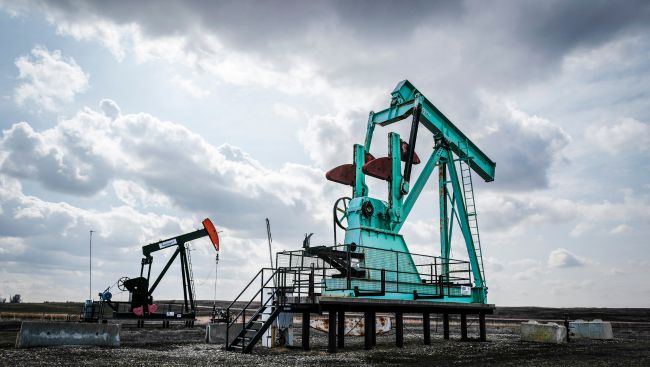
Of the 20 major fossil-fuel producer countries profiled in the production gap report, Canada’s planned increase to oil production for 2030, compared to 2023 levels, ranks behind only Saudi Arabia, Brazil, the United States and Nigeria. Canada is ranked as a top four oil producer with about 6.5 per cent of the global total.
Canada's contribution to fossil fuel production is also likely underestimated in the report since it relies on energy forecasts from 2023, before the government greenlit several new liquefied natural gas projects, said Nichole Dusyk, a report contributor and a senior policy adviser with the International Institute for Sustainable Development.
The expansion of oil and gas production also comes as Canada pulls back on some key climate policies, Dusyk said.
"We're moving in the wrong direction in both fronts," she said.
Prime Minister Mark Carney has repealed the consumer carbon price and paused the electric vehicle sales mandate. He has also been noncommittal on legally enshrined 2030 and 2035 emissions targets, though the government says it's still focused on hitting net-zero by 2050.
The future of a federal policy to cap emissions on the oil and gas sector also appears to be in limbo. Alberta and oil industry groups have slammed the policy as a barrier to growth and demanded its cancellation.
Meanwhile, Alberta has frozen its industrial carbon price for 2026, and Saskatchewan has moved to extend the life of its coal plants.
Monday's production gap report also singled out Canada for the tens of billions of dollars it has spent to purchase and construct the Trans Mountain pipeline.
"We are continuing to fuel climate change," Dusyk said. "Canadians experience that as heat waves, as floods, droughts, as wildfires. It affects the quality of life of Canadians. And it also affects our economy. People pay for that. They pay for it in their insurance costs. They pay for it in the destruction of their homes and their properties."
Despite some of the report's grim findings, it also highlights some promising trends.
Clean energy technology – particularly solar, batteries and electric vehicles – continue to break records with accelerating deployment and rapid production cost decreases, the report said. The cost of renewable energy has dropped dramatically in recent years and is now the cheapest form of new electricity generation in much of the world, it said.
Picture Courtesy: THE CANADIAN PRESS/Jeff McIntosh