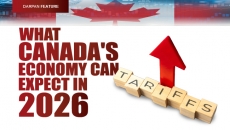
The Trump administration launched trade investigations of multiple countries Wednesday in an attempt to solidify the president's tariff policies after the Supreme Court struck down his previous efforts to realign global trade.
Canada was not included in the list of countries targeted by President Donald Trump's investigations under Section 301 of the Trade Act of 1974.
Mexico is on the list. So are China, the European Union, Singapore, Switzerland, Norway, Indonesia, Malaysia, Cambodia, Thailand, South Korea, Vietnam, Taiwan, Bangladesh, Japan and India.
"The United States will no longer sacrifice its industrial base to other countries that may be exporting their problems with excess capacity and production to us," United States Trade Representative Jamieson Greer said in a Wednesday news release.
"Today's investigations underscore President Trump’s commitment to reshore critical supply chains and create good-paying jobs for American workers across our manufacturing sectors."
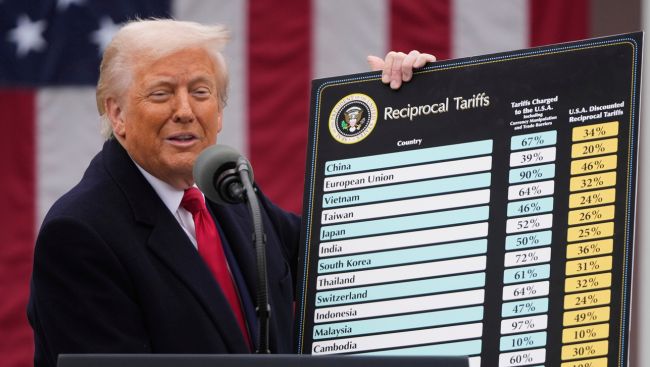
The 301 trade investigations are the Trump administration's latest attempt to implement worldwide tariffs.
The Supreme Court said last month Trump's favourite tariff tool, the International Emergency Economic Powers Act, could not be used for tariffs. The conservative-led court found that the U.S. Constitution "very clearly" gives Congress power over taxes and tariffs.
In response to the top court's ruling, Trump implemented a 10 per cent worldwide tariff using Section 122 of the 1974 Trade Act. Those tariffs do not apply to goods compliant with the Canada-U.S.-Mexico Agreement on trade.
Section 122 tariffs can only increase to 15 per cent and will expire after 150 days unless Congress votes to extend them. An extension would be unlikely to get the approval of Congress.
The Trump administration has also imposed Section 232 tariffs on specific industries, including steel, aluminum, automobiles and cabinetry.
Trump will have a longer-term tariff option if the Section 301 investigation finds a trading partner's policies are unreasonable and discriminatory.
Greer told reporters Wednesday that he didn’t want to prejudge the outcome of the process. He said the investigations would examine excess industrial capacity and government backing that could give foreign companies an unfair advantage over U.S. companies.
The White House and Greer's office have not yet responded to questions about Canada's exclusion from Wednesday's announcement and whether it will be included in future Section 301 trade investigations.
Scott Lincicome, vice president of general economics at the Washington-based Cato Institute, said it would be difficult for a 301 investigation to conclude that tariffs on Canada are necessary.
Lincicome said in an email that "given the nature of Canada's goods balance with the U.S. (oil or not), they could be unable to quickly point at a surplus and find the historic 'overcapacity' they need to justify tariffs."
Canada's trade surplus with the United States is largely caused by U.S. imports of Canadian oil.
Statistics Canada said Thursday that Canada's merchandise trade surplus with the U.S. was $5.4 billion in January compared with $5.7 billion in December, while exports to the U.S. fell 3.8 per cent and imports from the U.S. dropped 3.4 per cent.
Picture Courtesy: AP Photo/Mark Schiefelbein, File