Friday, December 19, 2025
ADVT 
National

Canada's vulnerable to money laundering on par with similar countries: expert

Darpan News Desk The Canadian Press, 28 May, 2020 09:24 PM
  • Canada's vulnerable to money laundering on par with similar countries: expert

A senior police officer from the United Kingdom who specializes in money laundering says he believes Canada is no more vulnerable to the crime than other Western jurisdictions.

Simon Lord of the National Crime Agency, who is also part of a Five Eyes group dedicated to international money laundering controls, began his testimony before a public inquiry into money laundering in British Columbia on Thursday.

Inquiry commissioner Austin Cullen heard in February from a coalition of tax fairness groups that hiding ill-gotten cash behind shell companies is so widespread in Canada that it's known globally as "snow washing."

However, Lord says that the money laundering situation in Canada looks similar to that of the United Kingdom, the United States and other countries with similar legal and economic frameworks.

He says aspects of an economy designed to attract investment or "good money," like having a developed financial system and global trade links, typically have the effect of attracting "bad money" at the same time.

Generally, he says Canada is "pretty well run" and referenced a 2016 review by the Financial Action Task Force, an international organization founded to combat money laundering, that found some deficiencies in regulation.

"I wouldn't say Canada is any more or less vulnerable to money laundering, and certainly British Columbia, than any other large Western country," Lord says.

There are consequences to being perceived as a country that is vulnerable to money laundering. Lord gave the example of the United Arab Emirates, which he says he believes has been unfairly portrayed as a "hot bed" for money laundering.

"There's no doubt that money laundering does take place there, but people can perceive that everybody who lives in a country is somehow tied up in that criminality," which he says is untrue.

"As soon as you are seen as a bad place to do business, if your regulatory structures aren't in place, if there are lots of ways in which your country can be abused, then people simply don't want to put their money there."

When that happens, remittances go down, the cost of borrowing goes up and the amount of money available for public services goes down, he says.

"It really is imperative that countries get on top of this type of thing because they can suffer all kinds of ill effects from it."

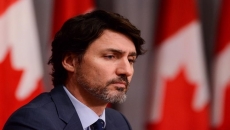
B.C. launched the provincial inquiry amid growing concern that illegal cash was helping to fuel its real estate, luxury car and gambling sectors. Prime Minister Justin Trudeau's government is participating and says it is committed to tackling the national problem.

The inquiry heard opening statements in February and will delve into specific industries starting in September.

The ongoing portion of the inquiry is dedicated to an overview of money laundering and the various regulatory models designed to fight it around the globe.

MORE National ARTICLES

Federal scientists predict high wildfire risk across Western Canada

Federal scientists predict high wildfire risk across Western Canada
Federal scientists are predicting a higher than average wildfire hazard for almost the entire country this summer. Their annual forecast says the risk will be highest in early summer in Western Canada.

Federal scientists predict high wildfire risk across Western Canada

Americans trust Canadians more than they trust themselves, poll suggests

Americans trust Canadians more than they trust themselves, poll suggests
A new online poll suggests COVID-19 has damaged the trust Canadians have in their American neighbours, while U.S. residents have more faith in their northern counterparts than they do in themselves. The poll from Leger and the Association for Canadian Studies finds only 34 per cent of respondents expressed trust in Americans, compared with 58 per cent from a similar survey in November of last year.    

Americans trust Canadians more than they trust themselves, poll suggests

PM deflects questions about military's delayed confirmation of helicopter crash

PM deflects questions about military's delayed confirmation of helicopter crash
Prime Minister Justin Trudeau deflected questions Tuesday about why it took more than 12 hours for the Canadian Armed Forces to confirm a military helicopter had crashed and when he found out that horrified crew members on board a Halifax-class frigate had watched it go down.

PM deflects questions about military's delayed confirmation of helicopter crash

Scientists concerned focus on COVID-19 disrupting regular health research funds

Scientists concerned focus on COVID-19 disrupting regular health research funds
Canada's health research granting agency has postponed its usual funding competition due to COVID-19, sparking concern the lack of money could disrupt regular health research. The Canadian Institutes of Health Research put off its regular $275 million competition this spring to focus on delivering federal grants related to the novel coronavirus.

Scientists concerned focus on COVID-19 disrupting regular health research funds

Qualtrough tells MPs Moms-to-be to get CERB Friday, Liberals say

Qualtrough tells MPs Moms-to-be to get CERB Friday, Liberals say
Expecting mothers who lost their jobs due to COVID-19 in March, and have since been unable to access emergency federal aid, will receive a key benefit once a fix comes into effect on Friday. Employment Minister Carla Qualtrough told MPs in an email today that changes to the system would be in place May 8 so some pregnant women can finally receive the Canada Emergency Response Benefit.

Qualtrough tells MPs Moms-to-be to get CERB Friday, Liberals say

Canada's COVID-19 death toll passes 4,000; feds announce help for farmers

Canada's COVID-19 death toll passes 4,000; feds announce help for farmers
The number of people in Canada killed by COVID-19 passed the 4,000 mark on Tuesday, as provinces eased anti-pandemic restrictions and the government announced new aid for farmers. The grim fatality milestone came as the country's two largest provinces each reported a jump in novel coronavirus-related deaths, although the overall increase in new cases was relatively modest. 

Canada's COVID-19 death toll passes 4,000; feds announce help for farmers