Sunday, December 21, 2025
ADVT 
National

Canada's vulnerable to money laundering on par with similar countries: expert

Darpan News Desk The Canadian Press, 28 May, 2020 09:24 PM
  • Canada's vulnerable to money laundering on par with similar countries: expert

A senior police officer from the United Kingdom who specializes in money laundering says he believes Canada is no more vulnerable to the crime than other Western jurisdictions.

Simon Lord of the National Crime Agency, who is also part of a Five Eyes group dedicated to international money laundering controls, began his testimony before a public inquiry into money laundering in British Columbia on Thursday.

Inquiry commissioner Austin Cullen heard in February from a coalition of tax fairness groups that hiding ill-gotten cash behind shell companies is so widespread in Canada that it's known globally as "snow washing."

However, Lord says that the money laundering situation in Canada looks similar to that of the United Kingdom, the United States and other countries with similar legal and economic frameworks.

He says aspects of an economy designed to attract investment or "good money," like having a developed financial system and global trade links, typically have the effect of attracting "bad money" at the same time.

Generally, he says Canada is "pretty well run" and referenced a 2016 review by the Financial Action Task Force, an international organization founded to combat money laundering, that found some deficiencies in regulation.

"I wouldn't say Canada is any more or less vulnerable to money laundering, and certainly British Columbia, than any other large Western country," Lord says.

There are consequences to being perceived as a country that is vulnerable to money laundering. Lord gave the example of the United Arab Emirates, which he says he believes has been unfairly portrayed as a "hot bed" for money laundering.

"There's no doubt that money laundering does take place there, but people can perceive that everybody who lives in a country is somehow tied up in that criminality," which he says is untrue.

"As soon as you are seen as a bad place to do business, if your regulatory structures aren't in place, if there are lots of ways in which your country can be abused, then people simply don't want to put their money there."

When that happens, remittances go down, the cost of borrowing goes up and the amount of money available for public services goes down, he says.

"It really is imperative that countries get on top of this type of thing because they can suffer all kinds of ill effects from it."

B.C. launched the provincial inquiry amid growing concern that illegal cash was helping to fuel its real estate, luxury car and gambling sectors. Prime Minister Justin Trudeau's government is participating and says it is committed to tackling the national problem.

The inquiry heard opening statements in February and will delve into specific industries starting in September.

The ongoing portion of the inquiry is dedicated to an overview of money laundering and the various regulatory models designed to fight it around the globe.

MORE National ARTICLES

Nova Scotia shooting leaves many unanswered questions regarding communication with the public

Nova Scotia shooting leaves many unanswered questions regarding communication with the public
As of Wednesday, 23 people, including denturist Gabriel Wortman 51, were confirmed to have been killed in Canada’s worst-ever mass shooting. RCMP continues to investigate the weekend mass shooting by gunman Wortman while a series of official communications about the rampage have raised questions about effectiveness and clarity surrounding the incident. 

Nova Scotia shooting leaves many unanswered questions regarding communication with the public

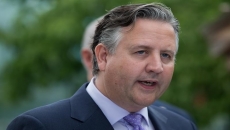
Offers of COVID-19 financial aid from province not enough for Vancouver: mayor

Offers of COVID-19 financial aid from province not enough for Vancouver: mayor
Vancouver's mayor says the financial help being offered by the B.C. government is a "poison chalice" because of the terms it would impose on the city. Kennedy Stewart says borrowing money from the province would saddle Vancouver with a massive deficit that would result in deep service cuts or large property tax increases in the future.    

Offers of COVID-19 financial aid from province not enough for Vancouver: mayor

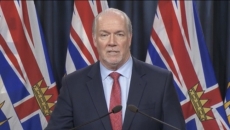
Horgan tells workers stay home if sick after COVID-19 outbreak at chicken plant

Horgan tells workers stay home if sick after COVID-19 outbreak at chicken plant
B.C. Premier John Horgan says people who are sick must stay away from work after an outbreak of COVID-19 at a chicken processing plant in Vancouver. Horgan said Wednesday workers should not go to work when they are sick because they fear losing wages, and that he was planning a meeting with Labour Minister Harry Bains and WorkSafe BC officials to discuss sick pay provisions.

Horgan tells workers stay home if sick after COVID-19 outbreak at chicken plant

Search for missing B.C. woman prompts homicide fears, second death

Search for missing B.C. woman prompts homicide fears, second death
Police are releasing more details about a British Columbia woman they fear may be the victim of a homicide. Metro Vancouver's Integrated Homicide Investigation Team says 45-year-old April Parisian was last heard from on March 28 and was declared missing earlier this month.

Search for missing B.C. woman prompts homicide fears, second death

Reports of hate crimes are up in Vancouver: police

Reports of hate crimes are up in Vancouver: police
An assault on a 92-year-old Asian man with dementia in Vancouver is being investigated as a hate crime and police say they have recently noticed an increase in reports of hate-motivated incidents. Vancouver police say the man has "severe dementia" and wandered into a convenience store on March 13 when another man yelled racist remarks that included comments about COVID-19.    

Reports of hate crimes are up in Vancouver: police

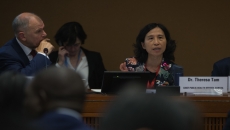
More signs COVID-19 is slowing in Canada; students to get federal help

More signs COVID-19 is slowing in Canada; students to get federal help
Chief Public Health Officer Dr. Theresa Tam said Canada was making progress in slowing the epidemic but warned against letting down its guard. The focus, Tam said, must be placed on stopping outbreaks in places like seniors homes and in other places where vulnerable populations live together in close quarters. How exactly Canada gets on the road to normalization will largely depend on the provinces, Prime Minister Justin Trudeau said on Wednesday. However, the closure of the Canada-U.S. border will stay in place until May 21st at least, he said.

More signs COVID-19 is slowing in Canada; students to get federal help