Monday, June 8, 2026
ADVT 
National

Canadian Bar Association names first Indigenous head

Darpan News Desk The Canadian Press, 04 Sep, 2020 07:33 PM
  • Canadian Bar Association names first Indigenous head

Brad Regehr is a bit surprised to see the attention he's getting over his new job.

The Manitoba lawyer and member of the Peter Ballantyne Cree Nation in Saskatchewan is the first Indigenous person to become president of the Canadian Bar Association.

He says that may have something to do with the spotlight.

“It’s time for the organization to have a little bit more diversity at its top spot," Regehr told The Canadian Press in an interview Friday during his first week in his new role.

He points out that his predecessor was the first Black lawyer to serve in the position.

Regehr is taking on the job at a time when people across North America are calling out racial injustice through movements such as Indigenous Lives Matter and Black Lives Matter.

One of his priorities, he said, will be continuing to implement the work of the Truth and Reconciliation Commission of Canada.

“My own grandfather went to a residential school in Saskatchewan — that had a big impact on our family," said the 52-year-old.

“I am a survivor of the '60s Scoop. Though I always like to qualify that ... I think I’m one of the lucky ones who was adopted into a very loving home and am very close to both my biological and adopted families.”

Regehr said healing needs to happen because of the legacy residential schools left with Indigenous people.

“It doesn’t take a whole lot to realize we’ve got some significant challenges in the Canadian legal system, particularly in the criminal justice system and the child-welfare system," he said.

"More and more court decisions are coming out where they are talking about the impact that the system has on Indigenous people."

Regehr is a former president of the Manitoba Bar Association and former vice-president with the national bar association. He is a partner at Maurice Law in Winnipeg.

He said more Indigenous judges are needed at all court levels, as well as more Indigenous lawyers in the legal profession.

"Indigenous lawyers can bring a perspective ... which there’s not enough of that perspective," he said.

“The role of Indigenous legal traditions needs to be better understood.”

Regehr said another challenge for him in his new job is dealing with the fallout from COVID-19 — navigating online meetings, the toll the pandemic is taking on the well-being of lawyers who may feel isolated, and the overall functioning of the courts.

The health crisis has forced courts to adapt over the last six months and, in some cases, he hopes the changes stick.

“It’s both a challenge for everyone, but I think it’s an opportunity for us to modernize the justice system in a lot of ways.”

MORE National ARTICLES

Nova Scotia shooting leaves many unanswered questions regarding communication with the public

Nova Scotia shooting leaves many unanswered questions regarding communication with the public
As of Wednesday, 23 people, including denturist Gabriel Wortman 51, were confirmed to have been killed in Canada’s worst-ever mass shooting. RCMP continues to investigate the weekend mass shooting by gunman Wortman while a series of official communications about the rampage have raised questions about effectiveness and clarity surrounding the incident. 

Nova Scotia shooting leaves many unanswered questions regarding communication with the public

Offers of COVID-19 financial aid from province not enough for Vancouver: mayor

Offers of COVID-19 financial aid from province not enough for Vancouver: mayor
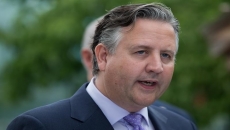
Vancouver's mayor says the financial help being offered by the B.C. government is a "poison chalice" because of the terms it would impose on the city. Kennedy Stewart says borrowing money from the province would saddle Vancouver with a massive deficit that would result in deep service cuts or large property tax increases in the future.    

Offers of COVID-19 financial aid from province not enough for Vancouver: mayor

Horgan tells workers stay home if sick after COVID-19 outbreak at chicken plant

Horgan tells workers stay home if sick after COVID-19 outbreak at chicken plant
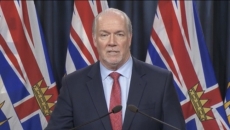
B.C. Premier John Horgan says people who are sick must stay away from work after an outbreak of COVID-19 at a chicken processing plant in Vancouver. Horgan said Wednesday workers should not go to work when they are sick because they fear losing wages, and that he was planning a meeting with Labour Minister Harry Bains and WorkSafe BC officials to discuss sick pay provisions.

Horgan tells workers stay home if sick after COVID-19 outbreak at chicken plant

Search for missing B.C. woman prompts homicide fears, second death

Search for missing B.C. woman prompts homicide fears, second death
Police are releasing more details about a British Columbia woman they fear may be the victim of a homicide. Metro Vancouver's Integrated Homicide Investigation Team says 45-year-old April Parisian was last heard from on March 28 and was declared missing earlier this month.

Search for missing B.C. woman prompts homicide fears, second death

Reports of hate crimes are up in Vancouver: police

Reports of hate crimes are up in Vancouver: police
An assault on a 92-year-old Asian man with dementia in Vancouver is being investigated as a hate crime and police say they have recently noticed an increase in reports of hate-motivated incidents. Vancouver police say the man has "severe dementia" and wandered into a convenience store on March 13 when another man yelled racist remarks that included comments about COVID-19.    

Reports of hate crimes are up in Vancouver: police

More signs COVID-19 is slowing in Canada; students to get federal help

More signs COVID-19 is slowing in Canada; students to get federal help
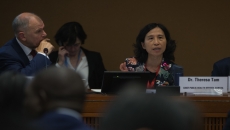
Chief Public Health Officer Dr. Theresa Tam said Canada was making progress in slowing the epidemic but warned against letting down its guard. The focus, Tam said, must be placed on stopping outbreaks in places like seniors homes and in other places where vulnerable populations live together in close quarters. How exactly Canada gets on the road to normalization will largely depend on the provinces, Prime Minister Justin Trudeau said on Wednesday. However, the closure of the Canada-U.S. border will stay in place until May 21st at least, he said.

More signs COVID-19 is slowing in Canada; students to get federal help