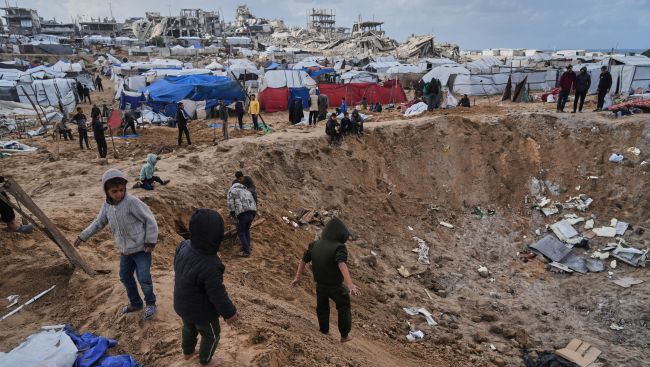
As advocates warn the world is turning away from the suffering in Gaza, a Canadian charity is opening a relief hub to give traumatized children in the enclave access to basic mental health supports and education.
"The need is so urgent," said Usama Khan, an adviser to the head of Human Concern International, a Muslim charity based in Ottawa.
His group is paying $3.5 million to UNICEF Canada to open an emergency space with 12 classrooms that offers psychological supports.
The plan is to help nearly 1,500 children with psychological needs, including many who were left with disabilities from Israel's bombardment of the territory. The hubs also will be used to distribute food and medicine from United Nations agencies.
"The emotional health and the psychological well-being of the children is incredibly important, with them being so vulnerable. And so these centres will ensure that there are experts there who can work with the children and the varying degrees of needs that they have," Khan said.
HCI and UNICEF would not say where the hub will be located, whether it sits in parts of Gaza controlled by Israel or Hamas, or when it will open.
Khan said while the hub is not meant to be a "multi-year project," the plan is to open it "as soon as possible" in a location where it can respond to local needs while ensuring safe access.
UNICEF estimates more than a million children in Gaza need mental health supports; the territory's population of 2.1 million skews younger than most countries. The organization says 97 per cent of schools in Gaza have been damaged or destroyed, just as Canada, the U.S. and others are cutting back foreign aid.
UNICEF supports 93 emergency hubs that have reached 111,000 of the 700,000 school-aged children in Gaza who need education.
Videos provided by UNICEF show structures constructed of tarps or corrugated metal where children sit on rugs and listen to teachers.
Khan said education is critical to the future of Palestinians, particularly since Gaza had a high literacy rate before October 2023, when Hamas attacked Israel and triggered the ongoing war.
"We can provide education and skills, so that there is a chance years later for these children to have a chance of a dignified life," he said.
"We want to ensure that children are not out of school for long periods of time, and they can still have a sense of community and belonging and that they can feel safe and … be happy, just like children all around the world."
He said Canadians need to understand that the humanitarian situation in Gaza remains critical and he fears people are getting "complacent" as other geopolitical events distract from the Middle East.
Israel also still restricts what types of goods can enter Gaza, including items aid workers say are essential to helping those in need. Khan said the restrictions limit access to toys that professionals use in programs to treat traumatized children.
"Since the ceasefire, things are definitely more open and moving. But we shouldn't be deluded in thinking that everything that Gazans need, they're able to get," Khan said.
He said Israel has banned from the territories it occupies the aid groups that have refused to provide detailed information on aid workers and their activities. Those groups have said they were being asked for an unreasonable amount of information by a government which has killed journalists and aid workers in Gaza and the West Bank.
"More attention is needed and more advocacy is needed, to ensure that Israel provides access for aid to freely go in," Khan said.
While Israel says it is respecting humanitarian law as it tries to neutralize Hamas, the country has faced intense criticism over the high number of civilian deaths, restrictions on aid, statements from Israeli officials holding all Gaza citizens responsible for Hamas, and the demolition of critical infrastructure such as the Canada Well.
Picture Courtesy: AP Photo/Jehad Alshrafi