
Monday, June 8, 2026
ADVT 
National

Canadians being asked to complete 2026 census as letters are mailed out

Darpan News Desk The Canadian Press, 05 May, 2026 04:07 PM
  • Canadians being asked to complete 2026 census as letters are mailed out

Canadians will soon be receiving their census forms, and while the mailout says it needs to be returned by May 12, Statistics Canada says this is a "reference date" rather than a deadline.

It is mandatory to fill out the census, but it would be at least a couple of months before someone would face consequences for failing to do so. Statistics Canada will follow up with people who haven't returned the form by May 12.

A spokesperson from Statistics Canada said in an emailed response that this date was chosen in order to maximize the number of Canadians who are at home before people begin to travel for the summer.

Statistics Canada will send reminder letters out to households that don't complete the census by mid-May. Additional follow up could involve phone calls and in-person visits to ensure the census is completed.

The federal Statistics Act states a census must be held every five years, and that every household and farm operator in Canada must participate.

The act says failure to complete the census can result in a fine of up to $500. A Statistics Canada spokesperson said that households that don't complete the census could face consequences starting in mid-July after receiving a final warning letter.

The spokesperson said while repeated efforts are made to get people to complete the census, there are always a small number "that refuse to comply." The agency can refer those people to the Public Prosecution Service of Canada to initiate a summary conviction proceeding.

After the 2016 census, Statistics Canada referred 47 cases for such action, and after the 2021 census, it referred 43 cases.

The last census was held in 2021 and collected data on the population, including age, gender, marital status, family structure and types of dwelling, as well as statistics like income, ethnocultural and religious background and education.

Statistics Canada says the results are kept confidential and are used to plan government services involving employment, education, public transportation and health care.

"For over a century, Canadians have relied on the census to understand how our country is changing over time," said André Loranger, Canada's chief statistician, in a news release Monday.

"Once again, we call on all residents to complete their census questionnaire."

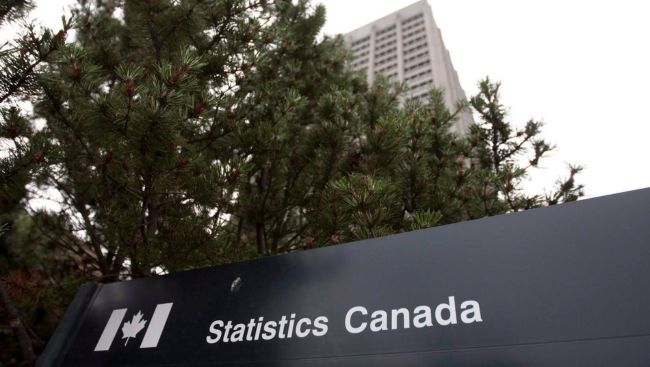
Picture Courtesy: THE CANADIAN PRESS/Sean Kilpatrick

MORE National ARTICLES

Earthquake shakes Vancouver and other B.C. cities

Earthquake shakes Vancouver and other B.C. cities
An earthquake with a preliminary magnitude of 5.1 has shaken Vancouver, Victoria and other B.C. cities. Natural Resources Canada says the quake was centred 24 kilometres north-northeast of Sechelt on the Sunshine Coast.

Earthquake shakes Vancouver and other B.C. cities

Heiltsuk Nation written constitution passes with 67 per cent of votes

Heiltsuk Nation written constitution passes with 67 per cent of votes
The Heiltsuk Nation has approved the adoption of a written constitution for the First Nation on British Columbia's central coast. The nation says 67 per cent of the 725 people who voted on the referendum were in favour of the constitution.

Heiltsuk Nation written constitution passes with 67 per cent of votes

Poilievre's proposed incentives for First Nations water, resource projects draw fire

Poilievre's proposed incentives for First Nations water, resource projects draw fire
Conservative Leader Pierre Poilievre says he would incentivize First Nations to support natural-resource projects through industry taxes and revisiting how much sway Indigenous Peoples and environmental considerations have over approving projects.  The proposals drew swift criticism from some experts and researchers.

Poilievre's proposed incentives for First Nations water, resource projects draw fire

Indigenous kids in care more likely to experience poor health later in life: report

Indigenous kids in care more likely to experience poor health later in life: report
Indigenous people who were in government care as children experience poorer health and socioeconomic outcomes later in life than those who were never in care, a new Statistics Canada report says. They suffer higher rates of disability, lower self-rated health levels and more homelessness, and are more likely to struggle to meet basic household needs, the report says.

Indigenous kids in care more likely to experience poor health later in life: report

Ex-coroner says B.C.'s drug policy overhaul looks like 'impulsive political decision'

Ex-coroner says B.C.'s drug policy overhaul looks like 'impulsive political decision'
British Columbia's former chief coroner says she's disappointed by the province's overhaul of its program that provides prescription alternatives to toxic street drugs, a shift she says "feels like a really impulsive political decision." Lisa Lapointe said the move to a "witnessed-only" model in which people are supervised while consuming their prescription drugs appeared to ignore scientific evidence.

Ex-coroner says B.C.'s drug policy overhaul looks like 'impulsive political decision'

Internal military report blames botched shooter drill on poor organization

Internal military report blames botched shooter drill on poor organization
During the drill, which took place on Nov. 12 at a service depot at CFB Longue-Pointe in Montreal, military police also confused a racialized employee with a drill participant playing an active shooter and wrestled him to the ground.

Internal military report blames botched shooter drill on poor organization