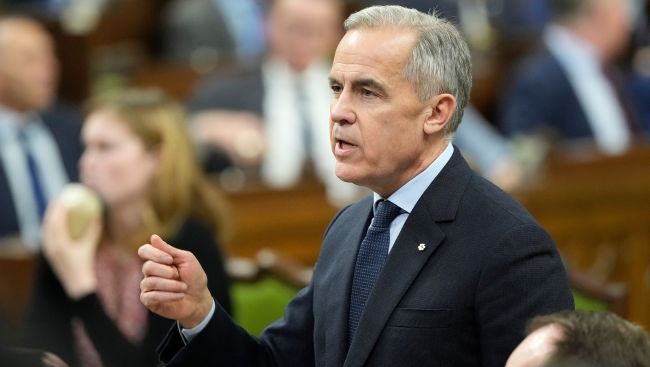
British Columbia "has to agree" on any pipeline from Alberta to the Pacific coast, Prime Minister Mark Carney said Tuesday, as his government edges closer to unveiling the details of a new energy pact it has been negotiating with Alberta.
In question period Tuesday, Carney was pressed by Conservative Leader Pierre Poilievre to state when a pipeline would be built. Carney said a memorandum of understanding with Alberta — expected to be announced Thursday while the prime minister is in Calgary — would lay out "necessary conditions but not sufficient conditions" for a new pipeline.
"We believe in cooperative federalism," Carney said. "We believe the Government of British Columbia has to agree. We believe that First Nations rights holders in this country has to agree and support."
B.C. Premier David Eby has criticized the government for not engaging with his province on the push for a new pipeline through his province. Eby told reporters at a news conference Monday he told Carney it was "unacceptable" when the two spoke on the phone earlier in the day.
In its climate competitiveness strategy released earlier this month, Ottawa committed to reinforced methane regulations and a strengthened industrial carbon pricing system. Both of those elements are expected to be part of a deal with Alberta, according to a clean energy industry source familiar with the negotiations who was not authorized to discuss the details publicly.
The source also said Alberta had been pushing Ottawa to repeal the clean electricity regulations as part of the negotiations.
Two years ago Canada published draft regulations to bump up its target of reducing methane emissions from oil and gas production to 75 per cent below 2012 levels by 2030. Those regulations — which would require companies to identify and fix leaks of methane coming from their operations — have never been finalized. The government's recent budget committed to finally doing so, as part of the climate competitiveness strategy.
The budget also said Ottawa would make the federal industrial carbon pricing system stronger, though it did not specifically say how.
The clean electricity regulations, to eliminate emissions entirely from Canada's electrical grid by switching to clean sources or installing carbon capture systems, initially targeted 2035 for a net-zero grid. However a year ago the government pushed that to 2050.
Alberta Premier Danielle Smith has been critical of most federal climate policies, accusing Ottawa of invading provincial jurisdiction. She has publicly called on Ottawa to terminate "bad laws" including the West Coast tanker ban, which prohibits tankers from carrying more than 12,500 metric tons of crude oil in areas along the northern coast of British Columbia.
Energy and Natural Resources Minister Tim Hodgson said Monday the government is close to providing clarity on whether Ottawa will repeal the ban — something Smith has said is necessary to move Alberta oil to overseas markets.
"We have been talking with that potential proponent, the government of Alberta. We have been working on, as has been widely reported, a memorandum of understanding. That is a work in process right now," Hodgson told the House of Commons committee on natural resources Monday.
"I think we are getting close to a place, and when that gets done we'll have some more clarity."
Eby has called on Ottawa to keep the ban in place. Hodgson also said previously that any pipeline through B.C. would need support from the province and First Nations.
On Tuesday, however, Hodgson's office told The Canadian Press that the government wouldn't give B.C. a veto over a pipeline project.
While no company has stepped up yet to build an oil pipeline from Alberta to B.C., Smith has said her government still intends to submit a proposal to the Major Projects Office next spring.
Smith said an agreement with the federal government would involve a "grand bargain" which would see the proposed Pathways Alliance carbon capture project move forward alongside a proposed pipeline.
Visiting Ottawa last month, Smith also said she was open to reinforcing Alberta's industrial carbon price.
When Carney cancelled the consumer carbon price last spring, he did so with a commitment to strengthening the industrial carbon price, which contributes far more to reducing carbon emissions than the consumer fuel levy. He has yet to explain how it will be strengthened.
Picture Courtesy: THE CANADIAN PRESS/Adrian Wyld