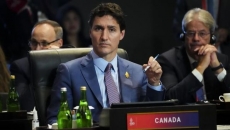
Liberal leadership contender Mark Carney is backing away from Prime Minister Justin Trudeau's consumer carbon pricing regime but will keep industrial pricing in place.
Carney said the country has become divided over the policy because Canadians have been fed "misinformation" by Conservative Opposition Leader Pierre Poilievre.
“Since Canada's current climate policy has become too divisive, it's time for a new, more effective climate plan that everyone can get behind," Carney said at an event in Halifax Friday morning.
"It's a plan that makes our economy more competitive. It grows good jobs today and will grow better ones in the future."
He sketched out broad points of a plan that largely swaps the stick for the carrot for Canadian households. It includes financial incentives for purchases of more energy efficient appliances and electric vehicles, and improvements to home insulation.
Carney, a former Bank of Canada governor who has spent the last several years as a United Nations special envoy for climate action, said he would have big polluters, including oil and gas companies, help to cover the cost of allowing Canadians to make those choices while still paying "their fair share for emissions."
It’s time for a new, more effective climate plan that everyone can get behind.
— Mark Carney (@MarkJCarney) January 31, 2025
One that makes our economy more competitive, and grows good jobs today and in the future. https://t.co/n46vg8RoTq
It's likely the last nail in the coffin for one of Trudeau's signature climate policies. Most other Liberal leadership candidates are vowing to end or at least freeze the existing carbon price charged on fossil fuel purchases.
Rival candidate Chrystia Freeland, who came out against the consumer carbon price weeks ago, slammed Carney for the timing of his announcement.
She said it is "truly out of touch" for Carney to be talking about anything other than the "very real, generational, existential, historic threats Canadians are facing from the United States," with President Donald Trump poised to hit Canada with tariffs on Saturday.
Carbon pricing has been in place since 2019 and charges $80 per tonne of emissions.
It has two portions. The first is the industrial system, which charges a price on emissions from large polluters like oilsands mines, auto factories and steel manufacturers.
The consumer portion is charged on the purchase price of 22 types of fuel bought by individual consumers or smaller businesses and non-profit entities like schools and hospitals. It adds about 17.6 cents to a litre of gasoline and 15 cents to a cubic metre of natural gas.
While the government compensates Canadians for the consumer cost with quarterly rebates, the policy has never been that popular - and Conservative Leader Pierre Poilievre has made "axing" it the centrepiece of his pitch to Canadians.
Poilievre has said he doesn't believe the Liberals will abandon the policy under new leadership and has been referring to all the leadership candidates with the moniker "Carbon Tax" in front of their names.
But they all say they are backing away from it in some way.
Freeland has promised to end the consumer carbon price, citing sagging public support for the policy. Former government House leader and rival leadership candidate Karina Gould has said she would freeze the carbon price at its current rate, but has not committed to abolishing it yet.
Frank Baylis, a businessman and former MP from Montreal, said at his official Liberal leadership campaign launch Thursday that he would fix the carbon price but didn't say how. Baylis said the current policy is not working and is "hurting the wrong people."
They all appear to be targeting only the consumer carbon price, not the industrial version.
An analysis published in March 2024 by the Canadian Climate Institute found Canada's carbon price could slash greenhouse gas emissions by more than 100 million tonnes a year by 2030, but only about one-fifth of that would come from the consumer carbon price.
Most of the reduction would come from the big industrial system.
Most Liberals have previously defended carbon pricing, including Carney.
In 2021, while attending annual UN climate talks in Scotland, Carney participated in a panel with Trudeau discussing the need for more countries to price carbon as an way to drive down emissions.
"Everyone should try and have a price on carbon," he said at the time.
During his leadership launch in Edmonton on Jan. 16, Carney said if carbon pricing is to go, it must be replaced "with something that is at least, if not more, effective."