The Bank of Canada is holding its key interest rate at 0.25 per cent in response to what it calls the "extremely uncertain" economic outlook from the COVID-19 pandemic, and plans to keep it there until the picture improves.
In its updated outlook, the bank said Wednesday it expects the economy to contract by 7.8 per cent this year, driven downward by a year-over-year contraction of 14.6 per cent in the second quarter.
The report pegs the annual inflation rate at 0.6 per cent this year, rising to 1.2 per cent in 2021 and 1.7 per cent in 2022.
Its inflation target is 2 per cent, and the bank said in its policy statement it will maintain the current rate until that target is achieved.
The rate will have to stay low to provide "extraordinary monetary policy support" to help recuperate from the economic impact of COVID-19, it said.
The forecasts included in the Bank of Canada's monetary policy report also come with a caution that the numbers could be thrown off.
The bank's outlook is based on the assumption that there won't be a broad-based second wave of the pandemic, that lockdowns will be gradually lifted, and the pandemic will have run its course by mid-2022 thanks to a vaccine or effective treatment.
The monetary policy report said there isn't enough information to forecast how deep the economic scarring will be from business closures or widespread job losses.
It's also unclear how quickly consumer demand will recover due to changes in spending habits, work patterns and social behaviour, the report said.
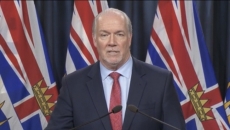
"This is not a normal recession," governor Tiff Macklem said in his opening statement.
"The exceptionally strong near-term growth of the reopening phase is likely to give way to a slower and bumpier recuperation phase. As a result, it will take a long time for economic activity to get back even to the level where it was at the end of 2019, before the pandemic struck."
Still, Macklem said, the central bank believes the country has avoided a worst-case scenario envisioned by the bank in its last report in April.
The central bank's key interest rate has been at 0.25 per cent since March when it was rapidly dropped in response to the economic fallout from COVID-19.
Macklem has seemingly ruled out any further drops and has said that the central bank doesn't plan to raise the rate until well into an economic recovery.
The Bank of Canada's June interest rate announcement came on Macklem's first day on the job as the country's top central banker. Though he was only observer during the June round of deliberations by the bank's governing council, he endorsed the decision to keep the rate on hold.
The report Wednesday said growth will pick up beginning in this quarter, the third of the year, with the country recouping about 40 per cent of the drop in output from the first half of 2020.
Much of that will be driven by the reopening of businesses and partial rebound in spending, the bank says.
But after an initial, quick bounceback, Canada will enter what the bank calls a "recuperation phase" where the pace of recovery will slow.
"As reopening progresses, many people will probably continue to fear contracting the virus, and uncertainty about job security is likely to persist," the report said.
"Both consumer and business confidence are therefore expected to remain subdued, restraining spending and employment, particularly in activities that involve in-person interaction."
The bank said the pandemic will continue to affect consumer and business confidence during this phase amid widespread changes in the economy, including the energy sector where low prices and reduced demand have put production well below its pre-pandemic path.
As well, the shock facing the oil sector has "renewed questions about the likelihood of pipelines being developed," the report said.
Some lower-income workers, disproportionately affected by job losses or cuts in earnings, "will face prolonged income losses" and push more households to the financial brink, the bank warns.
While higher income households may have excess savings to spend during this phase, some households will prioritize paying down debts, or padding rainy-day funds due to the uncertain economic environment, the report said.
Heavy discounts on unwanted inventory and smaller-than-planned price increases for firms will also act as a drag on inflation, which the bank expects to remain weak before gradually getting back to its two per cent target.
Housing activity is also expected to slow over the next few years with the ripple effects of the downturn, and lower immigration, the report said.
The central bank said it will provide a more detailed analysis of its long-run assumptions for the domestic economy when it updates it outlook in October.