Sunday, December 21, 2025
ADVT 
National

CERB to be extended eight weeks: PM

Darpan News Desk The Canadian Press, 16 Jun, 2020 06:09 PM
  • CERB to be extended eight weeks: PM

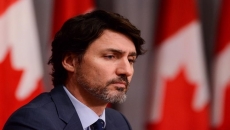
Prime Minister Justin Trudeau says his government's signature benefit for people whose jobs have vanished amid the COVID-19 pandemic will be extended by eight weeks.

The Canada Emergency Response Benefit has paid $500 a week for a maximum of 16 weeks depending on when people signed up for the help either because they lost their jobs or saw their hours drastically slashed due to the pandemic.

The first cohort of applicants who signed up in April are set to soon max out their payment period in early July, with worries some wouldn't have jobs to go back to and others unable to work due to health reasons.

Trudeau says the economy is recovering from the mass closures ordered to fight the spread of the novel coronavirus, but there's a long way to go. He says that the government will look at international best practices to determine what further changes will be needed.

An extension will add to the cost of the benefit, which has already paid out $43.51 billion as of June 4 and carries a budget of $60 billion. The parliamentary budget officer in a report last week estimated that extending the maximum number of weeks from 16 to 28, and extending the program through to January 2021, would cost about $57.9 billion.

Trudeau didn't provide a spending figure today, but says the government's hope is that fewer people will need the CERB as restrictions ease and businesses reopen. Extending the CERB has been a demand from the New Democrats in exchange for the party's support for the minority Liberals in an upcoming confidence vote. The supplementary spending estimates detail roughly $81 billion in already approved spending and about $6 billion more in measures MPs are set to vote on.

But budget officer Yves Giroux notes in a report this morning that a number of measures promised by the government aren't included because they don't come out of what's known as the consolidated revenue fund. Left out of the estimates are cost details on the $45-billion wage-subsidy program delivered through the tax system, and a loan program to small- and medium-sized businesses that will open applications to a wider number of companies on Friday. "While these supplementary estimates include a significant amount of the spending announced by the government in response to the global pandemic, it does not include all of the planned spending," Giroux writes. "Thus, it does not provide parliamentarians with a complete picture of how much the government will spend on COVID-19 response measures."

Giroux warns it will be difficult to get answers about the estimates from federal officials because MPs will only debate the estimates for four hours under a deal agreed to last month by a majority of MPs. The Conservatives and Bloc Quebecois have been demanding more transparency from the government around its spending and fiscal projections.

MORE National ARTICLES

Tiff Macklem new Bank of Canada governor

Tiff Macklem new Bank of Canada governor
Tiff Macklem, a former second-in-command at the Bank of Canada, is returning to the central bank to take over the top job at a moment that he says cries out for bold, unprecedented responses to the economic crisis fuelled by COVID-19. 

Tiff Macklem new Bank of Canada governor

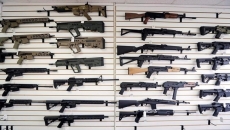
Trudeau announces ban on 1,500 types of 'military-style' guns

Trudeau announces ban on 1,500 types of 'military-style' guns
Prime Minister Justin Trudeau says the federal government is banning a range of assault-style guns, with an order that takes effect immediately. The cabinet order he described in a Friday-morning announcement doesn't forbid owning any of 1,500 "military-style" weapons and their variants but it does forbid them to be used and halts the trade in them

Trudeau announces ban on 1,500 types of 'military-style' guns

COVID in all regions of Canada as Nunavut sees 1st case

COVID in all regions of Canada as Nunavut sees 1st case
COVID-19 has now spread to every region in Canada, with Nunavut reporting its first case on Thursday, as Ontario reported its largest one-day climb in fatalities and the country's budget officer predicted a staggering $252-billion deficit. The case in northern Nunavut was identified in the 1,600-strong largely Inuit community of Pond Inlet on Baffin Island. The territory's chief public health officer, Dr. Michael Patterson, said a rapid response team was on its way to the community to help manage the situation.

COVID in all regions of Canada as Nunavut sees 1st case

Military identifies service members missing in deadly helicopter crash

Military identifies service members missing in deadly helicopter crash
The Canadian military is deploying a flight investigation team to look into the causes of a helicopter crash off the coast of Greece that has claimed the life of at least one service member and left five others missing. Prime Minister Justin Trudeau confirmed during a news conference that six people were aboard the Cyclone helicopter that went down in the Ionian Sea on Wednesday as the aircraft was returning to the Halifax-based frigate HMCS Fredericton from a NATO training mission.

Military identifies service members missing in deadly helicopter crash

Budget officer says federal deficit could top $252 billion

Budget officer says federal deficit could top $252 billion
Parliament's budget watchdog says that it's likely the federal deficit for the year will hit $252.1 billion as a result of the COVID-19 pandemic, and could go even higher if emergency measures remain in place longer than planned. The figure is an estimate based on the almost $146 billion in spending measures the government has announced to help cushion the economic blow from the pandemic, estimated declines in the country's gross domestic product, and the price of oil remaining well below previous expectations.

Budget officer says federal deficit could top $252 billion

Canadian support for gender equality doesn't match reality, survey suggests

Canadian support for gender equality doesn't match reality, survey suggests
Canadian support for the principle of equal rights for women and men is among the highest in the world — but in practice, archaic attitudes towards gender roles are still alive and well both at home and around the globe, a new survey suggests. Respondents to the international Pew Research Center poll released Thursday expressed overwhelming support for the concept of gender equality — 93 per cent of Canadians surveyed ranked it as "very important," second only to Sweden at 96 per cent.

Canadian support for gender equality doesn't match reality, survey suggests