First Nations chiefs voted unanimously Tuesday to press the government to uphold the oil tanker ban off the northern British Columbia coast and withdraw an agreement signed last week that clears a path for a new oil pipeline to the B.C. coast.
Prime Minister Mark Carney and Alberta Premier Danielle Smith signed a memorandum of understanding on Nov. 27 to co-operate on energy, opening up the prospect of an exemption from the tanker ban to support the pipeline.
The ban was passed in legislation in 2019, putting legal teeth behind a non-binding moratorium that had been in place in the region since the 1970s. It bars oil tankers carrying more than 12,500 tonnes of crude oil from stopping or unloading at ports from the northern tip of Vancouver Island to the Alaska border.
The issue was the first topic up for debate Tuesday at the Assembly of First Nations' meeting in Ottawa, where hundreds of chiefs gathered to discuss issues affecting their communities.
Chief Donald Edgars of Old Massett Village in Haida Gwaii put forward the resolution calling on chiefs to affirm support for the oil tanker ban, and to support First Nations in B.C. in their opposition to a potential pipeline.
Edgars told his fellow chiefs a new pipeline to B.C.'s coast is "nothing but a pipe dream" and that passing his resolution would show Carney they are united in their opposition when he comes to address the group later Tuesday.
"We cannot let this happen," Edgars told the chiefs.
"I call on all chiefs to reject this dangerous precedent. I ask the chiefs to stand in support of coastal First Nations who firmly reject any pipelines that propose running through our territories.
The resolution was seconded by B.C.-based Indigenous resource lawyer Merle Alexander, who said an oil spill would destroy the economic livelihood of the coast.
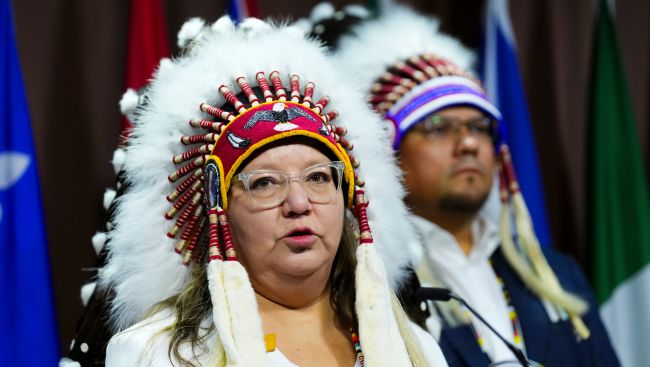
During her opening remarks to the gathering, AFN National Chief Cindy Woodhouse Nepinak slammed Carney’s government over what she called its failure to consult meaningfully with First Nations and cuts to federal investments in First Nations communities.
Woodhouse Nepinak said First Nations will continue to protect their rights, in and outside of the courts.
Carney is set to address the hundreds of chiefs gathered in Ottawa for the three-day assembly on Tuesday afternoon.
Prime ministers and their cabinets traditionally attend the December AFN meeting to gauge the outlook of First Nations leadership and field chiefs' questions and criticisms.
Woodhouse Nepinak told The Canadian Press Carney would be wise to come to the meeting with firm commitments to things the chiefs want, such as the clean drinking water legislation that died when the federal election was called earlier this year.
Some of the most prominent members of Carney's cabinet will address the chiefs over the course of the three-day gathering: Crown-Indigenous Relations Minister Rebecca Alty, Finance Minister François-Philippe Champagne, Indigenous Services Minister Mandy Gull-Masty, National Defence Minister David McGuinty and Energy and Natural Resources Minister Tim Hodgson.
Hodgson found himself in hot water last week when he brushed off concerns from Coastal First Nations about failing to meet with them before the pipeline agreement was signed with Alberta.
"It's called Zoom," Hodgson quipped on CBC's Power and Politics when asked about Coastal First Nations president Marilyn Slett's inability to make the trip to Vancouver on short notice for a meeting.
He apologized for those remarks, saying on social media it was a "poor choice of words" and offering to meet with the First Nations "at their convenience."
First Nations leaders have for months criticized the Carney government's approach to First Nations, saying its actions signal a major shift in the tone of the relationship set by former prime minister Justin Trudeau.
They have accused his government of introducing legislation that affects them without their consent or co-operation as it seeks to remake the economy in response to U.S. President Donald Trump's trade war.
Woodhouse Nepinak acknowledged "Canada is going through challenging times" but insisted Carney won't get the economic wins he wants by shutting First Nations out of the conversation.
"Canada can create all the MOUs, projects offices and advisory groups (it wants), but chiefs will be united — and are united — when it comes to the approval of projects on First Nations lands," she said. "There will be no getting around rights-holders."
Picture Courtesy: THE CANADIAN PRESS/Sean Kilpatrick