
Tuesday, March 31, 2026
ADVT 
National

Climate change behind increases in extreme rain danger: scientists

Darpan News Desk The Canadian Press, 01 Jun, 2020 08:11 PM
  • Climate change behind increases in extreme rain danger: scientists

The rains soaked southern Alberta for days, unrelenting, saturating soil already sodden with melting snow — and before long Calgary was awash as rivers overflowed their banks.

The province described the 2013 flood as the worst in its history, but it might not be for long. Research from Environment Canada shows that climate change is behind more extreme rainfalls in Canada and suggests the problem is likely to get worse.

"If we continue with global warming, we will see continued increase in the frequency and severity of extreme precipitation," said Megan Kirchmeier-Young, co-author of a paper published Monday in the Proceedings of the National Academies of Sciences.

Researchers combined computer models and observed data for the most specific look yet at how climate change affects the kind of damaging rainfalls that turn streets to rivers.

The idea stems from simple physics. Because warm air holds more moisture than cool air, an atmosphere heated by climate change should hold more water and dump larger amounts of it.

Showing that, however, is more complex.

Previous research on extreme rainfall patterns hasn't been able to achieve a finer scale than the average of the entire Western Hemisphere. Now, scientists have been able to focus on regions within the United States and Canada — what's happening, why, and what's coming down the road.

They began with figures from a variety of locations for the maximum amount of rain falling over a one-day period and over a five-day period.

They did four separate calculations for the probability of those rainfall amounts occurring each year over a 50-year period from 1961 to 2010. Three were based on climate models that incorporated real-world data on increasing greenhouse gas levels, while the fourth was calculated directly from observed figures.

All four calculations showed increasing chances of extreme precipitation. The result from the observed data showed the highest increase, with chances of one-day heavy rainfall increasing by more than five per cent.

Five-day rainfalls showed similar patterns, although a lower increase.

"We're finding (that) extreme precipitation increases in the models that have this human influence (greenhouse gases) agrees well with the increases we're seeing in the observations," Kirchmeier-Young said.

Such studies not only help scientists understand the past. Comparing modelled results with real-world measurements increases their ability to look ahead.

"If we have that, we can have more confidence in what the model is telling us what will happen in the future."

All three models in the study showed the chance of over-the-top rainfalls is expected to increase far into the future.

"If we continue with global warming, we will see continued increase in the frequency and severity of extreme precipitation," Kirchmeier-Young said.

The consequences are serious, she added. A one-day deluge can create significant flash floods in an urban area; five-day downpours can swell rivers over their banks — although river floods are complicated by more factors than just rainfall.

Urban planners, builders and regulators are all going to have to take Canada's coming climate into account.

"We have to be thinking about what impacts more heavy rainfall will have," Kirchmeier-Young said. "Flash flooding is something that we're going to have to be thinking more about and be more concerned with."
MORE National ARTICLES

B.C. woman charged after deliberately coughing on grocery clerk: RCMP Tissues and toilet paper aren't worth arrest

A woman is facing criminal charges after RCMP in British Columbia allege she coughed at a grocery clerk who would not let her buy extra tissues. Police say a store in the Vancouver suburb of Coquitlam has set a maximum amount of tissues and toilet paper each customer can buy as the COVID-19 pandemic wears on.

B.C. woman charged after deliberately coughing on grocery clerk: RCMP Tissues and toilet paper aren't worth arrest

Canadians drinking more due to stress, boredom during COVID-19

A study commissioned by the Canadian Centre on Substance Use and Addiction suggests some Canadians are drinking more alcohol due to boredom and stress during the COVID-19 pandemic. The poll, conducted by Nanos Research, found 25 per cent of Canadians aged 35 to 54 and 21 per cent of Canadians aged 18 to 34 say they have increased the amount of alcohol they drink while spending more time at home.    

Canadians drinking more due to stress, boredom during COVID-19

Ferries, orchestra retract layoffs, await subsidy

Vancouver Symphony Orchestra and BC Ferries have rescinded lay-off notices in anticipation of receiving the Canadian government's emergency wage subsidies. Both BC Ferries and the symphony had planned layoffs to take effect on the Easter weekend as the COVID-19 pandemic drains away their businesses.

Ferries, orchestra retract layoffs, await subsidy

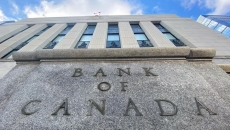
The Bank of Canada announced that it is holding its interest rate target at 0.25 per cent

The Bank of Canada announced that it is holding its interest rate target at 0.25 per cent
The Bank of Canada is warning that the downturn tied to COVID-19 will be the worst on record and that the economic recovery will depend on the effectiveness of current measures to bring the pandemic under control. The bank announced that it is keeping its key interest rate target on hold at 0.25 per cent, saying that it is effectively as low as it can go to combat the economic impacts of COVID-19.

The Bank of Canada announced that it is holding its interest rate target at 0.25 per cent

Liberals ease access to emergency COVID-19 benefit, plan to top-up wages

The federal government is making changes to its COVID-19 programs to send emergency aid to seasonal workers without jobs and those whose hours have been drastically cut but who still have some income. The changes will also allow people who are making up to $1,000 a month to qualify for the Canada Emergency Response Benefit, as well as those whose employment insurance benefits have run out since the start of the calendar year.    

Liberals ease access to emergency COVID-19 benefit, plan to top-up wages

Canada focused on fighting COVID-19 Trudeau steers clear of WHO controversy

Prime Minister Justin Trudeau refused Wednesday to join the escalating global debate about the World Health Organization's handling of the COVID-19 crisis, insisting Canada remains focused on working with experts around the world to combat the pandemic. Trudeau repeatedly batted back questions about Donald Trump's plan to halt funding to the UN agency and review what the U.S. president says was a failure to properly assess the threat posed by the novel coronavirus back in January.

Canada focused on fighting COVID-19 Trudeau steers clear of WHO controversy